
PESHAWAR – The geopolitical landscape of the Middle East is shifting as the Yemen power struggle enters a volatile new phase. What began as a civil war has mutated into a multi-front battle for the soul of the nation, involving separatist surges, maritime warfare, and the world’s most dire humanitarian catastrophe.
The Southern Transitional Council (STC), a powerful UAE-backed movement, has fundamentally altered the map by seizing control of critical southern and eastern territories. Established in 2017, the STC is no longer just a political faction; it is a governing force aiming to resurrect South Yemen as an independent sovereign state—a status it held until 1990.
Pakistan and Saudi Arabia Defence Agreement Signals A New Chapter in Regional Alliances
This move is a masterstroke of regional strategy. By backing the STC, the UAE secures unprecedented influence over the Gulf of Aden and the Red Sea, the world’s most vital maritime arteries. The STC’s ambitions are clear: they have set their sights on the capital, Sanaa, vowing to take it through either high-stakes diplomacy or total war.
A Government in Name Only?
Caught in the middle is the internationally recognized Presidential Leadership Council (PLC). Formed in 2022 under Rashad al-Alimi to unify the anti-Houthi front, the Saudi-supported council is struggling to maintain relevance. Paralyzed by internal friction and the aggressive expansion of the STC, the PLC’s authority is rapidly eroding, leaving a power vacuum in its wake.
How Middle East Crisis Could Shake Pakistan’s Remittance Lifeline
The Houthi Front: From Local Rebels to Global Threat
In the north, the Houthis (Ansar Allah), backed by Iran, have transformed from a regional insurgency into a global disruptor. Holding the capital and five major provinces, they have moved beyond the borders of Yemen to target international shipping in the Red Sea. Claiming their strikes are a response to the conflict in Gaza, the Houthis have launched direct missile and drone attacks at Israel, drawing the eyes of the entire world to the Yemeni coastline.
The Human Cost: A Nation Starving in Silence
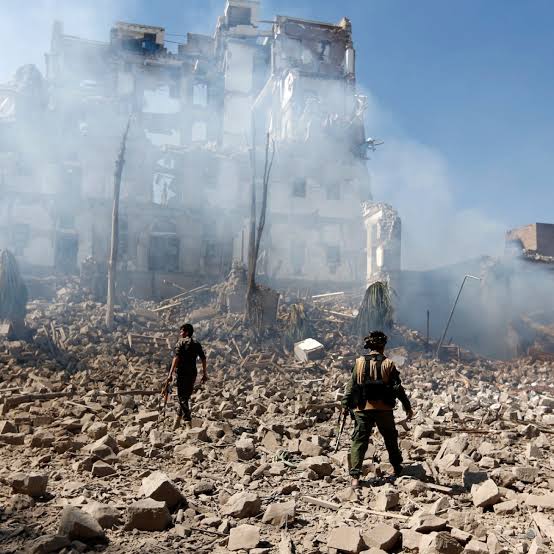
Behind the maps and the military maneuvers lies a harrowing reality. This relentless pursuit of power has triggered the world’s worst humanitarian crisis. While factions fight for ports and provinces, millions of Yemeni civilians face extreme danger, famine, and a total collapse of basic infrastructure. The world can no longer afford to look away as the struggle for Yemen’s future destroys its present.
The Yemen conflict has entered a new and more complex phase involving multiple factions, including the Houthis, the Southern Transitional Council (STC), and the internationally recognized Presidential Leadership Council (PLC), all competing for territorial and political control.
The Houthis, also known as Ansar Allah, control northern Yemen including the capital Sanaa. Backed by Iran, they have expanded their activities to include attacks on international shipping and missile strikes beyond Yemen’s borders.
Yemen’s location near key maritime routes like the Gulf of Aden and the Red Sea makes it strategically important for global trade and regional power influence.