
Salary relief, two million new jobs, and massive tax targets—here is everything you need to know about Pakistan’s most consequential budget in years.
PESHAWAR—Federal Finance Minister Muhammad Aurangzeb has presented the Federal Budget 2026-27 before the National Assembly, proposing a total outlay of over Rs17,500 billion—a budget that balances ambitious economic targets with relief for the salaried class.
The budget session, however, was anything but smooth. Opposition benches erupted in protest the moment the finance minister rose to speak.
Also Read: Budget 2026-27: Over 2m New Job Opportunities Announced
Opposition Storms the House
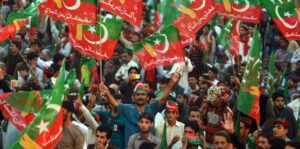
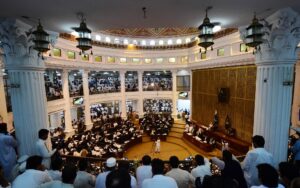
As Aurangzeb began his budget speech, Pakistan Tehreek-e-Insaf (PTI) lawmakers launched an immediate and fierce protest inside the National Assembly, holding up placards and banners carrying anti-government slogans and disrupting proceedings from the floor.
Meanwhile, the Pakistan Peoples Party (PPP) created a separate political headache for the ruling coalition. Before the session began, PPP lawmaker Aejaz Jakhrani announced that PPP members would boycott the budget session entirely — with only Naveed Qamar attending on the party’s behalf.
Senior government leaders scrambled to avert the crisis. Ishaq Dar and other ruling party figures rushed to meet Bilawal Bhutto Zardari in an attempt to bring PPP on board—but failed in their first attempt.
It was ultimately Interior Minister Mohsin Naqvi who successfully persuaded Bilawal Bhutto Zardari and brought PPP lawmakers into the chamber, allowing the National Assembly session to formally begin.
Also Read: IMF Demands Carbon Levy During Budget Talks
Budget at a Glance — The Big Numbers
Here is a more creative version:
| # | Budget Head | Amount (Rs Billion) | Share of Budget |
|---|---|---|---|
| 01 | Total Budget Size | Rs 17,500+ | 100% |
| 02 | Tax Revenue Target | Rs 15,267 | 87.2% |
| 03 | Non-Tax Revenue Target | Rs 2,767 | 15.8% |
| 04 | Petroleum Levy Target | Rs 1,727 | 9.9% |
| 05 | Debt Servicing Allocation | Rs 7,824 | 44.7% |
| 06 | Defence Expenditure | Rs 3,000 | 17.1% |
Key Takeaway: Nearly half of Pakistan’s entire budget (44.7%) goes straight toward debt repayment—before a single rupee is spent on development, health, or education.
Economic Targets for 2026-27
The government has set the following growth targets for the new financial year, approved by the National Economic Council:
- GDP Growth Target: 4 percent
- Inflation Target: 8.2 percent
- Agriculture Sector Growth: 3.8 percent
- Industrial Sector Growth: 4 percent
- Large-Scale Manufacturing Growth: 4.5 percent
- Services Sector Growth: 4.2 percent
Two Million New Jobs — Sector by Sector
One of the budget’s headline announcements is the creation of two million new employment opportunities across the country during the next financial year.
The government plans to generate these jobs as follows:
- Services Sector: 1.1 million new jobs
- Industrial Sector: 500,000 new jobs
- Agriculture Sector: 400,000 new jobs
Relief for the Salaried Class
Amid record tax targets, the government has included proposals to provide relief to the salaried class—a move aimed at easing the burden on Pakistan’s taxpaying middle class that has borne the brunt of economic pressure in recent years.
Finance Minister Aurangzeb, speaking ahead of the budget presentation, stated that maximum possible relief had been incorporated into this year’s budget.
Khyber Pakhtunkhwa Debt Surges to Historic High of Rs679bn
The Debt Burden — The Elephant in the Room
Despite the ambitious revenue targets, a staggering Rs7,824 billion — nearly half of the total budget — will go directly toward servicing Pakistan’s existing debt obligations. This underscores the structural fiscal challenge that continues to constrain the government’s ability to invest in public services and development.
Defense expenditure has been allocated approximately Rs 3,000 billion, reflecting ongoing security commitments.
Cabinet Greenlights Budget Before Assembly Presentation
Before the National Assembly session, the Federal Cabinet formally approved the budget proposals in a meeting chaired by the Prime Minister at Parliament House, which began at 2:30 PM. The Cabinet meeting gave official clearance to all budget proposals before their presentation on the floor of the house.
National Assembly Bans Plastic Book Covers for Plastic-Free Schools
What This Budget Means for Pakistan
The Federal Budget 2026-27 arrives at a critical juncture for Pakistan’s economy. With inflation targets set at 8.2 percent, a GDP growth ambition of 4 percent, and promises of two million new jobs, the government is projecting cautious optimism while simultaneously committing nearly half its revenues to debt repayment.
Whether these targets prove achievable will depend on tax collection performance, global economic conditions, and the government’s ability to deliver on its employment and growth promises.