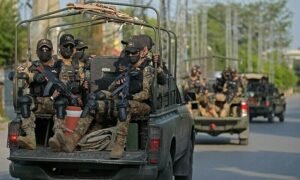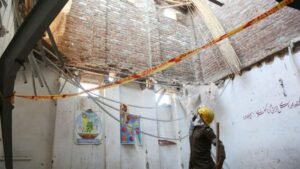

PESHAWAR – Three police officers were killed in Lower Dir. In Bannu, another attack ended differently—not because the threat had diminished, but because officers on duty stopped a suicide bomber before he reached his target.
Between these two incidents lies the story of terrorism in Khyber Pakhtunkhwa today: a conflict that has become both familiar and increasingly complex. Militant groups continue to evolve. The men and women confronting them continue to adapt. The question is whether the institutions responsible for supporting those officers are evolving at the same pace.
Terror financing: Centre orders freezing of bank accounts, digital wallets and real estate
Pakistan often measures success against terrorism through operations completed, militants arrested, or attacks prevented. Those numbers matter. But they tell only part of the story.
The quieter measure of preparedness is institutional strength.
It begins long before an operation is launched. It begins with intelligence officers tracking movements across difficult terrain. It depends on investigators connecting scattered pieces of information before violence occurs. It relies on protected vehicles reaching remote districts, secure communications that do not fail, and trained personnel who remain with specialized units long enough to build expertise.
This is where Khyber Pakhtunkhwa terrorism exposes an uncomfortable contradiction.
Counterterrorism Action Plan Finalized to eliminate terrorism
The province has carried the heaviest burden of militancy for nearly two decades, yet the Counter Terrorism Department—the agency expected to anticipate threats rather than simply respond to them—continues to struggle with shortages that would challenge any modern security organisation. Reports point to limited permanent staff, incomplete infrastructure, insufficient armoured transport, and dependence on temporary deployments borrowed from the regular police force.
No counterterrorism strategy can depend indefinitely on improvisation.
Police officers have repeatedly demonstrated courage that deserves national recognition. In Bannu, that courage prevented another tragedy. In Lower Dir, officers paid with their lives while confronting an organised assault. Individual bravery has become one of the state’s most dependable security assets.
Bravery, however, is not a substitute for capacity.
Militant organisations invest time in planning, recruitment, logistics, and intelligence. A state that responds only after violence occurs surrenders the strategic advantage before the first shot is fired. Counterterrorism succeeds not because security forces fight well, but because they prevent the fight from becoming necessary.
Pakistan at war: Fighting Terror and Betrayal
That requires permanent investment rather than periodic urgency.
It requires digital surveillance capabilities that match modern threats. It requires forensic laboratories that accelerate investigations instead of delaying them. It requires analysts, investigators, cyber specialists, and intelligence officers whose expertise grows through continuity rather than temporary assignments. Most importantly, it requires recognising that institutions—not emergency operations—form the foundation of lasting security.
The debate should therefore extend beyond budgets and procurement.
Every attack weakens more than physical security. It tests public confidence. Communities living along the province’s most vulnerable corridors measure the state’s strength not by official statements but by whether schools remain open, roads remain safe, businesses continue to operate, and police officers return home after their shifts.
Military Operation in Bajaur: Civilians Killed, Families Displaced, Elders Demand Accountability
The security challenge confronting Pakistan has changed. So must the institutions confronting it.
Terrorism in Khyber Pakhtunkhwa will not disappear through isolated victories, however important they may be. Lasting success depends on building an intelligence-led counter-terrorism department equipped with modern technology, permanent expertise, and operational independence equal to the complexity of the threat it faces.
The officers on the front line have shown what commitment looks like.
The institution behind them must now show the same.