
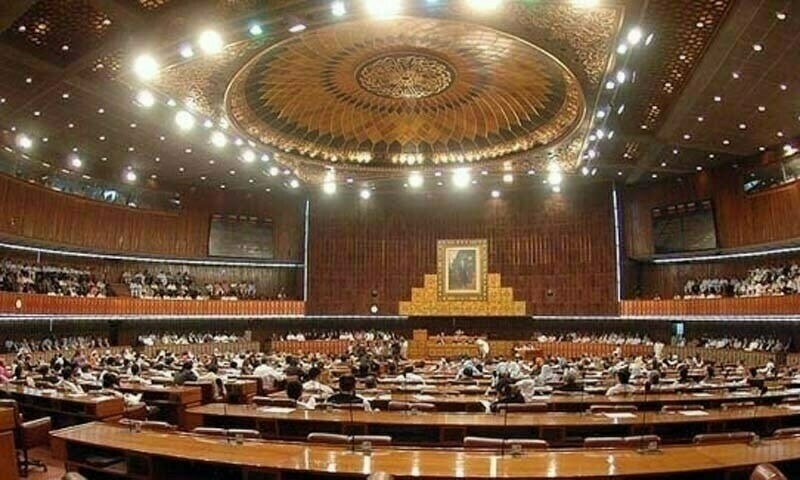
ISLAMABAD: The federal government of Pakistan will present the national budget for the fiscal year 2025-2026 in Parliament today. The proposed total outlay of the new budget exceeds Rs 17,500 billion, balancing historically high revenue collection targets with proposed income tax relief for the salaried class.
Before its presentation in the National Assembly, the federal cabinet will formally approve the budgetary proposals. Prime Minister Shehbaz Sharif will chair this crucial cabinet meeting at 2:30 PM at Parliament House. Following cabinet approval, Federal Minister for Finance Muhammad Aurangzeb will present the budget and deliver his speech at 3:00 PM, outlining the government’s economic priorities and roadmap.
Key Macroeconomic Targets and Job Creation
The government has proposed a Gross Domestic Product (GDP) growth target of 4% for the upcoming fiscal year, while aiming to contain inflation at 8.2%.
The National Economic Council (NEC) has already approved the sectoral growth targets, which project:
- Sectoral Growth: Agriculture at 3.8%, the industrial sector at 4.0% (with large-scale manufacturing estimated at 4.5%), and the services sector at 4.2%.
- Employment Generation: A major plan to create 2 million new jobs across the country. This includes 1.1 million jobs in services, 500,000 in industry, and 400,000 in the agricultural sector.
Ambitious Revenue Goals Paired with Surmounting Debt Costs
On the revenue front, the government aims for a massive tax collection target of Rs 15,267 billion, alongside a non-tax revenue target of Rs 2,767 billion. The state also plans to generate Rs 1,727 billion through the petroleum levy.
However, debt servicing will consume the largest share of national revenues, with a proposed allocation of Rs 7,824 billion for interest payments on past loans. Meanwhile, defense expenditures under consideration stand at approximately Rs 3,000 billion.
On the trade front, exports are projected at $32.8 billion against imports of $70 billion, pushing the estimated trade deficit beyond $37 billion for the fiscal year.
National Development Plan and Austerity Measures
The NEC has approved a Rs 3,669 billion National Development Plan. The Federal Public Sector Development Programme (PSDP) volume is set at Rs 1,000 billion, while provincial development projects receive an allocation of Rs 2,218 billion.
To maintain fiscal discipline, the federal government and provinces will enforce development budget savings totaling Rs 1,046 billion. This includes budget cuts of:
- Rs 701 billion for Punjab
- Rs 110 billion for Sindh
- Rs 109 billion for Khyber Pakhtunkhwa
must be noted that the government has decided that no new development projects will be initiated in any sector during the fiscal year, with the sole exceptions of the Ministry of Defence and the Ministry of Interior.
Tax Revisions and Relief for the Salaried Class
To alleviate the financial burden on the public, the government is considering a Rs 50 billion tax relief package for the salaried class, alongside a modest increase in the salaries and pensions of government employees.
The budget proposes expanding the number of income tax slabs from 6 to 8. This restructuring intends to provide relief to nearly 400,000 employees earning above Rs 183,000 per month.
| Monthly Income Range (Rs) | Proposed Tax Rate | Status / Change |
| Around 267,000 | 20% | Reduced from 25% |
| Around 467,000 | 29% | Under consideration |
| Up to 583,000 | 32% | Under consideration |
| Above 583,000 | 35% | Retained as maximum slab |
Additionally, the government has proposed abolishing the tax surcharge currently levied on annual incomes exceeding Rs 10 million.
Sector-Specific Tax Policies
The federal budget maintains stability in several key sectors by proposing no changes to the taxes currently levied on solar panels, stationery items, and the stock market. However, to regulate transport and energy transit, the government plans to increase the sales tax on imported electric vehicles (EVs) to 25%, while maintaining the existing tax rates on hybrid vehicles.