
PESHAWAR — The prevailing wisdom suggests that war never solves problems and that dialogue remains the only viable path to resolution. While this sentiment holds weight, it lacks a complete sequence. The true geopolitical cycle follows a definitive pattern: negotiations, war, and then further negotiations.
As observers analyze the current US-Iran peace negotiations 2026, this cycle reveals why global powers often return to the table only after the exhaustion of military options.
Will the US-Iran Peace Talks in Islamabad Finally Succeed?
The Mirage of Total Victory
President Trump characterizes the current ceasefire as a “complete and comprehensive victory.” He draws parallels to the American withdrawals from Vietnam and Afghanistan, which he previously framed in similar terms. However, history suggests these exits were nightmares rather than triumphs. For the United States, Afghanistan served as its “Vietnam,” and now, Iran has emerged as a “New Afghanistan.”
Critics argue that a “comprehensive victory” cannot begin with a president shifting blame for the war onto his own defense secretary. In the realm of high-stakes diplomacy, winners do not cast blame; losers do. This internal friction became evident just as the American president prepared to leave his seat, signaling a weakening of the administrative front.
Trump Cancels Envoys’ Pakistan Visit as US-Iran Peace Talks Stall in Islamabad
The Shift in Ground Realities
Before the war, the United States issued constant threats and even targeted Iranian nuclear facilities. Today, the landscape has shifted. The U.S. must now recognize Iran as an independent nation with established nuclear rights. While questions remain regarding the storage of Iran’s enriched uranium, the primary change lies in Washington’s tone.
The U.S. no longer possesses the leverage to attack Iran at will, having realized the potential for a “crushing response.” Consequently, discussions have moved toward unfreezing Iranian assets once held by the U.S. This shift suggests that Washington desperately sought a ceasefire, a reality reflected in the frequent use of “TACO” (Tactical Communication) in American media. The more aggressive the rhetoric from the White House, the more it signals a fundamental need for an exit strategy.
The Strait of Hormuz Blockade: A Global Food Crisis in the Making
Pakistan’s Strategic Role in the Middle East
As the US-Iran peace negotiations 2026 progress, the Middle East is undergoing a transformation. The era where parties would drift apart just as they approached a deal has ended. Current uncertainty persists, but neither side desires a return to total war. Notably, the U.S. lacks its previous “might,” knowing that aside from Israel, no global power stands with them in this conflict.
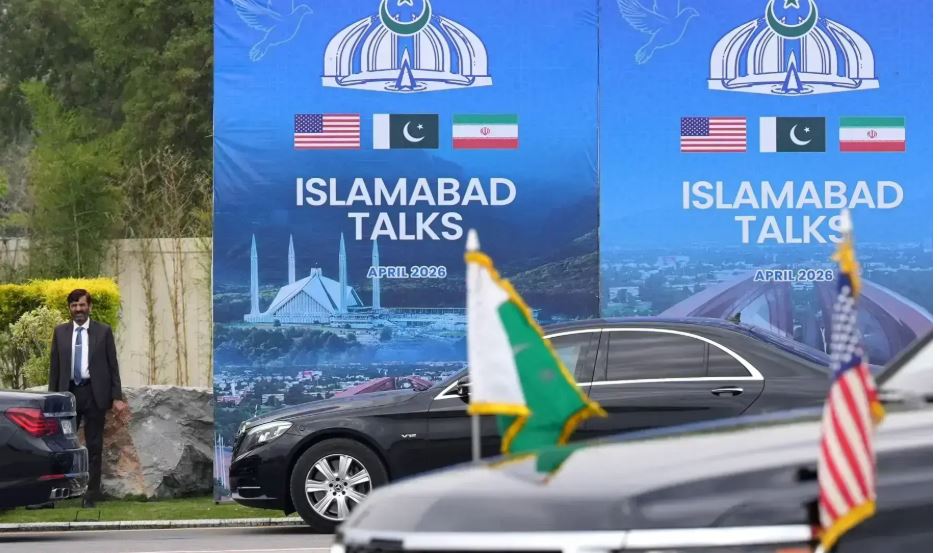
For Pakistan, this landscape offers an open field fraught with challenges. The nation has utilized its diplomatic cards with significant wisdom, earning acknowledgment from even its adversaries. Pakistan continues to play a sophisticated role, balancing its relations with both sides while the world watches. However, the current “euphoria” among the public must be tempered with patience and caution. As the global center of gravity shifts, Pakistan must manage its increasing responsibilities with strategic depth.
US-Iran Negotiations in Islamabad Signal Potential Regional De-escalation
The Institutional Cycle: A Final Lesson
The current political transition brings to mind a classic administrative anecdote. A departing chief executive once left three envelopes for his successor to open during times of crisis. The first advised, “Blame your predecessor.” The second suggested “Implement Business Process Re-engineering (BPR).” The third, and final, envelope warned: “Prepare three envelopes for your own successor.”
This cycle mirrors the current state of global leadership. As the US-Iran peace negotiations 2026 reach a definitive stage, the world waits to see if the outcome will be lasting peace or merely the preparation of the next envelope.