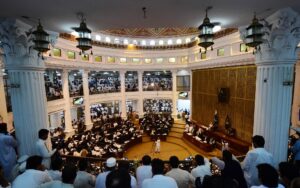

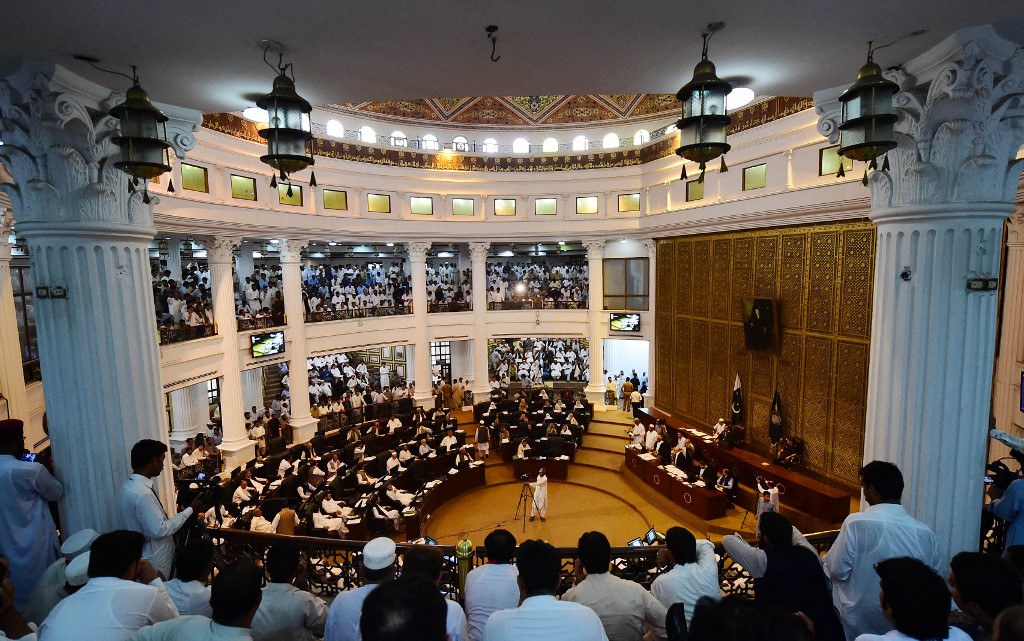
PESHAWAR — The decision to convene the Khyber Pakhtunkhwa Assembly session in a cricket stadium ostensibly aimed to modernize the democratic process.
Proponents argued that the move would allow the public to witness the proceedings of their elected representatives firsthand, making the legislative process more open and accessible.
However, the lack of measures to ensure genuine public participation and the practical outcomes of this experiment have cast doubt on these claims from multiple perspectives.
KP Assembly Approves Brick Kiln Registration Bill 2024
The Reality of Public Exclusion
In reality, this unconventional session pushed citizens away rather than bringing them closer to the state. Strict traffic closures, extensive blockades, and extraordinary security arrangements across the city severely disrupted daily life. The very citizens in whose name the government conducted this experiment found themselves excluded from the entire process. Instead of broad public involvement, the situation devolved into a limited and tightly controlled environment.
Political Fragmentation and Opposition Boycott
On a political level, the Khyber Pakhtunkhwa Assembly session in Imran Khan Cricket Stadium failed to generate any consensus. Opposition parties boycotted the event entirely, labeling it a “political show” that defied parliamentary traditions.
They maintained that such administrative dramas and heavy expenditures serve as tools for political branding rather than solving public grievances. The opposition leader dismissed the activity as an exhibitionist exercise, claiming the government prioritized imagery over serious legislation.
Impact on Institutional Dignity
Critics argue that moving a serious constitutional body like the Assembly into a stadium environment compromised its dignity and traditional solemnity. While the concept of bringing democratic institutions closer to the people remains vital, symbolic and expensive experiments rarely achieve this goal. Genuine progress requires public access, transparency, and effective law-making rather than temporary impression-building.
The Question of Lasting Impact
This entire experience revives a fundamental question: do such actions strengthen democracy or merely reinforce political narratives? Claims of proximity lose their meaning when the state keeps the public at a distance during the actual event.
The Khyber Pakhtunkhwa government must seriously consider that institutional strength grows from continuity and real inclusion, not from non-traditional spectacles. Ultimately, while the Khyber Pakhtunkhwa Assembly stadium session created a fleeting impression, it generated more criticism than lasting utility.