
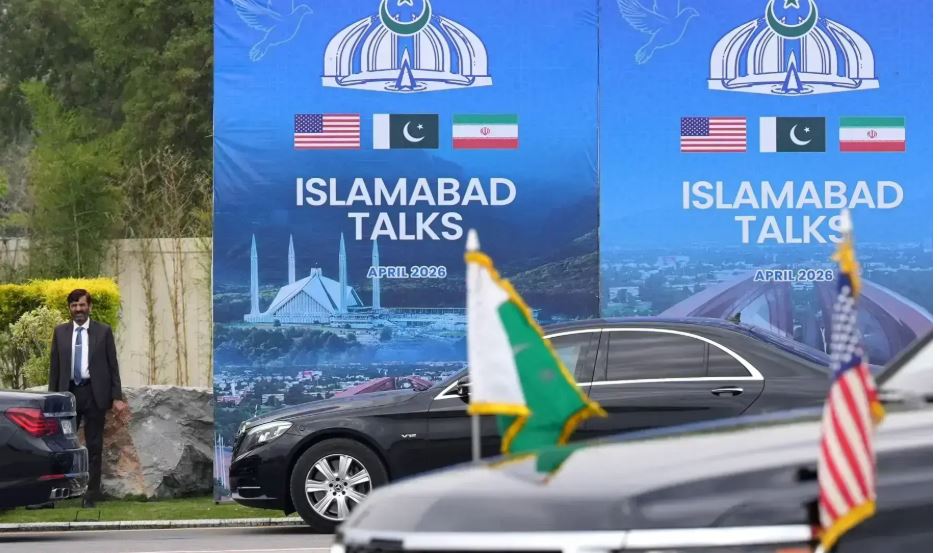
PESHAWAR – Global media outlets currently resonate with reports regarding the second round of US-Iran negotiations in Islamabad. While official confirmation remains pending, diplomatic circles view this as a serious and expected development.
The atmosphere suggests that intense back-channel diplomacy has reached a stage where progress appears inevitable. Both Tehran and Washington now operate under a unique pressure where the need for reconciliation outweighs the impulse for resistance.
Trump Announces Migration Suspension After White House Shooting
Economic Constraints and Political Isolation
The US-Iran negotiations in Islamabad stem from a convergence of domestic and economic crises. Iran faces immense war expenditures and regional tensions, while the United States grapples with a perception of global isolation and uncertain support from traditional allies. For President Donald Trump, this issue has transcended foreign policy to become a matter of political survival.
As internal political pressure mounts to resolve these long-standing regional frictions, the president increasingly finds himself isolated within the White House.
Iran-Israel War: 10 Dead as Iran Targets Israeli Cities Overnight
The sensitivity of the Strait of Hormuz significantly influences the entire scenario. There could be disastrous consequences for the world economy if this waterway is closed. This threat compels major powers—most notably China—to signal their interest in de-escalating the tension. The cautious strategies of other nations reflect a broader global consensus seeking stability in a region pushed to its breaking point.
The Significance of a Second Round
In this context, the expected second round of US-Iran negotiations in Islamabad represents more than a mere diplomatic activity; it serves as an extension of a process gradually moving toward a conclusion. While this dialogue may not yield an immediate solution, its continuity acts as the primary marker of progress. Both parties have reached a junction where the path of war has become prohibitively expensive and dangerously uncertain.
Is Iran Running Out of Missiles Amid Intensified Israel Aggression?
A New Regional Balance
Despite the complexities, the path of the US-Iran negotiations in Islamabad has become a necessary choice. If the current momentum persists, these sustained diplomatic efforts may eventually culminate in an agreement that does more than reduce temporary tension. It could lay the foundation for a new regional balance.
History often changes course at such intersections where pressure, interests, and strategy meet. The world now looks toward Islamabad’s hosting role with a sense of cautious optimism, waiting to see if this diplomatic window can finally alter the trajectory of the Middle East.