
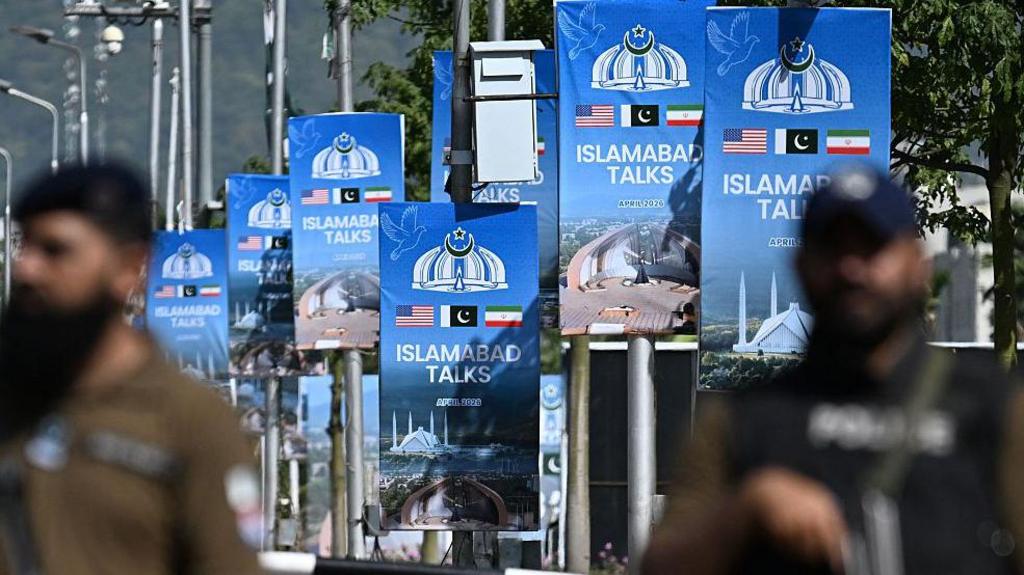
ISLAMABAD — U.S. President Donald Trump announced on Saturday that he has canceled the scheduled visit of his special envoys, Steve Witkoff and Jared Kushner, to Pakistan. This decision followed the departure of an Iranian delegation from Islamabad, which returned to Tehran earlier that day without engaging in direct dialogue with American representatives.
Diplomacy Hits a Deadlock
Despite Pakistan’s persistent efforts to mediate a second round of US-Iran peace talks in Islamabad, the diplomatic breakthrough remains elusive. An Iranian delegation, led by Foreign Minister Abbas Araghchi, arrived in the Pakistani capital on Thursday night. Over two days, Araghchi held high-level meetings with Prime Minister Shehbaz Sharif, Foreign Minister Ishaq Dar, and Chief of Army Staff Field Marshal Asim Munir.
Iran Rejects Further Talks with United States
However, Tehran maintained a firm stance against direct dialogue with Washington. Following a two-hour concluding meeting with Prime Minister Sharif on Saturday afternoon, the Iranian team departed for Tehran, leaving Pakistani officials with a list of demands and formal reservations regarding U.S. proposals.
Had a warm and constructive telephone exchange this evening with my brother, President Masoud Pezeshkian, on the evolving regional situation.
— Shehbaz Sharif (@CMShehbaz) April 25, 2026
I appreciated Iran’s continued engagement, including the high-level delegation to Islamabad led by Foreign Minister Abbas Araghchi, whom…
Trump’s Reaction: “No Results, No Travel”
Shortly after the Iranian delegation’s departure, President Trump explained his decision during an interview with Fox News. He stated that he instructed Witkoff and Kushner to abort their trip to avoid a fruitless diplomatic exercise.
“I just told my delegates, who were preparing to leave: No, you are not going to fly 18 hours to Islamabad just to sit there and talk with no results,” Trump asserted.
The U.S. President placed the burden of progress on Iran, suggesting that Washington holds the necessary leverage. He noted that while his envoys remain ready, they will not undertake the journey unless a productive outcome is guaranteed. “They can call us whenever they want,” Trump added, emphasizing that the U.S. currently “holds all the cards.”
The Challenges of Mediation
Two weeks ago, Islamabad hosted the first round of direct US-Iran peace talks in Islamabad. While those talks established a temporary ceasefire, they failed to produce a long-term agreement. Major disputes continue to stall progress, specifically regarding:
- The Strait of Hormuz: Disagreements over reopening the vital shipping lane and clearing naval mines.
- Nuclear Program: Iran’s nuclear program remain a primary point of contention for the Trump administration.
- Direct vs. Indirect Dialogue: Iran’s current reluctance to face U.S. officials directly complicates Pakistan’s role as a mediator.
Regional Tensions Persist
While Pakistan intensifies its diplomatic efforts, the regional backdrop remains volatile. Recent Israeli strikes in Southern Lebanon and ongoing maritime tensions in the Strait of Hormuz cast a shadow over the peace process. Sources indicate that Iran has handed over its specific conditions to Pakistan, highlighting deep-seated skepticism toward the terms proposed by the Trump administration.
Prime Minister Shehbaz Sharif described the meetings with the Iranian delegation as “pleasant and friendly.” He reaffirmed Pakistan’s commitment to regional stability through diplomacy. However, with the U.S. envoys’ visit now canceled, any future negotiations will likely return to an indirect format, with Pakistan acting as the primary conduit for messaging between Washington and Tehran.