
PESHAWAR – For years, Afghanistan-Pakistan relations have moved between cooperation and confrontation, but the latest deterioration suggests that both countries have reached a point where continuing with familiar policies could carry serious costs.
The address by Afghanistan’s Chargé d’Affaires, Sardar Ahmad Shakib, at Pakistan’s National Defence University offered an unusual opportunity to hear Kabul’s position directly before senior Pakistani defence and intelligence officials.
Also Read: Afghan Ambassador Says Pakistan-Afghanistan Relations Shape Stability and Trade
Shakib repeated the Taliban government’s assertion that it would not allow Afghan territory to be used against Pakistan. But he also challenged Islamabad’s approach, arguing that security concerns should not automatically become a justification for military action inside Afghanistan.
His central message was straightforward: if Pakistan expects cooperation from Kabul on security, it must also engage directly with Afghanistan over its own concerns. Security allegations, he argued, should be based on specific and credible information identifying individuals, networks and incidents rather than broad accusations.
That argument deserves serious consideration, even where Pakistan disagrees with it.
The deterioration in Afghanistan-Pakistan relations has been particularly disappointing because Islamabad initially welcomed the Taliban’s return to power in August 2021 with expectations that the new government would help address militant threats along the border. Those expectations have since given way to deep mistrust.
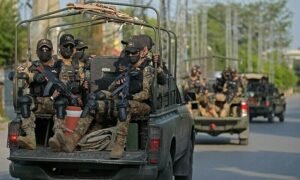
The dispute over militant groups, particularly Pakistan’s concerns about attacks originating from Afghan territory, has become one of the defining issues between the two neighbours. Pakistan has responded with military action inside Afghanistan, while Kabul has condemned such operations and accused Islamabad of violating Afghan sovereignty and causing civilian deaths.
Neither approach has produced a durable settlement.
The problem is larger than the immediate dispute over militancy. Pakistan and Afghanistan share a long, difficult history in which security, borders, trade, politics and communities have remained closely connected. Decades of war have created problems that cannot be separated neatly by an international frontier.
The region’s modern history also matters. Colonial-era border arrangements, the partition of British India and the conflicts of the Cold War created political and security structures whose consequences continue to shape Afghanistan-Pakistan relations. The Soviet invasion of Afghanistan in 1979 turned both countries into frontline states in a conflict that evolved through several phases but never truly disappeared.
Pakistan’s Afghanistan policy therefore deserves more than another short-term adjustment. Islamabad needs to examine whether policies developed under very different regional circumstances remain suitable for today’s Afghanistan.
That does not mean ignoring legitimate Pakistani security concerns. Nor does it require accepting every claim made by the Taliban government. It means recognising that military pressure alone cannot produce the kind of stable Afghan neighbour that Pakistan ultimately needs.
Kabul, meanwhile, cannot expect Pakistan to disregard militant threats allegedly emerging from Afghan territory. The Taliban authorities have a responsibility to demonstrate through concrete action that Afghanistan will not become a base for attacks against another country.
Sovereignty must work both ways. Afghanistan has the right to defend its territorial integrity, while Pakistan has the right to protect its citizens from credible security threats. The challenge is to establish mechanisms through which these competing concerns can be addressed without repeatedly pushing the two countries towards confrontation.
This is where Shakib’s appearance at the National Defence University becomes significant. Whatever the disagreements surrounding his government’s policies, allowing an Afghan representative to put Kabul’s position directly before Pakistan’s security establishment is preferable to communicating through public accusations, border closures or military strikes.
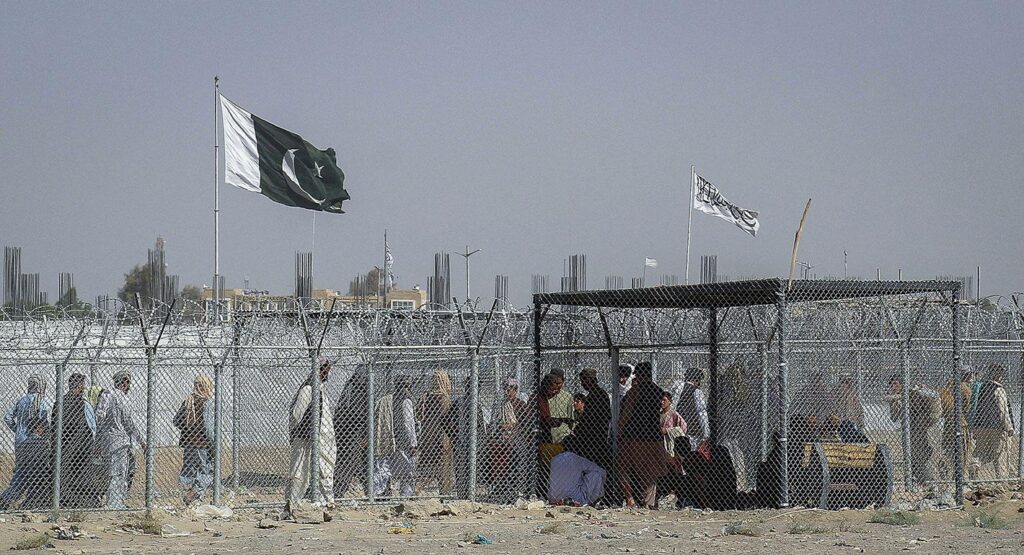
Afghanistan-Pakistan relations also cannot survive indefinitely without functioning diplomatic and economic channels. Restrictions on trade and movement may create pressure in the short term, but prolonged disruption can deepen public resentment and create opportunities for actors who have little interest in stability.
Pakistan has much to gain from a stable, economically connected and diplomatically engaged Afghanistan. Afghanistan, for its part, cannot afford to treat Pakistan as an adversary that can simply be ignored.
The alternative is a cycle in which militancy produces accusations, accusations produce military action, military action produces retaliation and retaliation further destroys diplomatic trust.
Breaking that cycle requires political courage on both sides.
Pakistan should use the current moment to reassess its Afghanistan policy, restore meaningful diplomatic engagement and pursue security cooperation based on evidence and direct communication. Kabul should respond with credible measures against groups that threaten Pakistan and demonstrate greater willingness to address Islamabad’s concerns.
The choice before both countries is not between trust and mistrust. It is between managing their disagreements through sustained engagement or allowing those disagreements to become increasingly dangerous.
After decades of conflict, Afghanistan-Pakistan relations need fewer inherited assumptions and more realism. Neither country can change its geography. Both, however, can change the way they deal with it.