
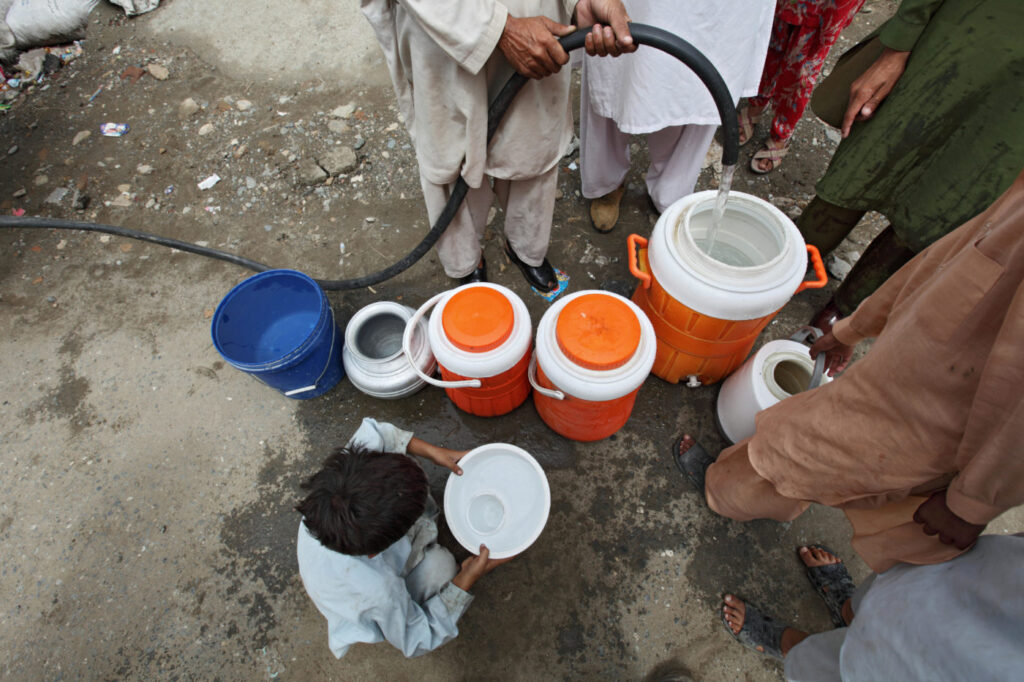
PESHAWAR – Peshawar faces an escalating water crisis as intense heatwaves continue to drive groundwater levels deeper underground. Unregulated and illegal boring practices across the city have exacerbated the situation, leading to critical water shortages in various residential areas.
Residents and officials are raising alarms as the scarcity threatens to become a major public health and infrastructure challenge for the capital of Khyber Pakhtunkhwa.
A National Emergency: Pakistan’s Water Scarcity Rankings
The crisis in Peshawar mirrors a broader national disaster. Pakistan is currently ranked 14th globally among countries facing severe water scarcity. Experts warn that this decline poses a grave threat to the country’s agricultural sector, food security, and overall economic stability.
Also Read: Peshawar Water Crisis: 80% of City’s Supply Is Contaminated, UNICEF Warns

Historical data paints a concerning picture:
- In 1951, the per capita water availability stood at 5,260 cubic meters.
- Over the decades, this figure has plummeted to less than 1,000 cubic meters, marking a critical threshold.
Environmental Impacts and Policy Failures
Climate change remains a primary driver of these challenges. Increasing temperatures, erratic monsoon patterns, prolonged droughts, and frequent flooding are significantly disrupting agricultural productivity. However, the report highlights that the agrarian crisis is not solely due to climate change; poor policy execution and administrative failures are equally responsible.
Also Read: Water Crises in Pakistan : Center seeks Action Plan for Water Resources Management from Provinces
Contributing factors to the current environmental and agricultural strain include:
- Ineffective irrigation systems.
- Declining soil fertility.
- Excessive and uncontrolled use of chemical fertilizers and agricultural pesticides.
- Continuous monocropping (cultivating the same crop repeatedly).
Impact on Economy and Employment
The agricultural sector is a pillar of Pakistan’s economy, contributing 24% to the Gross Domestic Product (GDP). Furthermore, it provides employment to over 37% of the total workforce. As this vital sector faces mounting pressure from water shortages and climate-induced heatwaves, the livelihood of millions remains at risk. Urgent administrative reforms and sustainable water management policies are now required to mitigate these long-term threats.