
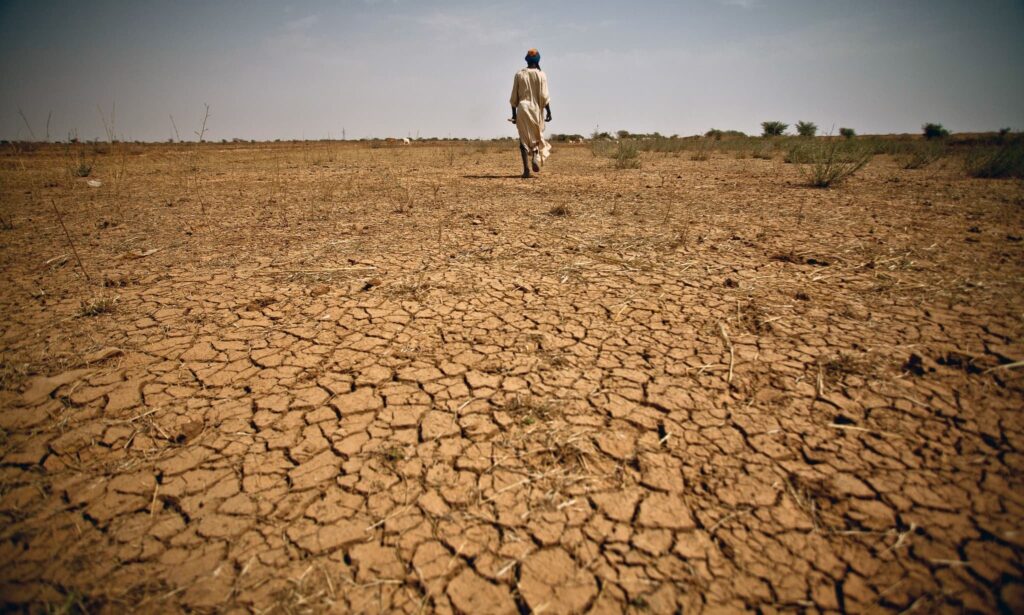
PESHAWAR—A severe drought crisis is now looming over several regions across the country. Consequently, the federal government has issued urgent directives to provincial administrations. Local authorities must brace for escalating water scarcity and potential famine risks.
Furthermore, large swaths of the territory are currently facing critical environmental vulnerability. This is a direct result of prolonged dry spells and rapid desertification.
Climate Change in Khyber Pakhtunkhwa: A Growing Financial Concern
Drought-Affected Districts in Pakistan Identified
To tackle this, the federal government has officially mapped out the crisis zones. This vulnerability map isolates the specific drought-affected districts facing the most intense threat.
While certain regions are inherently more arid, shifting climate patterns have rapidly expanded these danger zones. Therefore, extreme water stress now threatens local agriculture, livestock survival, and regional food security.
The Threat Profile: Risk Assessment & Impact
The immediate focus of the current crisis centers around three critical threat areas:
- Agricultural and Famine Risks: Vulnerable zones are facing crop failures. As a result, water shortages have raised the immediate threat of localized famine.
- Socio-economic Fallout: Prolonged dry spells are threatening rural livelihoods. Consequently, millions of farmers who depend entirely on predictable weather are at risk.
- Eco-Volatility: Rapid environmental degradation is changing the landscape. In fact, it is permanently altering soil fertility in the high-risk zones. Thus, immediate mitigation is critical.
KP Launches Climate Action Board to Tackle Environmental Crisis
Strategic Shift: Implementing Pre-Emptive Early Warning Systems
Recognizing the severity of the situation, the national strategy is shifting away from reactive disaster management. Instead, the focus has turned to proactive threat detection.
Key Strategy Change: The backbone of the current strategy relies on a robust Early Warning System. This system is designed to forecast, detect, and evaluate threats across all drought affected districts in Pakistan well before they devastate local economies.
National Mobilization and Action Framework
To combat these immediate threats, the Ministry of Climate Change and Environmental Coordination has submitted a comprehensive blueprint. This plan was developed under the United Nations Convention to Combat Desertification (UNCCD).
Climate Change Threats in KP: Governor Kundi Urges Unified Action
Meanwhile, Inspector General of Forests Dr. Syyed Moazzam Nizami is leading the federal oversight. His office has demanded immediate, updated action reports from Chief Secretaries across all provinces, Azad Jammu and Kashmir (AJK), and Gilgit-Baltistan (GB).
In response, administrative machinery has initiated fast-tracked bureaucratic operations. This is particularly true in Khyber Pakhtunkhwa. Local officials are deploying resources to the mapped high-risk zones. Additionally, they are focusing on inter-departmental synergy and transparent fund distribution to minimize damage.