
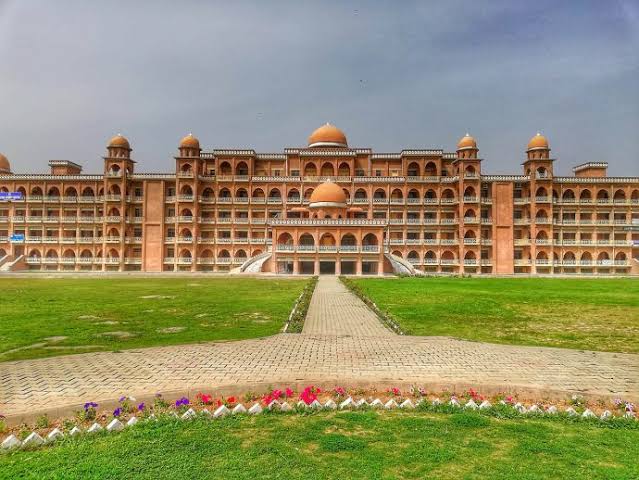
PESHAWAR – A drowning man clutches at straws. University of Peshawar’s (UoP) employees are doing exactly that.
Teachers wrote to nearly every major leader in the country, laying out the university’s financial collapse in plain terms. Silence answered them. Sources close to the Teachers Association say a separate appeal, addressed directly to the chancellor, vanished somewhere inside his own secretariat.
Compare that to Punjab’s chief minister, who at least picked up the phone to ask what was needed. In a country like ours, that small gesture almost passes for generosity.
Also Read: Peshawar University Suspends Academic Operations Amid Financial Crisis
A Secretariat That Loses Letters
For anyone who understands what a secretariat is actually for, a letter disappearing inside one isn’t a bureaucratic accident. It’s a small, telling miracle.
And here is the real tragedy: retired Class IV employees, sick and unsupported, can no longer afford their own medicine while waiting for pensions that never arrive.
Three Crises, One Country
Pakistan is wrestling with three grave problems at once—a collapsing education system, the mounting threat of climate change, and the persistent scourge of terrorism. The honest question is simple: what are we actually doing about any of them?
Also Read: Audit report reveals illegal use of employees’ funds at University of Peshawar
Is it invisible to everyone that employees at one of the country’s oldest universities have gone two months without salaries or pensions? That scholarships for its poorest students have quietly become a memory? Has the spirit of sacrifice for education simply died its own death—and can our collective indifference lead anywhere except a darker future?
The Math That Doesn’t Add Up
A 7 percent raise in salaries and pensions is coming—barely a pinch of salt in the flour. But the real question is what happens when that raise becomes payable from July 1, 2026. Will the university receive additional funding to cover it?
History gives a blunt answer: it won’t. And when it doesn’t, Peshawar University’s monthly expenditure—currently Rs60 crore—will climb toward Rs70 crore.
Meanwhile, the federal government’s first and smallest grant installment won’t land until late July. What the provincial government will contribute remains anyone’s guess.
Also Read: Peshawar University Suspends Academic Operations Amid Financial Crisis
Even if Punjab’s chief minister does step in, and salaries and pensions are partially resolved, one question still hangs in the air: how does a university actually run? Because a fiscal year, inconveniently, has twelve months—not two.
Where Indifference Leads
There’s no real mystery here. Where there’s no will to improve, no vision, and no sense of urgency; where accountability is nowhere in sight; and where education simply isn’t a priority for those holding power—what outcome did anyone expect?
Suppose Punjab’s chief minister does cover two months of salaries and pensions, easing the worst of Class IV employees’ hardship. What happens in the ten months that follow? If the government, university administration, and employees alike keep failing to play their respective parts, Pakistan’s oldest seats of learning may soon need a new plaque on its front gate—one marking it as the city’s second grand museum.