

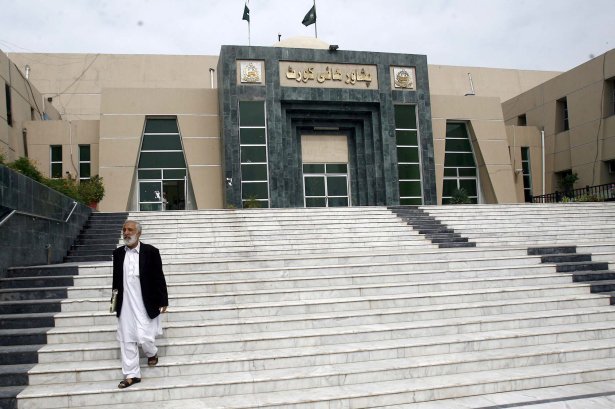
PESHAWAR: The Peshawar High Court has questioned the legality of placing citizens on travel restriction lists solely on the basis of FIRs or intelligence reports, stressing that authorities must follow established legal standards.
A two-member bench comprising Justice Syed Arshad Ali and Justice Babar Sattar heard a petition filed by Dr Amjad Ali, a member of the National Assembly whose name was placed on the PCL, restricting his ability to travel abroad.
During the hearing, the court questioned how the government could prevent Dr Amjad Ali from travelling when he had not been convicted in any case.
The petitioner’s lawyer, Barrister Amirullah Chamkani, told the court that his client was an elected member of the National Assembly and had been stopped from travelling after authorities placed his name on the list.
The government’s Assistant Attorney General told the bench that Dr Amjad Ali was named in FIRs.
The Peshawar High Court responded that previous court judgments had established that authorities could not place a person on a travel restriction list merely because an FIR existed or an intelligence agency had submitted a report.
Justice Babar Sattar stressed that the same principle should apply to every citizen, regardless of political or parliamentary status.
The court’s observations raise broader questions about the use of travel restriction mechanisms in Pakistan and the legal safeguards available to citizens facing restrictions without a conviction.
The Peshawar High Court has reserved its decision in the case.
The proceedings highlight the tension between the state’s authority to restrict travel in specific legal circumstances and an individual’s right to move freely unless authorities establish a lawful basis for imposing such restrictions.