
PESHAWAR — The Khyber Pakhtunkhwa Higher Education Department (HED) has announced the results of its inaugural provincial university ranking system, marking a first-of-its-kind initiative in Pakistan.
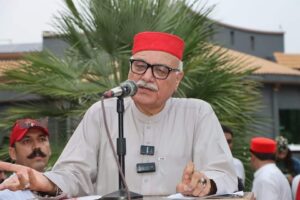
The provincial Minister for Higher Education and Local Government, Meena Khan Afridi, announced the detailed rankings during a special press conference. Provincial Information Minister Shafi Jan and vice-chancellors from various universities also attended the high-profile media briefing.
HED Launches New KP University Ranking System to Evaluate Performance
The Ranking Methodology and Framework
Minister Meena Khan Afridi explained that the department adopted actionable performance metrics derived from reputable international and national ranking frameworks to evaluate the institutions.
The evaluation committee completed the rigorous assessment process using a comprehensive matrix consisting of:
- 12 Core Indicators
- 66 Sub-Indicators
The framework categorized 43 participating higher education institutions across five distinct functional classifications to ensure fair benchmarking.
Women University Swabi Leads KP in Greenmetric Ranking
IMSciences Dominates Overall and General Categories
In the overall ranking of all 43 universities, the Institute of Management Sciences (IMSciences) Peshawar clinched the prestigious first position. Hazara University secured the second spot, followed closely by the Pak-Austria Fachhochschule: Institute of Applied Sciences and Technology (PAF-IAST), Haripur in third place.
The assessment mirrored these results within the specific General Universities Category, where IMSciences Peshawar, Hazara University, and the University of Malakand secured the first, second, and third positions, respectively.
Federal govt approves major projects for Hazara University, University of Malakand
Technical and Emerging Categories Leaderboard
The ranking system separated specialized and newer institutions to track targeted educational performance:
Technical Universities Category
The University of Engineering and Technology (UET) Peshawar topped the technical category. Khyber Medical University (KMU) secured the second position, while the University of Agriculture, Peshawar ranked third.
Emerging Universities Category (Institutions established after 2011)
Pak-Austria Fachhochschule (PAF-IAST), Haripur led this category in first place. The Shuhada-e-Army Public School (APS) University of Technology, Nowshera secured second place, while the University of Haripur finished third.
GIK Institute Leads Private Sector Rankings
The evaluation also measured the performance of private sector higher education institutions across the province:
| Rank | Institution |
| 1st | Ghulam Ishaq Khan Institute of Engineering Sciences and Technology (GIKI), Swabi |
| 2nd | CECOS University of Information Technology and Emerging Sciences, Peshawar |
| 3rd | Qurtuba University of Science and Information Technology, Dera Ismail Khan |
Performance-Linked Funding and Long-Term Vision
Minister Afridi emphasized that Khyber Pakhtunkhwa is the first province in Pakistan to introduce a localized university ranking system. The initiative aims to drive healthy competition, enhance educational quality, stimulate academic research, and optimize administrative efficiency across campuses.
Furthermore, the Minister announced that the provincial government will now link future financial allocations to these metrics, distributing performance-based grants according to the annual rankings, which the department will publish regularly every year.
Women University Swabi updates curriculum of 17 departments
Reflecting on infrastructural expansion, Afridi noted that Khyber Pakhtunkhwa established 14 new universities over the past 13 years. He promised that the upcoming provincial budget would introduce enhanced incentives and facilities for students.
Drawing a budgetary comparison with Punjab, the Minister concluded that when evaluating population ratios alongside educational expenditures, Khyber Pakhtunkhwa is investing significantly more aggressively in its higher education sector.