
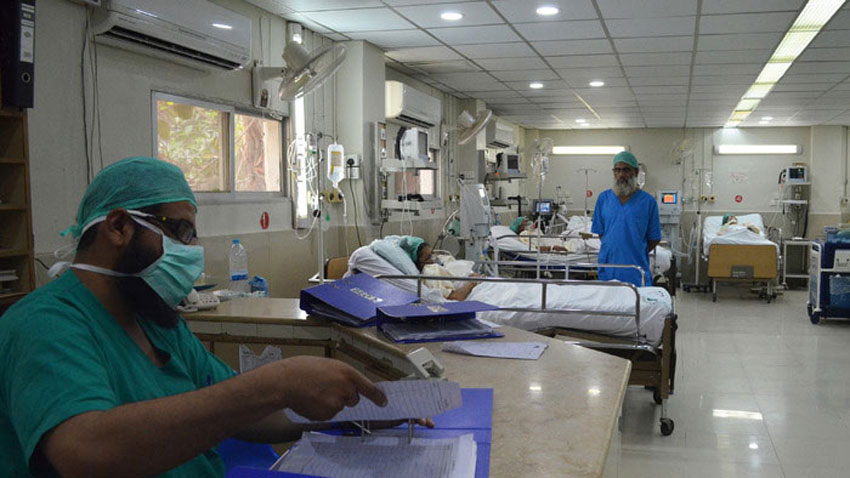
PESHAWAR — Despite a massive surge in public funding, structural issues plague most healthcare facilities in Khyber Pakhtunkhwa (KP).
According to the newly released Technical Working Group (TWG) Disparity Report, a severe gap persists in fund distribution. Therefore, several underprivileged regions continue to suffer from acute medical backwardness.
Also Read: KP Announces Recruitment of 2,439 Healthcare Professional
Development Share Frozen Despite Massive Budget Hike
The provincial healthcare financial layout has seen exponential growth over the last few years. Specifically, the total budget skyrocketed from PKR 151.9 billion in FY 2020-21 to a staggering PKR 275.4 billion in FY 2025-26.
However, structural progress has stalled completely.
Key Finding: The development share of the healthcare budget remains strictly frozen at just 17% to 18%. Because of this stagnation, the state has failed to bring any revolutionary upgrades to existing healthcare facilities in KP.
Also Read: Mercury in Skin-Whitening Creams in Raises Health, Safety Concerns
Severe Shortage of BHUs and Secondary Hospitals
Currently, the medical sector caters to a massive population of approximately 41 million people. To manage this, the department utilizes over 2,600 healthcare facilities in KP and a workforce of 90,000 employees.
Nevertheless, public hospitals are buckling under immense pressure. Annually, these facilities handle over:
- 46.6 million Outpatient Department (OPD) visits
- 2.2 million patient admissions
- 330,000 maternity and delivery cases
This heavy load has exposed massive gaps in infrastructure. Most notably, the province faces a critical shortfall of over 1,700 basic health units (BHUs). Furthermore, there is an alarming deficit of more than 500 secondary-level hospitals across the territory.
Also Read: Khyber Pakhtunkhwa Engages Psychologists to Aid Flood Victims’ Mental Health
Marginalized Districts Left Behind
Due to the unequal distribution of operational funds, certain regions are experiencing severe medical deprivation. For instance, healthcare facilities in KP located in districts such as Torghar, Upper Kohistan, Lower Kohistan, and Hangu remain completely stripped of basic, reliable services.
To bridge this expanding divide, the TWG report strongly recommends a complete overhaul of the current fiscal strategy. Instead of relying on traditional historical budgeting, the government must shift toward need-based funding.
Additionally, experts suggest upgrading existing BHUs into 24/7 maternity centers. Finally, the report advises outsourcing dysfunctional or failing public hospitals to private management to ensure immediate relief for the public.