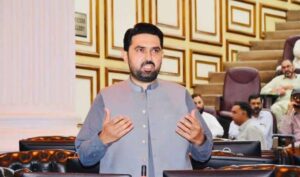


PESHAWAR – Governor Khyber Pakhtunkhwa, Faisal Karim Kundi, warned that the escalating impacts of climate change are no longer just environmental threats but are actively destabilizing agriculture, infrastructure, and the daily lives of citizens.
Speaking as the chief guest at the launch of the district adaptation plans for Karak and Charsadda, the governor emphasized that localized, district-level planning is the only viable path toward providing practical solutions to unique regional challenges.
Disaster Risk Reduction, Climate Change Adaptation Expo Opens
Strategic Alliances for Environmental Resilience
The event brought together high-level representatives from the Ministry of Climate Change and Environmental Coordination, the United Nations Environment Programme (UNEP), the Sustainable Development Policy Institute (SDPI), and the Planning and Development Department.
Governor Kundi lauded the collaborative efforts of these organizations, noting that the District Adaptation Plans represent a significant move toward evidence-based planning. “This initiative aligns our regional strategy with future global requirements,” the Governor remarked, praising the technical rigor behind the plans.
Disaster Risk Reduction, Climate Change Adaptation Expo Opens
Expanding the Scope of Adaptation
Highlighting the success of the pilot projects in Charsadda and Karak, the governor called for the immediate expansion of these District Adaptation Plans to all other districts across the province. He argued that a “one-size-fits-all” approach cannot address the diverse geographical needs of Khyber Pakhtunkhwa.
The current adaptation frameworks focus on several critical sectors:
- Agriculture and Water Management: Protecting crops from shifting weather patterns and securing water resources.
- Disaster Risk Reduction (DRR): Strengthening local response mechanisms to floods and droughts.
- Resilient Infrastructure: Building roads and buildings capable of withstanding extreme climate events.
- Social Inclusion: Ensuring human development and community participation in environmental conservation.
KP facing dual brunt of climate change, terrorism: Shafiullah
A Roadmap for the Future
Governor Kundi concluded by stating that preserving natural resources and ensuring social inclusion are the pillars of these plans. By prioritizing localized evidence over generalized assumptions, the province aims to build a defense against the socio-economic disruptions caused by global warming.