
PESHAWAR – There are moments in politics when a sentence carries consequences far beyond the person who speaks it. Maryam Nawaz Sharif’s recent remarks about terrorism and its alleged links to neighboring provinces came at precisely such a moment.
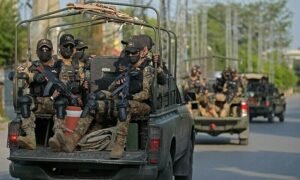
Pakistan is already confronting a renewed security challenge, while political tensions and mistrust between the provinces remain deeply rooted. In such circumstances, blaming one province for a national crisis does little to make the country safer.
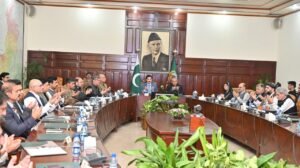
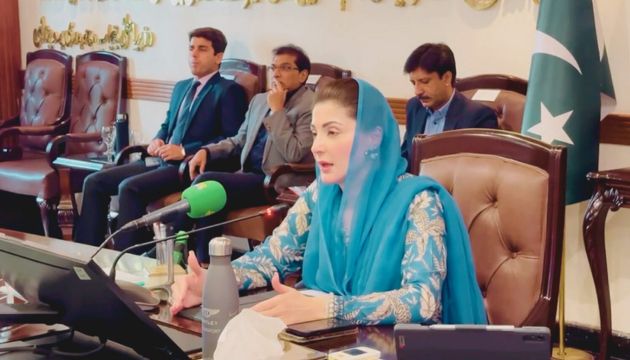
The Punjab chief minister said at an event that Punjab faced no threat from a neighboring state or from another province, but that terrorism incidents in Punjab originated from neighboring provinces. The remarks immediately drew criticism, particularly in Khyber Pakhtunkhwa and Balochistan.
Also Read: Why Pakistan’s War on Terror Remains Unresolved
The criticism is understandable. Khyber Pakhtunkhwa has endured years of violence and has repeatedly demanded stronger action against terrorism. Its people have paid a heavy price for militancy. To speak of the province primarily as a source of terrorism is to overlook the experience of millions who have themselves lived through that violence.
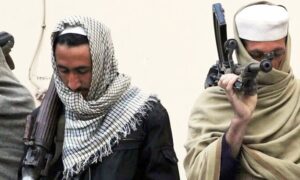
There is another reason for caution. Pakistan’s history of militancy is considerably more complicated than the political geography suggested by such remarks. The origins and development of militant organizations in the region stretch across borders, provinces, and institutions. The founding leaders of Tehrik-i-Taliban Pakistan, including Baitullah Mehsud, Hakimullah Mehsud, Mullah Fazlullah, and its current chief, Mufti Noor Wali Mehsud, are Pashtuns. But that is only one part of the story.
The formation of the Afghan Taliban in October 1994, the emergence of its sub-organization in Swat in 2005 and the formal establishment of Tehrik-i-Taliban Pakistan in December 2007 belong to a much wider history. That history also raises questions about the roles played at different stages by figures including Nasirullah Babar, Mullah Omar, Hafiz Gul, Asad Durrani, and Colonel Imam, among others.
Also Read: Resurgence of Terrorism in KP: A Grave Threat to National Stability
These questions cannot simply be wished away by attributing militancy to a particular province or ethnic group. Nor can the history of militancy in the former tribal areas be separated from the presence of what became known as the “Punjabi Taliban.” From 2005 to 2014, groups and fighters described in these terms were present in Miranshah and Mir Ali in North Waziristan, where they operated within the wider militant landscape.
This history matters because it demonstrates how misleading it can be to draw a straight line between geography and terrorism. Some militant organizations also maintained centers and networks in Punjab, particularly in Lahore, according to the argument advanced by the writer. The point is not to shift the blame from one province to another. It is to recognize that Pakistan’s militancy problem has never respected provincial boundaries.
That distinction should be central to any serious political discussion.
The danger of turning history into blame
Pakistan’s experience with militancy is inseparable from the Afghan conflict and the policies that developed around it. The writer argues that the Talibanization of Pakistan grew out of that wider Afghan conflict and that Pakistan’s military establishment remained prominently involved on the front line during the Afghan war.
Also Read: ANP Demands Accountability for Terror Resettlement, Honors Bilour Family
The Afghan war also generated longstanding questions about the conduct and interests of military and intelligence officials, including allegations that some individuals benefited from the conflict and transferred wealth abroad. These are serious historical and political questions. They deserve examination rather than convenient political amnesia.
Since Pakistan’s creation, there have also been persistent allegations that state institutions have prioritized Punjab’s interests. Governments led by the Sharif family have repeatedly faced accusations of treating other provinces, particularly Khyber Pakhtunkhwa, unfairly.
Whether one accepts every aspect of that argument or not, the perception itself has political consequences. The federal structure of Pakistan depends on trust between its provinces. That trust becomes particularly fragile when political leaders appear to speak about one province as though its population and militant organizations were interchangeable.
Also Read: External Elements Behind Terrorism in Pakistan, Says Ulema Council Chief
They are not. A province cannot be held collectively responsible for armed groups operating within it. Nor can an entire population be reduced to the actions of organizations that have inflicted violence on that very population.
The question of resources
There is another dimension to this debate: resources. Punjab has limited supplies of water, minerals, and energy compared with the demands of its population and economy, while it depends significantly on resources from other parts of Pakistan, particularly Khyber Pakhtunkhwa and Kashmir.
This interdependence should encourage cooperation, not suspicion. Pakistan’s provinces are economically and geographically connected. Water, energy, minerals, trade, and security do not stop at provincial borders. Neither does terrorism.
That is why the response to terrorism cannot be built around provincial accusations.
A political responsibility
Maryam Nawaz, as chief minister of the country’s largest province, carries particular political responsibility for the language she uses. The writer argues that she should have considered the consequences of her remarks before making them and consulted senior political figures, including her father, former prime minister Nawaz Sharif, and her uncle, Prime Minister Shehbaz Sharif.
Also Read: Govt to Revoke Citizenship of Terrorists Residing in Afghanistan
But the larger issue goes beyond the Sharif family. Pakistan needs its political leaders to lower the temperature, not raise it. When a country is already dealing with insecurity, economic pressures, and political polarization, statements that deepen hostility between provinces can only make national cohesion harder to achieve.
The reaction from Khyber Pakhtunkhwa has reflected that concern. Awami National Party president Aimal Wali Khan and National Democratic Movement leader Mohsin Dawar have criticized Maryam Nawaz’s remarks. They have also questioned the direction of responsibility, with the argument that Khyber Pakhtunkhwa itself has reasons to fear the policies and attitudes emanating from Punjab.
Such exchanges may be politically inevitable, but they should not become the basis for another cycle of provincial resentment.
Terrorism belongs to Pakistan, not to one province
The central truth should be simple: terrorism is not the problem of Khyber Pakhtunkhwa alone. It is not the problem of Balochistan alone. And it is certainly not a problem that can be understood through ethnic or provincial labels.
The people of Khyber Pakhtunkhwa have been among the principal victims of terrorism. Its political parties and civil society have repeatedly demanded an end to militancy. Their concerns should be heard rather than dismissed.
Maryam Nawaz’s terrorism remarks have therefore opened a debate that is larger than one political speech. They raise questions about how Pakistan understands the history of militancy, how it distributes responsibility, and how its political leaders speak about the federation.
Also Read: Bajaur Military Operation Fears Trigger Mass Displacement
The answer cannot be found in blaming another province.
Pakistan needs an honest reckoning with the historical, political, and institutional factors that allowed militancy to take root. It needs equal treatment of its provinces and recognition of their constitutional rights. Above all, it needs a national security policy that treats terrorism as a threat to every Pakistani, regardless of province or ethnicity.
The temptation to find a convenient provincial culprit may be politically attractive. It is also dangerously short-sighted.
If the country’s leaders allow their words to deepen mistrust between provinces and nationalities, the consequences will not stop in Khyber Pakhtunkhwa, Balochistan, or Punjab. They will be felt across Pakistan.
Terrorism cannot be defeated by turning Pakistanis against one another. It requires confronting the past honestly, acknowledging the sacrifices of those who have suffered, and building a politics based on equal rights, mutual respect, and a shared national interest.
That would be a far more useful response to Pakistan’s security crisis than another round of provincial blame.