
PESHAWAR – A dangerous mindset has taken root in modern society, transforming public service and political office into overnight wealth-generation tools. While citizens express deep exhaustion over routine corruption, the sheer scale of the Kohistan corruption scandal has shaken the collective conscience. This massive Rs 40 billion embezzlement case originating from the underprivileged Kohistan district is not a mere financial irregularity—it exposes a sinister nexus of administrative laxity, bureaucratic collusion, and political patronage.
Kohistan Corruption Scandal accused seeks plea bargain, offers voluntary asset return
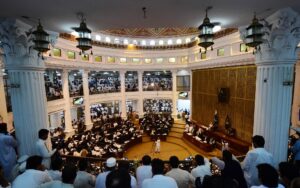
The true gravity of the situation emerged when the Public Accounts Committee of the Khyber Pakhtunkhwa (KP) Assembly intervened, suspending high-ranking officials across the Treasury and the Communication and Works (C&W) departments. This action opened a Pandora’s box of systemic plunder.
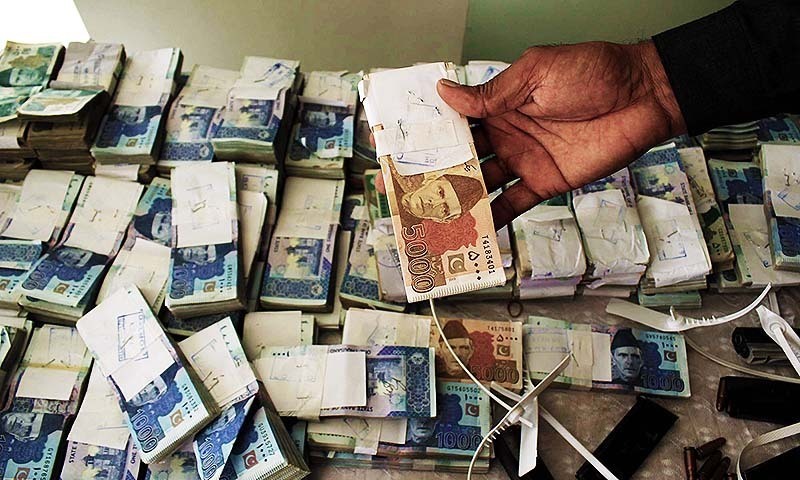
Recently, the central accused in the case, C&W Head Clerk Qaiser Iqbal, surrendered illegal assets worth over Rs 1.23 billion to the accountability court. Law enforcement agencies recovered local and foreign currency, gold, luxury vehicles, and palatial farmhouses from a subordinate clerk, illustrating a profound collapse of institutional oversight.
Upper Kohistan 36bn Scam: NAB Recovers Over 20bn In Early Probe
The ‘Sacred Triangle’ Shielding Corruption’s Masterminds
According to the latest report by the National Accountability Bureau (NAB) KP, anti-corruption authorities have arrested 41 suspects so far. Furthermore, six influential individuals utilized the legal loophole of “plea bargaining” to return Rs 8.43 billion, while NAB froze another Rs 420 million from various frontmen and anonymous accounts. While the freezing of Rs 27 billion in assets represents a temporary victory for recovery teams, critical questions echo across public circles.
Kohistan Corruption Scandal: Nab Moves to Freeze Assets In 40bn Rupees Fraud Case
A low-ranking clerk cannot execute a multi-billion rupee heist without powerful administrative backing and political patronage. Pakistan’s enduring tragedy remains its “sacred triangle”—a corrupt alliance of politicians, bureaucrats, and contractors who shield one another from legal consequences.
Historically, whenever a major mega-scandal breaks, authorities issue grand public statements, perform high-profile arrests, and dominate media headlines. Over time, however, the momentum fades. Mainstream architects of the scam escape entirely, while lower-tier employees become sacrificial lambs to close the official files.
The Kohistan corruption scandal explicitly unmasks how corrupt networks build hospitals, roads, and bridges exclusively on paper, diverting vital public development funds into the private bank accounts of a few elite families.
A Wake-Up Call for the KP Governance Model
While rulers consistently promise regional development, ground realities for ordinary citizens remain bleak. The Kohistan corruption scandal is not an isolated local crime; it serves as a loud alarm for the Pakistan Tehreek-e-Insaf (PTI) governance model, which has ruled the KP province for over thirteen years.
‘I Cannot Be Bought’: CM Vows to Recover Looted Wealth
If the provincial leadership genuinely intends to deliver on its foundational slogan of transparency, it must look beyond superficial arrests and political rhetoric. To establish true deterrence, the state must urgently implement structural reforms:
- Abolish Plea Bargain Vulnerabilities: The current plea bargain laws allow corrupt individuals to plunder public wealth, pay a fraction back to secure a clean chit, and walk free. This legal exit strategy requires immediate legislative revision.
- Digitalize the Financial Infrastructure: Authorities must fully digitalize the provincial financial system to ensure transparent auditing and real-time automated tracking of public funds.
If powerful masterminds escape the law once again, the public will lose all remaining faith in accountability institutions. History proves that when citizens lose trust in justice, the survival of political systems themselves hangs in the balance.