
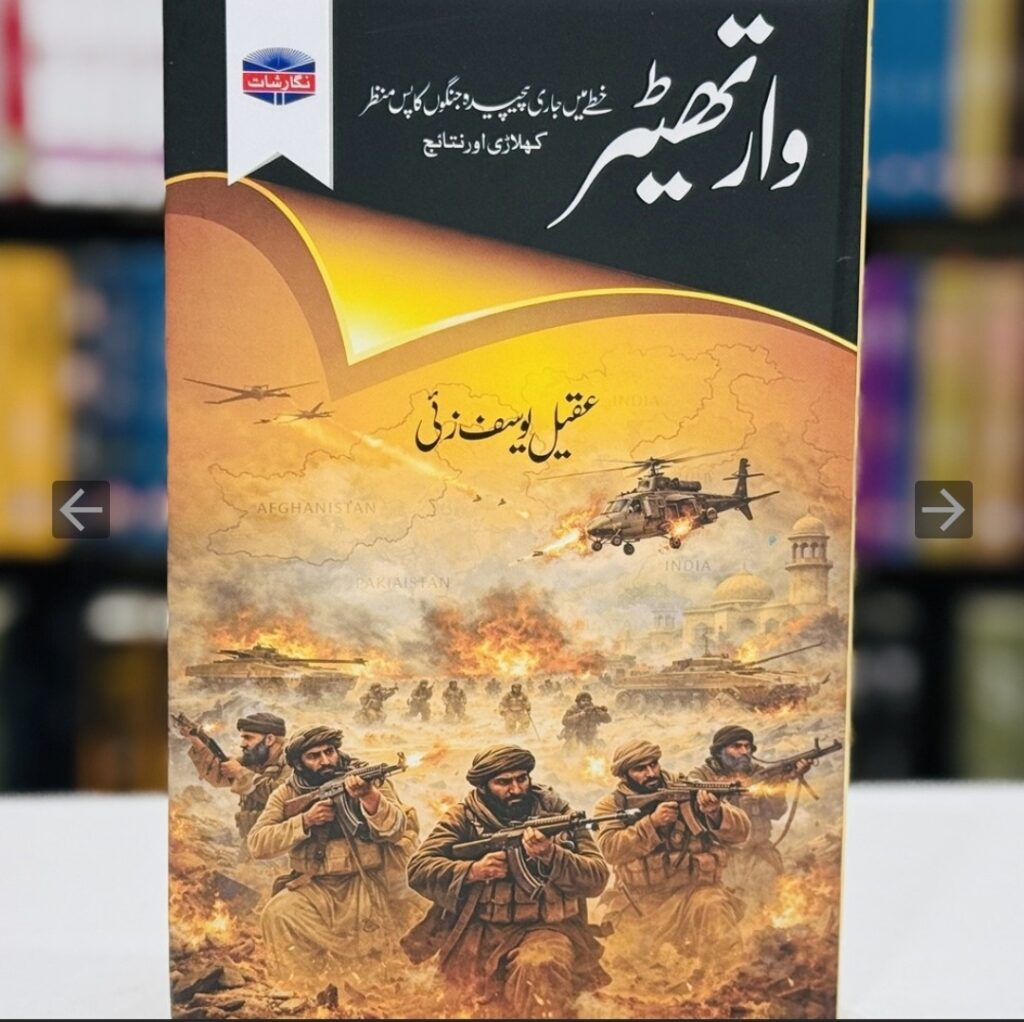
PESHAWAR — Senior journalist and security analyst Aqeel Yousafzai has launched his latest book, War Theatre, a detailed account of militancy, regional conflict, proxy warfare, and political instability shaping Pakistan and the wider region after the Taliban’s return to power in Afghanistan in 2021.
The launch of War Theatre comes at a time when Pakistan, particularly Khyber Pakhtunkhwa (KP) and Balochistan, continues to face an alarming rise in militant violence, cross-border attacks, and security challenges.
Through investigative reporting, historical analysis, and first-hand observations, Aqeel Yousafzai examines how regional powers, extremist networks, and political decisions transformed parts of South and Central Asia into what he describes as an ongoing “war theatre.”
‘Ali aur Zahra ki Kahaniyan’ Book Launch: Promoting Children’s Literature
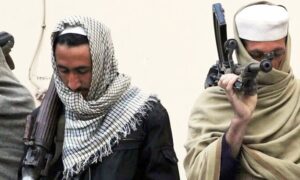
The book discusses key developments including the resurgence of the hardline militant group, Tehreek-e-Taliban Pakistan (TTP), cross-border militancy involving Afghanistan and Iran, Pakistan’s counter-terrorism operations, digital extremism, and the evolving geopolitical competition involving the United States, China, India, Iran, and Russia.
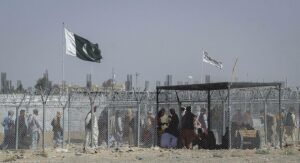
He argues that 2025 emerged as one of the most dangerous years for Pakistan’s security landscape, with thousands of militant attacks reported across the country. He states that KP and Balochistan remained at the center of violence while regional tensions intensified after military confrontations, cross-border operations, and growing instability in Afghanistan.
Why Pakistan’s War on Terror Remains Unresolved
The book also revisits critical historical developments, including the Soviet invasion of Afghanistan, the rise of Afghan militant groups during the Cold War, the post-September 11 security order, and Pakistan’s evolving role in regional conflicts. Yousafzai warns that repeated policy failures and proxy wars created long-term instability that still threatens the region today.
Prominent journalists and analysts, including Asma Shirazi and Hamid Mir, contributed special notes to the book. Shirazi described War Theatre as a powerful chronicle of the suffering endured by people in conflict-hit regions, particularly KP. She said Aqeel Yousafzai documented decades of violence with courage and consistency while highlighting the human cost of extremism and war.
KP facing dual brunt of climate change, terrorism: Shafiullah
Hamid Mir called the book an important historical record of the ongoing conflict in Pakistan and Afghanistan. He argued that regional powers repeatedly used the region for strategic interests, turning local populations into victims of prolonged geopolitical competition. He stressed the need for regional cooperation involving Pakistan, Afghanistan, Iran, China, Central Asian states, and India to prevent further instability.
Published by Nagrashat Publications, War Theatre marks Aqeel Yousafzai’s seventh book on militancy, regional politics, and security affairs. His previous works include Talibanization, Operation Nataamam, War Zone, Sarmaya-e-Iftikhar, and Aur Jang Jari Hai. Analysts and researchers frequently use these books as reference material on militancy and regional security trends.
Resurgence of Terrorism in KP: A Grave Threat to National Stability
Yousafzai has worked in journalism since 1993 and served with several Pakistani and international media organizations. He currently works as Director News and Current Affairs at Suno Pakhtunkhwa FM Radio and continues to write and comment extensively on terrorism, tribal affairs, Pakistan-Afghanistan relations, and regional geopolitics.
Security analysts, journalists, and researchers have described Aqeel Yousafzai War Theatre as a timely contribution to ongoing debates surrounding militancy, governance, and regional peace in South Asia.