
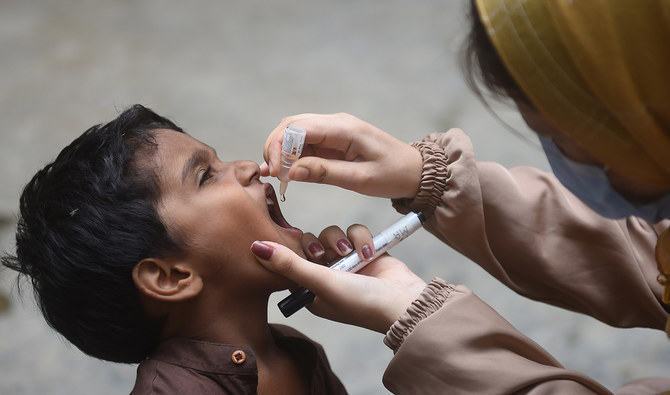
KHYBER — Securing the health and future of children through routine immunization in Khyber Pakhtunkhwa (KP) has become more critical than ever. In the remote and marginalized regions of the province, a significant number of “zero-dose” children remain.
These children have not received a single dose of life-saving vaccines. Consequently, they face dangerous diseases and pose a risk of spreading infections across society. Therefore, the government and partner organizations now prioritize reaching these children to ensure no child remains unprotected.
Sewage Samples Confirm Widespread Polio Virus Contamination
Overcoming the Barrier of Fake News
In several districts, particularly in tribal and mountainous areas, misinformation remains the greatest obstacle to routine immunization in Khyber Pakhtunkhwa. Last year, a wave of fake audio, video, and text messages flooded social media. These false reports claimed that the HPV vaccine was causing children to faint in schools.
Journalist Abdul Qayyum Afridi shared his firsthand experience investigating these claims. He interviewed the head of the health department’s vaccination wing, who confirmed that the viral videos were entirely baseless. Despite the fact that no such vaccination campaign was even active at the time, the rumors caused widespread panic.
Many schools closed their doors to health teams, and some shut down entirely. This incident proves that baseless news severely damages public health efforts. Citizens must verify information with officials before believing viral content, as the government only introduces vaccines to protect future generations.
Over 5mn children vaccinated against measles in KP
Social and Cultural Challenges
Beyond fake news, several other factors hinder routine immunization in Khyber Pakhtunkhwa. Scientific evidence proves vaccines are safe, yet some communities still view them as harmful. Additionally, the long distances to health centers and a shortage of trained staff create logistical gaps. Cultural factors also play a role; in some areas, women cannot visit health centers alone, and men make all health-related decisions.
However, a glimmer of hope exists. Health workers are now going door-to-door, and local elders, religious scholars, and teachers are joining the cause. For instance, in a remote village in District Khyber, a mother initially refused to vaccinate her child. However, after a lady health worker explained the risks of disease, she not only vaccinated her son but also persuaded her neighbors to do the same.
Achieving 2026 Targets
Health experts emphasize that vaccines are the most effective and cheapest way to prevent measles, polio, and TB. During a recent event at Police Services Hospital Peshawar marking World Immunization Week, Chief Secretary Shahab Ali Shah shared encouraging news. He noted that the province is hitting its targets ahead of schedule. While the government originally aimed for certain milestones by 2027, the current pace suggests they will achieve them in 2026.
Chief Secretary Shah praised international partners for their cooperation and directed health staff to work with renewed passion to rectify past shortcomings.
A Unified Strategy for a Healthy Future
KP Govt to Outsource 72 Hospitals to Private Sector in Major Healthcare Overhaul
Health Minister Khaleeq-ur-Rehman also addressed the gathering, stressing that public awareness is the need of the hour. He acknowledged that while Pakistan still faces challenges in reaching every child, Khyber Pakhtunkhwa is making significant progress. The government is currently improving the primary health system and providing essential facilities to underserved hospitals. Furthermore, the province is activating 34 more health centers to ensure better coverage.
Protecting children through routine immunization in Khyber Pakhtunkhwa is a shared responsibility. It requires the collective effort of the government, media, civil society, and parents. By silencing fake news and improving access to remote areas, the province can eliminate polio and reduce child mortality, building a stronger and healthier society for the next generation.