

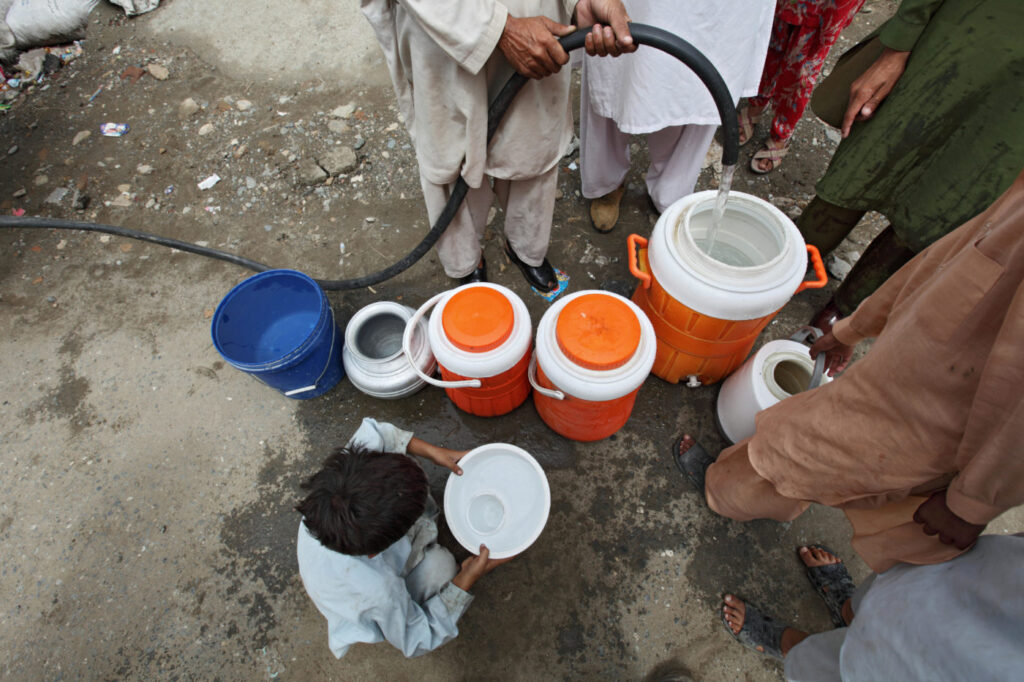
PESHAWAR – A severe environmental crisis is quietly escalating right beneath the provincial capital. Specifically, new data reveals that the Peshawar groundwater table is dropping at an alarming rate of up to one meter every single year. Consequently, this rapid decline threatens the long-term water security of millions of local residents.
The numbers paint a stark picture of a rapidly depleting valley. For instance, over the past three decades, the underground water level has plummeted by an average of 6.5 meters across the entire district. Meanwhile, the situation is even more critical in neighboring Nowshera. In that area, the water table is falling by a staggering 1.3 meters annually.
Undoubtedly, this drastic drop stems from a simple, dangerous imbalance. The city extracts water far faster than nature can replenish it. Therefore, experts blame rapid population growth and chaotic urban sprawl for the crisis. Additionally, the unmonitored, excessive use of private tube wells is draining the valley’s aquifers to historical lows.
Also Read: Water Crisis in Peshawar: Groundwater Levels Drop Amidst National Scarcity Concerns
Toxic Depletion and Public Health Risks
Worse yet, the water left behind is turning toxic. According to a critical water quality assessment, nearly 45% of drinking water samples in the area are completely unsafe for human consumption. For example, lab tests show hazardous concentrations of nitrates, solid particles, and chemical pollutants. As a result, these contaminated samples far exceed safe, standard limits.
The Blueprint for Urgent Reforms
To halt the collapse of the Peshawar groundwater table, environmental experts are urging the government to step in with an immediate regulatory framework. For this reason, they state that the provincial administration must prioritize four critical reforms to manage the resource effectively:
Also Read: Water Crisis Threatens Peshawar’s Future
- Enforce Tube Well Registration: First, authorities must legally register and monitor all private and commercial tube wells to stop excessive extraction.
- Launch Comprehensive Monitoring: Next, the state needs to install a modern groundwater monitoring system to track aquifer health in real-time.
- Harvest Rainwater: Similarly, city planners must integrate mandatory rainwater harvesting systems into new residential and commercial building designs.
- Promote Responsible Use: Finally, the public must adopt responsible water-use habits at the civic level to eliminate daily waste.
In conclusion, if the government fails to regulate underground water extraction right now, the water crisis across the Peshawar Valley will turn catastrophic in the coming years. For a region already facing infrastructure challenges, it is a disaster that local communities simply cannot afford.