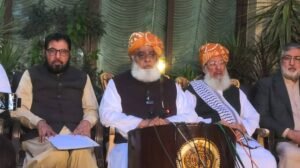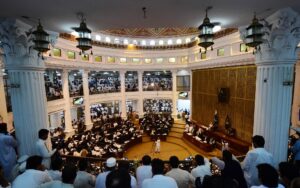

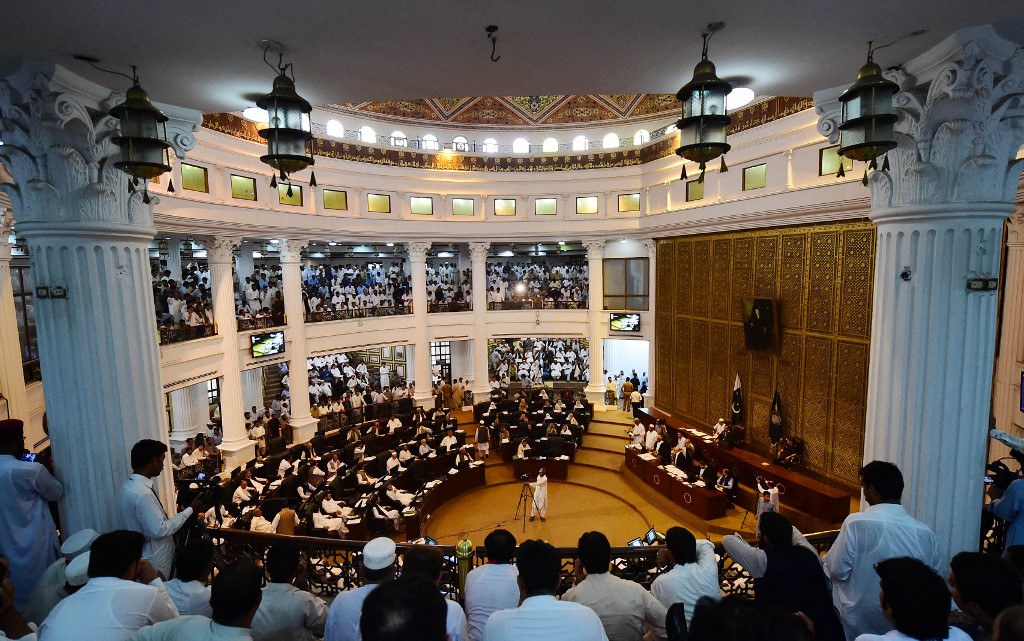
PESHAWAR – A rare display of political unity has emerged in the provincial assembly over the economic status of the frontier regions. Specifically, treasury and opposition benches in the Khyber Pakhtunkhwa Assembly have joined hands to oppose the enforcement of new taxes in tribal districts and the Malakand Division.
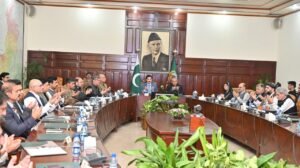
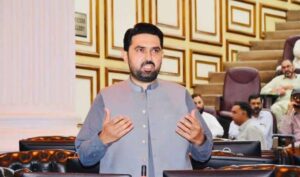
During a heated assembly session, lawmakers from all political parties stood together to defend the economic rights of the region’s inhabitants. They demanded that the historical tax exemptions for the former Federally Administered Tribal Areas (FATA) and Provincially Administered Tribal Areas (PATA) must remain intact.
Furthermore, the members emphasized that this immunity should apply to all financial levies, regardless of whether they fall under provincial or federal jurisdiction.
Also Read: Assembly Debates KP Government School Outsourcing Amid Privatization Concerns
In response to the growing consensus, KP Assembly Speaker Baber Saleem Swati announced plans to hold an in-depth debate on the floor of the house. He also indicated that he would soon convene a joint meeting of parliamentary leaders from both the government and opposition sides to draft a unified strategy.
Debating the Origin of the Regional Levies
The legislative debate highlighted the ongoing friction between regional needs and federal decisions. For instance, Provincial Housing Minister Dr. Amjad clarified that the provincial government did not initiate the taxation in Malakand.
Instead, he explained that the levies resulted directly from decisions made by the federal government. He noted that the federal administration possesses the direct authority to restore the tax-free status of Malakand immediately if it chooses to do so.
Also Read: Govt Enforces Historic Tax Regime on Conflict-Hit Frontier Regions
Undoubtedly, the economic burden on these transitioning districts remains a highly sensitive issue. Opposition Leader Dr. Ibadullah supported this stance, stating that the imposition of taxes in tribal districts is a public welfare crisis rather than a political dispute.
Therefore, he urged both sides of the aisle to adopt a single, unyielding position. Dr. Ibadullah also recalled that strong public pressure has successfully forced the federal government to withdraw similar taxation policies in the past.
Bipartisan Coalitions for Regional Rights
Consequently, the assembly’s decision to form a joint front marks a major step in the province’s constitutional advocacy. The upcoming parliamentary meeting will focus on three main objectives to challenge the levies:
- Draft a Unified Resolution: First, the joint committee will write a formal resolution demanding that the federal government extend the tax exemptions.
- Launch Legal Consultations: Next, legal experts will evaluate the constitutional protections of merged districts under the 25th Amendment.
- Coordinate Public Outreach: Finally, leadership will coordinate with local business chambers and tribal elders to maintain a peaceful, united stance.
In conclusion, the provincial leadership is preparing for a serious legislative pushback against federal revenue policies. For a region still recovering from decades of instability and integration challenges, local leaders agree that premature taxation could derail economic recovery.