

The governor promises to press the province’s case with Islamabad. The promise matters only if a clear plan and timely payments follow.
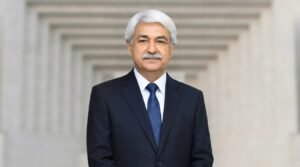
Governor Faisal Karim Kundi has put the province’s challenges and public problems at the top of his agenda. Speaking to members of the Council of Newspaper Editors in Peshawar, he also listed the wealth Khyber Pakhtunkhwa holds. Those assets include petroleum output, minerals and tourism. He added that the federation and the province stand on the same page.
A day earlier, Kundi said in a video message that he would present Islamabad with a plan to secure the province’s rights and resources. He promised to argue the case with strong evidence, so that farmers and ordinary citizens receive what they are owed. The intention is welcome. Now the province needs results.
A province that carries a heavy load
Khyber Pakhtunkhwa has a difficult geography, far from any port, and that alone demands special attention for development. In addition, the province has hosted millions of Afghan refugees. It stood on the front line of the war on terror, and it has absorbed the worst of the security challenges that followed.
As a result, investment has suffered, and unemployment has risen. The province has paid a high price for decisions that were not its own.
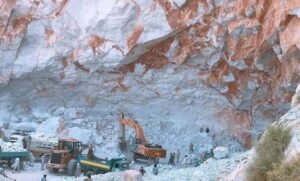
Yet the province is rich in natural resources. Its mountains and valleys offer countless tourism opportunities. Its rivers offer huge potential for hydropower. Its location also makes it the gateway for trade with Central Asia.
Therefore, the real task is to turn this potential into income. That needs an effective strategy, not another round of speeches.
Also Read: ANP Vows to Resist ‘Division of KP’ in the Name of New Provinces
What the province needs now
First, the federation must pay the province its hydropower profits. Both sides should also implement the AGN Qazi formula, which sets the rate of profit and settles the arrears.
Second, the province needs a solid plan to promote tourism. Every stakeholder should have a voice in it, and every relevant office should work together on one platform, each doing its own part.
Third, the government must set clear priorities for solving public problems. Those priorities must reflect conditions on the ground. A list written in an office, far from the people it affects, will not work.
A promise that history tests
Almost every government has tried, in its own way, to win the province its due. None has fully succeeded. The federation could change that record by paying Khyber Pakhtunkhwa its dues as a priority, so that construction and development can move ahead.
The governor has made his promise in public. Editors, farmers and ordinary citizens will now watch closely, and they will measure him by what reaches the province.