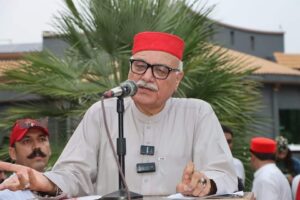

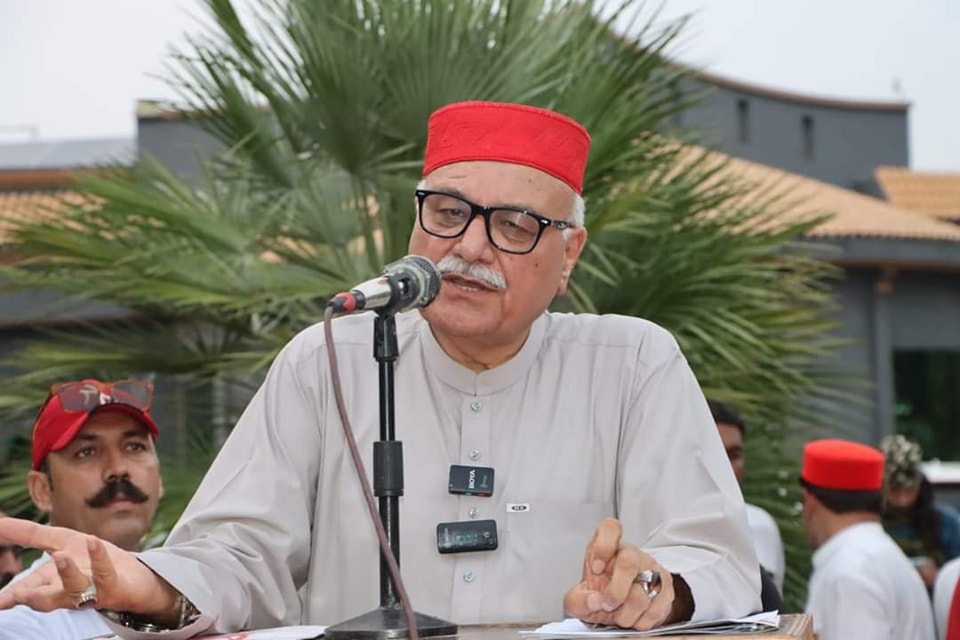
PESHAWAR: Awami National Party (ANP) Khyber Pakhtunkhwa President Mian Iftikhar Hussain has declared that his party will not accept the division of Khyber Pakhtunkhwa in the name of creating new provinces. He vowed to resist every attempt to damage the province’s geographical, political, economic and historical identity.
Hussain spoke at a press conference in Peshawar alongside members of the party’s provincial cabinet. The press conference followed three days of meetings of the ANP provincial cabinet, provincial working committee and provincial council.
“Pakhtunkhwa is our land, our identity and our historical heritage,” he said. He also warned that the party would not allow any plan to take control of the province’s land, resources and mineral wealth under the cover of new provinces.
Hussain said the ANP holds a clear position on the matter. If the state wants to create new provinces, it should form them on the basis of nationalities. However, the party firmly rejects the division of Khyber Pakhtunkhwa through any other route.
The ANP played a leading role in the campaign to rename the North-West Frontier Province as Khyber Pakhtunkhwa. Parliament approved the new name through the 18th Constitutional Amendment in 2010.
Terrorism Is a National Issue, Says ANP Leader
Turning to security, Hussain said terrorism is not the product of any province, nation or language. Instead, he described it as a problem at the state and national level.
He noted that the people of Khyber Pakhtunkhwa have made the greatest sacrifices of life and property in the fight against terrorism. According to Hussain, more than 1,300 ANP workers and leaders have fallen victim to terrorist attacks. He added that the people of the province still pay a price for peace in their areas.
Hussain criticized those who blame the people of Pakhtunkhwa while sitting in Punjab. He urged them to examine the real causes of terrorism, along with the facilitators, policies and networks that brought the country to its current situation.
He also called on the federal and provincial governments to stop shifting responsibility onto each other. Both governments, he said, must take serious steps to end terrorism and protect citizens. “Restoring peace and the writ of the state is not a favor from any government. It is a constitutional duty,” he said.
ANP Rejects Private Militias
Hussain said the state cannot view Khyber Pakhtunkhwa only through a security lens. If the state truly wants to eliminate terrorism, it must implement the National Action Plan in letter and spirit. Moreover, it must address poverty, unemployment, deprivation, injustice and the lack of education.
The ANP will not accept any armed lashkar, private force or non-state militia in the name of peace, he said. In his view, arming ordinary citizens against terrorists offers no solution. Instead, the state should strengthen its own institutions and take direct responsibility for protecting its people.
Demand for a New NFC Award
Hussain said the solution to the country’s problems lies in the rule of law, the supremacy of Parliament and all institutions working within their constitutional limits. He stressed that the country cannot move forward without respect for the public mandate.
He made it clear that the ANP will not compromise on the 18th Amendment, provincial autonomy, the National Finance Commission (NFC) award or the constitutional rights of the provinces. He demanded that the federal government announce a new NFC award as soon as possible and give provinces their due financial share. The party, he added, will resist every attempt to curtail the province’s resources, powers and financial rights at both political and constitutional levels.
Promises to Merged Districts
Beyond the division of Khyber Pakhtunkhwa, Hussain also raised the status of the merged districts. He urged the state to fulfil the promises it made to their people under the 25th Constitutional Amendment, which merged the former tribal areas with the province in 2018.
A merger on the map alone is not enough, he said. Real integration requires the state to give these areas financial, administrative and political rights, along with basic human rights.
Furthermore, Hussain said the state must rebuild infrastructure in areas hit by terrorism and military operations. He also demanded the dignified return of displaced families. He called for a comprehensive plan to compensate victims, rebuild destroyed homes and businesses, and provide jobs and basic facilities.