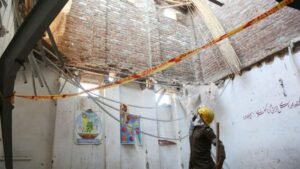

PESHAWAR – A school without electricity is more than a building without lights. In Khyber Pakhtunkhwa, it is a reminder of how far the reality of education remains from the constitutional promise of providing every child with the conditions to learn.
The latest reports from the provincial Education Department show that 3,796 government schools across Khyber Pakhtunkhwa have no electricity. The problem is particularly severe in the merged districts, where 2,183 of 6,223 schools reportedly lack power. In the settled districts, the figure is 1,613 out of 27,679.
The numbers become more troubling when viewed through the lens of girls’ education in Khyber Pakhtunkhwa.
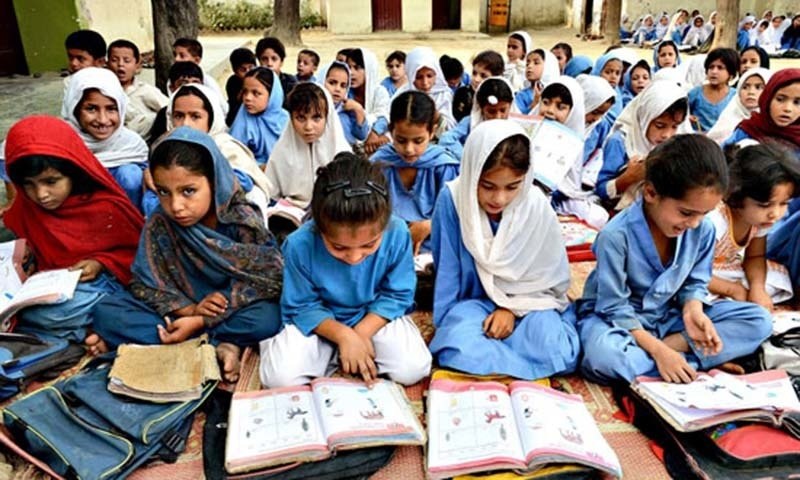
At primary level, 1,085 girls’ schools operate without electricity, compared with 2,213 boys’ schools. The lower number of affected girls’ schools should not make the problem appear smaller. Girls already face greater barriers to entering and remaining in education, and poor infrastructure can reinforce those disadvantages.
3,796 Government Schools in KP Still Lack Electricity, Report Reveals
The scale of exclusion is evident in the 2023 Digital Population Census. Pakistan has an estimated 25.37 million children aged five to 16 who are out of school. In Khyber Pakhtunkhwa, about 4.9 million children are outside the education system, including roughly 1.99 million boys and 2.92 million girls.
Girls therefore account for close to 60% of the province’s out-of-school children.
These figures tell two parts of the same story. One shows how many children never reach the classroom. The other shows the conditions many encounter once they get there.
For girls’ education in Khyber Pakhtunkhwa, that distinction matters.
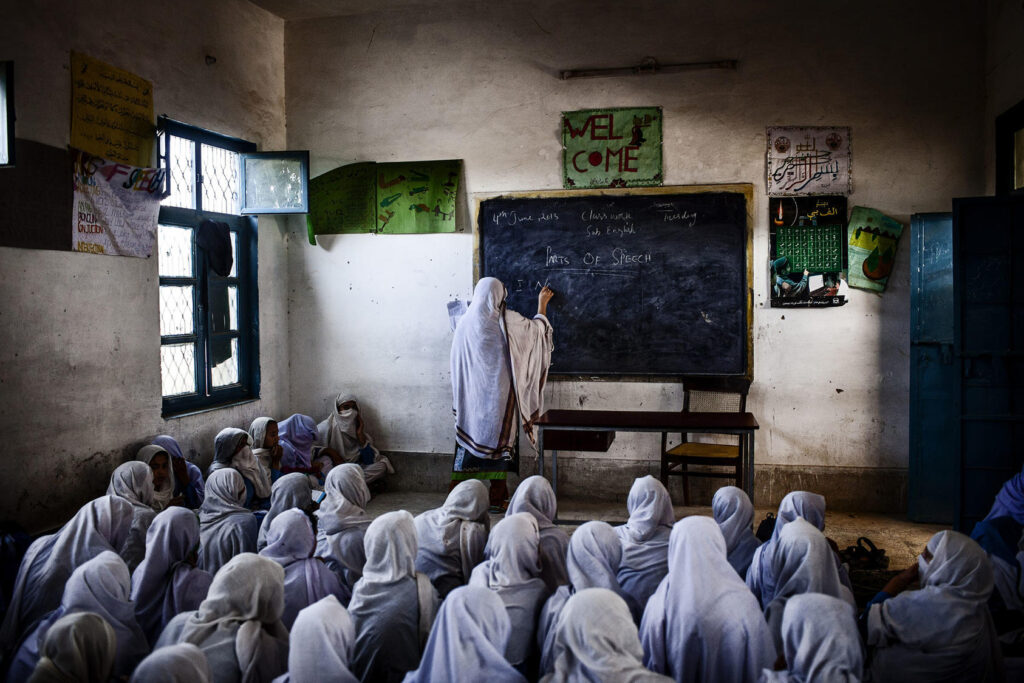
A girl from a rural, mountainous or underserved community may already have to overcome distance, household responsibilities, social expectations and concerns about safety before she reaches school. If the school itself lacks electricity, water, adequate toilets, boundary walls or suitable classrooms, the case for continuing her education becomes harder to sustain.
KP Child Labor Survey Report: Alarming Realities Exposed
Electricity may seem like a basic infrastructure issue, but its absence affects the learning environment in practical ways. It can mean classrooms without fans during increasingly difficult summer heat, limited use of computers and digital resources, inadequate lighting and fewer opportunities to use modern teaching equipment.
For girls, however, infrastructure carries an additional significance.
A functioning toilet, clean drinking water, privacy and a secure school boundary can influence whether parents feel comfortable sending their daughters to school, particularly as they grow older. These are not luxuries. They are basic conditions for attendance, dignity and retention.
That is why the debate around girls’ education in Khyber Pakhtunkhwa should not stop at enrolment figures.
Getting a girl into a classroom is only the first step. Keeping her there, helping her progress from primary to middle and secondary education, and enabling her to complete her studies are equally important.
The geography of the province makes this challenge more complicated.
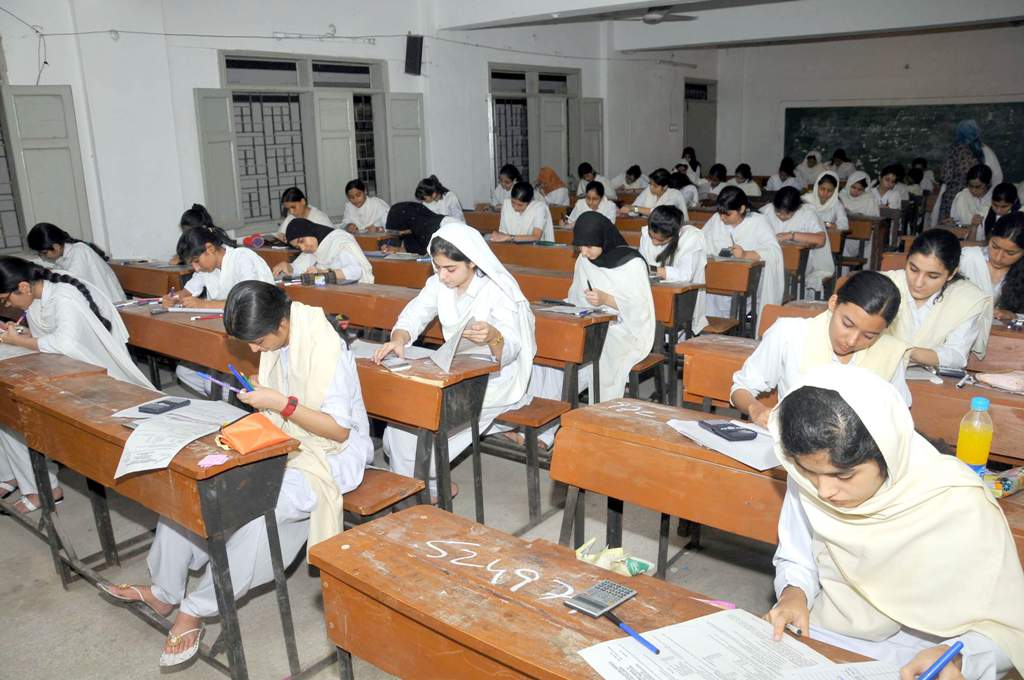
KP to Launch Education Card as Part of Major School Enrolment Drive
The latest electricity figures suggest that about 35% of schools in the merged districts lack power, compared with roughly 5.8% in the settled districts. Such a gap reflects a wider inequality in access to public services.
A child’s location should not determine whether she studies in a properly equipped classroom or whether her school can provide basic facilities.
Distance creates another barrier. The Khyber Pakhtunkhwa Elementary and Secondary Education Foundation has acknowledged that some communities do not have a government school within one kilometre of their homes and that this creates particular difficulties for girls.
For families in such communities, education is therefore not simply a question of whether schooling is officially free. Parents must also consider whether a school is close enough, safe enough, adequately staffed and properly equipped to justify sending their daughters there every day.
Beyond Enrollment: The Text Book Crisis in Khyber Pakhtunkhwa
This is where policy needs to move beyond counting schools and enrolments.
A school can exist on a government database and still fail to provide a meaningful education. A classroom without basic infrastructure may satisfy an administrative definition of access, but it does not necessarily provide the conditions needed for learning.
The same principle applies to girls’ education in Khyber Pakhtunkhwa.
The province cannot address the problem simply by building more classrooms. It must improve the quality and reliability of the schools that already exist.
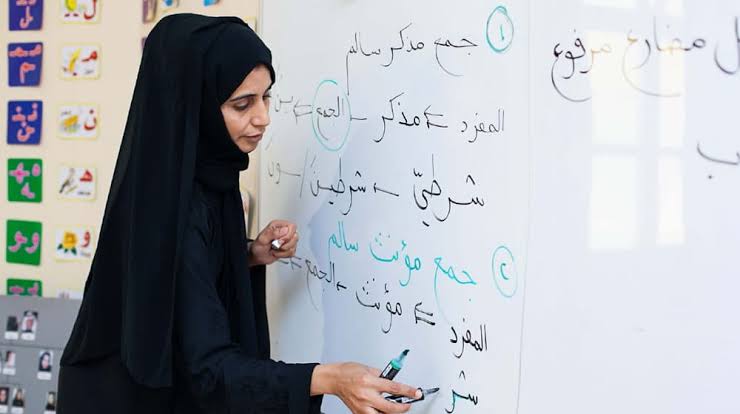
That means identifying schools with the greatest infrastructure deficits and prioritising those serving communities with the highest rates of exclusion. Electrification should be accelerated, including reliable solar solutions in areas where extending the conventional grid remains difficult.
But electricity should be treated as part of a wider minimum standard.
Assembly Debates KP Government School Outsourcing Amid Privatization Concerns
Every girls’ school should have access to safe drinking water, functional and private toilets, secure boundary walls, electricity, appropriate classrooms, accessibility and sufficient teaching staff. Where these basic conditions are absent, education policy should treat the school as a priority rather than simply marking it as operational.
The distribution of public money also matters.
Equal spending across districts does not necessarily produce equal opportunities. A district facing severe infrastructure shortages, high numbers of out-of-school girls and difficult terrain may need more resources than a district where basic services are already available.
Education budgets should therefore be judged not only by the amount allocated, but by where the money is spent and whether it reaches the children facing the greatest barriers.
There are signs that policymakers recognise the scale of the challenge.
A resolution in the Khyber Pakhtunkhwa Assembly earlier this year called for the 2026-27 financial year to be declared the “Year of the Revival of Girls’ Education”, citing the province’s large out-of-school population and the disproportionate number of girls among them.

Chief Minister Announces 13% Increase in Education Budget
The provincial government has also begun work on an integrated system to identify out-of-school children at village-council level, with the aim of improving enrolment planning and the allocation of resources.
Such initiatives are useful. But their success should ultimately be measured in classrooms, not announcements.
The real test is whether more girls enter school, stay there, move successfully between education levels and complete their studies.
This requires policymakers to see infrastructure and girls’ education as part of the same problem rather than separate policy areas.
The constitutional argument is equally clear. Article 25-A guarantees free and compulsory education to children between the ages of five and 16. But the right to education cannot mean simply providing a school building and declaring the obligation fulfilled.
Private Schools Propose Private Testing Agencies to Replace Cluster Exam System
A meaningful right to education requires a place where children can learn safely and with dignity.
The same principle sits at the heart of the Sustainable Development Goals. SDG 4 calls for inclusive and equitable quality education, while SDG 5 focuses on gender equality and the empowerment of women and girls.
In Khyber Pakhtunkhwa, these goals are inseparable.
When almost 2.9 million girls remain outside school and more than 1,000 girls’ primary schools lack electricity, the province cannot treat girls’ education as a narrow enrolment problem.
The question is not simply how to bring girls through the school gate. It is whether the education system gives them enough reason and opportunity to remain there.
That requires investment in teachers, infrastructure, transport, safety and local access. It requires better data and more targeted spending. And it requires recognising that the barriers facing girls often begin long before they leave school and continue when the school itself fails to meet basic standards.
Girls’ education in Khyber Pakhtunkhwa should therefore be treated as a central development priority, not a secondary social-sector concern.
4.9m Out-of-School Children in KP Face Uncertain Future
The province does not only need to bring millions of girls into classrooms. It needs to make those classrooms places where they can learn, stay and progress.
Electricity is only one part of that equation. Water, toilets, safety, qualified teachers, accessibility and reasonable distance matter too.
A school in darkness does not merely consume less electricity.
It can consume opportunities.
And when those opportunities belong to girls who are already more likely to remain outside the education system, the cost is measured not in kilowatts but in years of learning, lost choices and futures made unnecessarily harder.