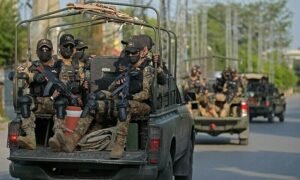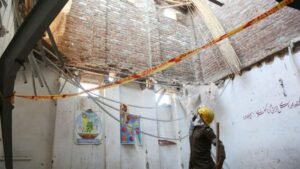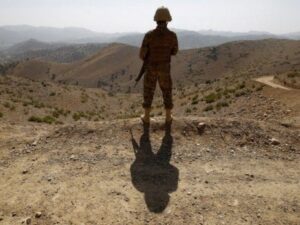

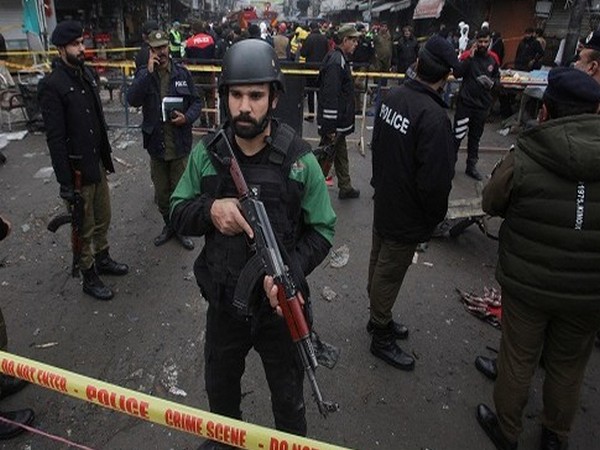
PESHAWAR – Every day, officers of Khyber Pakhtunkhwa’s Counter Terrorism Department (CTD) move through a province where the threat of violence remains a constant possibility. They investigate attacks, track militant networks, and stand between communities and those seeking to destabilise them.
Yet the institution carrying this responsibility is facing a challenge of its own: a shortage of permanent manpower, incomplete infrastructure and limited operational resources.
Official documents reveal a striking gap between the scale of the security challenge facing Khyber Pakhtunkhwa and the capacity of the department created to confront it. The province’s Counter Terrorism Department, despite operating in Pakistan’s most terrorism-affected region, remains behind other provinces in several key areas, including permanent staffing and operational facilities.
The figures present an uncomfortable reality.
The Khyber Pakhtunkhwa CTD has a total strength of 3,844 personnel, but only 25 are permanent employees. Most of its operational workforce comes through temporary arrangements, including thousands of police personnel assigned from other units.
For a department built around specialised investigations, intelligence gathering and long-term counterterrorism planning, dependence on temporary manpower creates a structural weakness. Counterterrorism requires institutional memory—the kind of experience developed when trained personnel remain within a specialised system for years, not months.
The comparison with other provinces highlights the challenge.
Balochistan, another region deeply affected by militancy, has a CTD workforce of 5,540 personnel, including 1,827 permanent employees. It also has greater access to protective vehicles and operational resources, including 42 bulletproof double-cabin vehicles and hundreds of motorcycles.
Meanwhile, the Khyber Pakhtunkhwa CTD operates with only 17 bulletproof double-cabin vehicles. Its available resources include 60 single-cabin vehicles, 32 motor cars and 350 motorcycles spread across a province where security threats often emerge in difficult and remote terrain.
Infrastructure remains another unresolved issue. Twenty-one CTD district offices are currently under construction, leaving several areas without permanent facilities required for effective counterterrorism operations.
The challenge facing Khyber Pakhtunkhwa is not simply a question of numbers. It is a question of whether security institutions are being prepared for the nature of the threats they are expected to confront.
Modern terrorism is not defeated only through force. It requires intelligence networks capable of detecting threats before attacks occur, investigators with specialised skills, digital surveillance capabilities and rapid-response systems supported by reliable infrastructure.
The provincial government has begun efforts to improve operational capacity, including the planned purchase of 97 additional vehicles. But equipment alone cannot transform an institution. A stronger CTD requires permanent recruitment, specialised training, modern technology and facilities designed for the realities of contemporary security challenges.
Khyber Pakhtunkhwa has carried a disproportionate burden in Pakistan’s long struggle against terrorism. Its police officers have repeatedly demonstrated courage in some of the country’s most dangerous environments.
Their commitment has never been the question.
The larger question is whether the institution behind them has received the strength it needs.
A province cannot build lasting security on temporary arrangements. If the CTD is expected to remain the first line of defence against terrorism, it must be equipped not only to respond to today’s threats but to anticipate tomorrow’s.