

PESHAWAR — Decades of tax exemptions have come to an abrupt end as a comprehensive tax regime officially took effect across the Malakand Division and the former tribal districts bordering Afghanistan. The enforcement has triggered widespread anger and threats of mass civil disobedience in a region still reeling from the devastating aftermath of the war on terror.
The sweeping fiscal policy marks a turning point in the administrative history of the area. Starting with the new fiscal year, federal and provincial authorities have implemented General Sales Tax (GST), income tax, and an array of other corporate tariffs.
Also Read:Khyber Pakhtunkhwa finalises bifurcation plan for Malakand Division
In a bid to forcefully integrate the local economy into the national framework, tax collection agencies—including the Federal Board of Revenue (FBR) and the Khyber Pakhtunkhwa Revenue Authority—have established local offices and begun field operations. Under the new guidelines, sales tax rates have been hiked to between 10% and 12%, while a strict crackdown has been sanctioned against the region’s ubiquitous non-customs paid (NCP) vehicles.
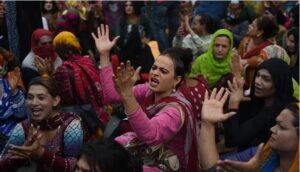
The sudden state intervention has mobilized local traders, religious parties, and Pashtun nationalists, who argue that forcing a war-ravaged population into the tax net without delivering essential services or promised development funds is both economically catastrophic and morally unjust.
A Devastated Economy Pushed to the Brink
For the business community, the tax enforcement is seen as a death blow to an economy already starved of basic infrastructure. Abdul Rahim Khan, a representative of the Traders Federation Malakand, warned that markets across the division and the seven adjacent tribal districts are barely surviving.
“Our businesses are operating at a fraction of their capacity due to persistent power outages and a total lack of industrial incentives,” Khan said, adding that local markets cannot realistically compete with industrial hubs like Lahore or Karachi.
Also Read: Budget 2026 Slashes Income Tax for Salaried Class — Full Breakdown
The region has repeatedly suffered structural shocks, navigating military operations, militancy, devastating earthquakes, and catastrophic floods. Local leadership points out that the state never properly compensated the population for these losses.
Furthermore, the business community claims Islamabad reneged on foundational promises made during the merger of the tribal areas. The federal government had originally pledged a special annual development fund of 1,000 billion rupees ($3.57 billion) for ten years to fully rehabilitate the frontier before enforcing taxes. The complete withholding of these funds has left the local youth facing deep socio-economic desperation.
Political Backlash and Demands for Suspension
The administrative move has also created a rare consensus among rival regional political parties, who view the enforcement as an aggressive overreach by the central government.
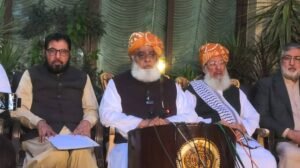
Siraj-ul-Haq, representing the religious political party Jamaat-e-Islami, delivered a blistering critique of the state’s priorities. He highlighted the stark irony of a state demanding direct taxes from a population that is still explicitly denied clean drinking water, functional healthcare, security, and basic education.
Also Read: KP Warns Federation of Wheat Crisis as Punjab Blocks Supplies
- The Demand: Opposition forces are demanding an immediate suspension of all tax collections.
- The Precondition: The state must first restore basic internal security, compensate victims of terrorism, and fully release the withheld merger funds.
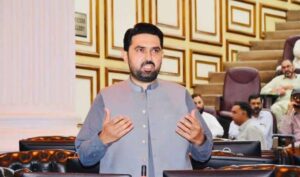
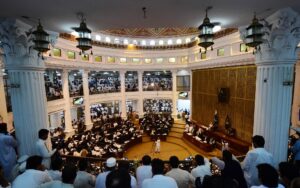
Aligning with the resistance, Mian Hussain Shah of the secular Awami National Party (ANP) reframed the issue around historical sacrifice. He reminded the legislature that the people of Malakand and the tribal belt historically served as a frontline shield protecting the rest of Pakistan from terrorism. Rather than rewarding these communities with relief packages and structural development, the state has instead chosen to burden them with tax liabilities.
With the ANP, Jamaat-e-Islami, and local trader unions formally backing strike calls, the northwestern frontier is bracing for a protracted political stand-off with Islamabad.