

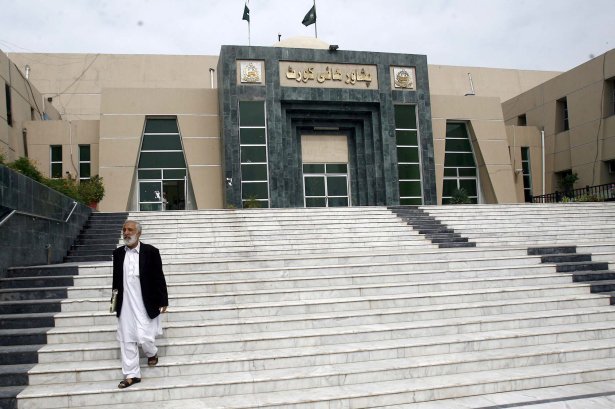
PESHAWAR – The Peshawar High Court has ordered the National Database and Registration Authority (NADRA) to decide citizenship verification cases within four months. The ruling concerns applicants whose records are linked to Afghan Citizen Cards (ACC) and Proof of Registration (POR) cards. The issue has gained attention amid ongoing efforts to repatriate Afghan refugees from KP.
Justice Waqar Ahmad issued the 21-page judgment. The court disposed of more than 127 petitions filed by applicants seeking cancellation of ACC and POR cards.
The petitioners argued that they are Pakistani citizens by birth. They claimed NADRA mistakenly issued ACC or POR cards in their names. They also told the court that they had approached NADRA but did not receive the required services.
The court noted that the applicants filed petitions before fully pursuing the available remedy with NADRA. Therefore, the court ruled that the petitions were not maintainable at this stage.
The court directed all applicants to approach NADRA for a clearance certificate. It ordered NADRA to decide every application within four months of submission.
The judgment instructed NADRA Registration Centres to hear all applicants without unnecessary obstacles. Officials must issue tokens to applicants and provide written receipts for all submitted documents.
NADRA must also forward complete cases to the Special Verification Board for further examination.
Statistics Presented Before the Court
NADRA’s director of operations informed the court that the authority has received around 26,000 similar applications.
According to the official, NADRA rejected 17,884 applications because the applicants failed to prove Pakistani citizenship.
The authority issued clearance certificates to 2,200 applicants after completing the verification process.
The court also learned that 6,637 applicants did not appear for verification hearings. Their cases remain pending.
These figures highlight the scale of citizenship verification cases connected to Afghan refugees in KP and related registration records.
The judgment stated that Section 19 of the Pakistan Citizenship Act, 1951, authorizes the Chairman of NADRA to issue clearance certificates.
NADRA officials informed the court that the institution already follows a comprehensive policy and procedure for handling such cases.
The court accepted that a formal administrative mechanism exists. Therefore, applicants must first seek relief through NADRA before approaching the judiciary.
Directions for Future Cases
The court instructed NADRA to provide attendance receipts to applicants who appear before the Special Verification Board.
The judgment also protects applicants against unnecessary delays. If NADRA fails to decide a case within four months, affected individuals may return to court and seek further legal remedies.
The ruling is significant for people whose records are linked to ACC and POR cards. It also carries broader implications for citizenship verification issues involving Afghan refugees in KP.
By disposing of the petitions, the Peshawar High Court reinforced NADRA’s responsibility to process applications efficiently and decide cases within the prescribed timeframe.