

ISLAMABAD — Pakistan is rapidly descending into acute polarization and systemic failure, driven by deepening political divisions, economic mismanagement, and a deteriorating security landscape. As public trust in state institutions bottoms out, political commentators argue that implementing comprehensive structural crisis solutions is no longer optional but an urgent prerequisite for national survival.
The current governance model is fracturing. Key pillars of the state—including the executive, the judiciary, and the legislature—frequently overstep their constitutional boundaries rather than fulfilling their designated roles. This institutional overreach fosters a lawless environment where power dictates authority, severely weakening the federal bond and distancing the provinces from the center.
Also Read: National economy: The need for lasting policy
Shrinking Political Horizons and Regional Unrest
Mainstream political parties have largely abandoned their national footprints, transforming instead into regional factions that prioritize localized power bases over federal cohesion. This political retreat aggravates existing grievances across critical regions, including Balochistan, Khyber Pakhtunkhwa, Azad Kashmir, and Gilgit-Baltistan.
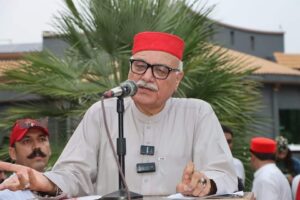
“The state’s historical reliance on shifting policies has consistently failed to yield long-term stability,” notes veteran journalist Shamim Shahid in a recent assessment of the crisis.
In Balochistan, the federal government’s approach has oscillated damagingly. The state initially attempted to label disgruntled elements as brothers to encourage dialogue, but quickly replaced that reconciliatory posture with aggressive and dismissive rhetoric. Similarly, the state continues to view Pashtun nationalist movements with deep-seated suspicion and allegations of treason, despite their adherence to constitutional and peaceful methods. This inconsistent treatment creates a dangerous sense of marginalization and institutional injustice among various ethnic groups.
Also Read: Barrister Saif Advocates National Dialogue to Break Political Deadlock
Governance Failures and the Public Trust Deficit
A pervasive trust deficit further complicates internal stability. Senior public officials frequently prioritize personal wealth accumulation and asset building over public service. Instead of fostering domestic investment and creating economic opportunities, elite figures routinely relocate their assets and seek comfortable retirements abroad, leaving the local population to bear the brunt of economic stagnation.
This governance failure directly impacts the newly merged tribal districts of Khyber Pakhtunkhwa. Despite their historical contributions to national struggles, residents of these districts face severe socio-economic hardships rather than the prosperous future promised during the merger process.
Security Escalation Demands a Strategic Shift
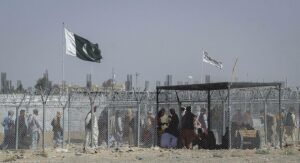
The security situation along the western border regions adjacent to Afghanistan has escalated beyond a localized issue, drawing international concern. The failure of state mechanisms to maintain law and order forces ordinary citizens to consider alternative measures, such as forming localized defense committees, while armed militant groups operate with relative impunity.
Also Read: Healthcare Collapse: Heavy Brain Drain Deprives KP of of Doctors and Nurses
When citizens must seek alternative security measures instead of relying on state institutions, it signals a profound crisis of confidence in the ruling elite. Unfortunately, policymakers in Islamabad remain detached from these stark ground realities, opting for temporary administrative fixes rather than seeking sustainable structural crisis solutions.
Administrative and military operations alone cannot secure federal unity. True stability stems from:
- Political accommodation across all provincial federating units.
- Constitutional equality that guarantees fundamental rights.
- Genuine public participation in the democratic process.
The Path Forward: A New Social Contract
To prevent further deterioration, the Pakistani leadership must recognize that the country is a multi-ethnic, multi-cultural, and diverse federation. Achieving genuine national cohesion requires the federation and its units to draft a new social contract. This agreement must be anchored in the true spirit of the constitution, public sovereignty, provincial autonomy, and the equitable distribution of resources.
Also Read: When the First Brick Falters: Inside Pakistan’s Political Crisis
Political stakeholders continuously invoke Quaid-e-Azam Muhammad Ali Jinnah’s pluralistic vision outlined in his historic August 11, 1947 address. However, the state continues to repeat obsolete, failed strategies under new guises.
Pakistan cannot resolve its current multi-dimensional crisis through superficial administrative fixes or security campaigns. Ultimately, the core of all structural crisis solutions relies on a transformative political vision, a robust national dialogue, and a comprehensive social contract that respects the public mandate and restores democratic legitimacy.