
Armed groups have burned dozens of trucks, caused Rs1 billion in losses, and brought Balochistan’s trade to its knees. Now the government has finally responded — but traders are giving them just 10 days to prove it.
PESHAWAR – Militancy in Balochistan has reached a dangerous new level, forcing traders and transporters to launch a devastating province-wide shutter-down and wheel-jam strike before a last-minute government intervention suspended the protest late Thursday evening.
Senior officials and trader representatives reached a breakthrough agreement at the Quetta Chamber of Commerce, ending a standoff that had paralysed commercial activity across Balochistan and cut off vital trade routes connecting the province to Punjab, Sindh, and Khyber Pakhtunkhwa.
However, traders have issued a firm warning — the government has exactly 10 days to deliver on its promises, or the strike returns with full force.
Also Read: Pakistan at war: Fighting Terror and Betrayal
How Militancy in Balochistan Brought Trade to a Standstill
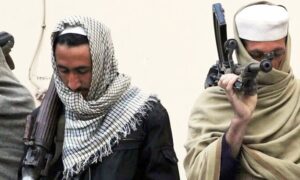
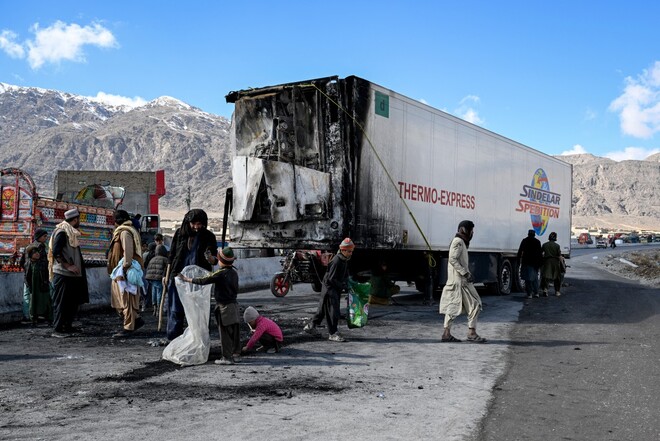
Militancy in Balochistan did not reach this point overnight. Over the past month, armed groups have systematically set ablaze dozens of cargo vehicles on the province’s critical highway network — particularly the Quetta-Taftan Iran route — directly causing losses exceeding Rs1 billion to an already struggling trader community.
Initially, militants targeted only mineral-carrying vehicles. However, attacks rapidly escalated to include trucks transporting fruit, food supplies, general goods, and LPG tankers. As a result, most transporters stopped moving their vehicles altogether, effectively shutting down both domestic supply chains and cross-border trade with Iran.
Consequently, over 20 organisations joined the protest — including political parties and lawyers’ associations — and traders issued a call for an indefinite province-wide strike, demanding urgent action on security, compensation, and trade facilitation.
Also Read: Balochistan Crisis: Addressing the Root Causes
Government Responds — Here Is the Full Action Package
In direct response to the growing militancy crisis in Balochistan, Home Minister Zia Ullah Langove and Additional Chief Secretary Home Hamza Shafqat led negotiations and unveiled a sweeping action package at the Quetta Chamber of Commerce.
Out of 33 trader demands, the government accepted 15 immediately, while negotiations continue actively on the remainder. Furthermore, officials escalated all federal matters directly to the Prime Minister, with the Federal Interior Minister and FBR Chairman committing to visit Quetta after the budget session concludes.
Complete Government Package — At a Glance
| Measure | Detail |
|---|---|
| New Security Force | Rs25 billion dedicated highway protection force |
| Operational Timeline | Ready within six months |
| Interim Protection | Army-escorted convoys for cargo vehicles |
| Insurance Scheme | Cargo vehicle coverage via State Life Insurance |
| Government Contribution | Balochistan government to co-fund insurance |
| Compensation | Fast-tracked payments to owners of burned vehicles |
| Vehicle Return Time | Reduced from months to one week |
| Checkpost Reduction | 55 highway checkposts to reduce gradually |
| Clearance Time | Cut from hours to just 15-20 minutes |
| Clearance Card System | Single check — no repeated stops for cargo vehicles |
| Private Vehicles | No checking at Lakpass and Bileli checkposts |
| Customs Powers | Removed from selected checkposts — security focus only |
Foreign Hands Behind Militancy in Balochistan — Government Reveals
Additional Chief Secretary Hamza Shafqat directly identified banned organisations and foreign intelligence agencies as the forces driving militancy in Balochistan and orchestrating the highway vehicle burning campaign. Moreover, he described these attacks as deliberate economic terrorism — a calculated strategy to destabilise Balochistan’s trade, destroy its economy, and spread chaos across the entire province.
Also Read: Pakistan Closes Border with Iran in Balochistan Indefinitely
To counter this threat directly, the government is building a specialised security force to protect road networks, cargo vehicles, and the mining and minerals sector. Notably, authorities are funding this force by redirecting money from the provincial development budget, signalling how seriously they now treat the militancy crisis in Balochistan.
Home Minister Zia Ullah Langove reinforced this message, warning that hostile elements and external forces are spending billions of rupees to target civilians, security forces, installations, and the business community. Nevertheless, he insisted that the government, people, traders, and security institutions would together defeat these plans without compromise.
Traders Warn — Strike Suspended, Not Abandoned
Muhammad Ayub Miriyani, President of the Quetta Chamber of Commerce and head of the All Balochistan Business Alliance and Action Committee, confirmed that the government and senior military leadership engaged seriously throughout the negotiations. Therefore, the trader community agreed to suspend the strike temporarily.
Nevertheless, the tone from the business community remains firmly cautious. Mines Owners Association leader Mir Behroze Reki delivered a direct warning to the government, stating that the strike is suspended and not called off, that progress will be reviewed over the next 10 days, and that if demands remain unmet, protest action will resume immediately without further notice.
Also Read: Balochistan Militant Attack: Govt Claims Rescue of 104 Passengers
Importantly, Additional Chief Secretary Shafqat himself publicly acknowledged that the traders’ grievances are genuine and fully legitimate — a rare admission from a senior official that underscores exactly how severe the militancy situation in Balochistan has become.
Why Militancy in Balochistan Threatens All of Pakistan
Militancy in Balochistan is not simply a provincial law and order problem. In reality, it directly threatens Pakistan’s national supply chain and regional trade infrastructure at its core.
For instance, the Quetta-Taftan route serves as one of Pakistan’s most critical trade arteries, directly connecting the country to Iran and broader regional markets. Therefore, when armed groups stop cargo from moving on this corridor, markets, warehouses, and households across the entire country immediately feel the economic consequences.
Furthermore, the government’s Rs25 billion security force — if delivered on schedule — would represent one of the most significant investments in countering militancy in Balochistan in years. Nevertheless, traders are no longer interested in announcements alone. They want visible action, and they want it within 10 days.
The clock is ticking. Ten days. Thirty-three demands. Fifteen agreed. Eighteen still pending.
Balochistan’s traders are watching closely — and they stand fully ready to act.