
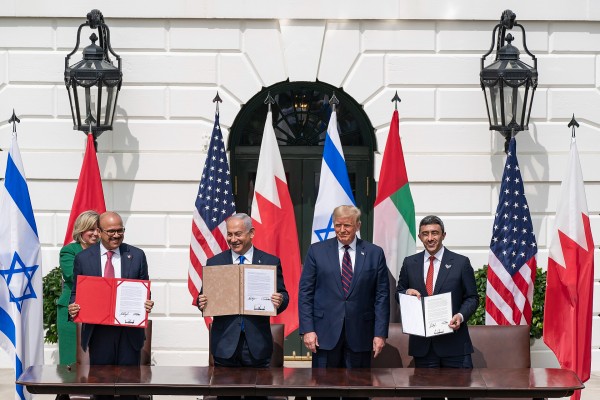
PESHAWAR – Geopolitical analysts argue that potential diplomatic agreements between Iran and the United States share no logical, political, or diplomatic connection with the broader framework of the Abraham Accords. Observers view any strategic attempt to interlink these separate diplomatic tracks as both unnatural and unnecessary.
When evaluating these developments through a regional lens, Pakistan leaves absolutely no room for ambiguity. Pakistan’s diplomatic stance regarding Israel does not rely on temporary political expediencies or shifting bilateral interests. Instead, it forms a core pillar of the country’s national identity, deep-rooted public sentiment, and historic foreign policy. As one of the pioneering nations to maintain a consistent, principled position on the Palestinian issue, Pakistan explicitly ties its diplomatic recognition to global justice.
Public Sentiment and the Geopolitical Reality of the Abraham Accords and Pakistan
The overwhelming majority of the Pakistani public refuses to separate the normalization of ties with Israel from the legitimate rights of the Palestinian people. The population demands a two-state solution that guarantees a sovereign Palestinian state with Jerusalem as its capital.
Consequently, the issue extends far beyond mere government rhetoric or temporary statecraft. The physical inscription on the Pakistani passport—which explicitly states it is valid for all countries of the world except Israel—serves as a powerful symbolic and practical manifestation of this permanent national policy.
Even Washington acknowledges these rigid domestic constraints. The U.S. presidency remains well aware that joining the Abraham Accords and Pakistan, along with several other key Muslim nations, is not a viable or acceptable policy option. This reality explains why recent American diplomatic statements hints at specific national exceptions within the Middle East and South Asia.
The Failure of Artificial Diplomatic Narratives
The persistence of international pressure on this matter raises a fundamental question: Why do external powers continue to push a narrative that clearly detaches itself from ground realities? Attempting to bypass established regional truths rarely yields sustainable diplomatic success.
For the wider Muslim world (Ummah), the treaty remains a highly sensitive and polarizing issue. The unilateral decisions of a few governments cannot represent the collective consensus of the entire Muslim population. For millions across the Islamic world, the Palestinian struggle is not merely a political or territorial dispute; it represents an issue of religious faith, human rights, historical justice, and global equity.
Therefore, any external pressure or rushed diplomatic maneuvers will likely trigger a severe public backlash. Pakistan’s bottom line remains definitive: without a just, equitable, and mutually acceptable resolution to the Palestinian conflict, neither the Pakistani public, the parliament, nor the broader Muslim world will accept the normalization concepts embedded in the treaty.
Foreign architectures that ignore these public sentiments may look successful on paper, but they will ultimately fail on the ground.