
PESHAWAR — The Higher Education Commission (HEC) has raised serious concerns over the quality of higher education in Khyber Pakhtunkhwa, as no university from the province managed to secure the highest category in the latest annual review report for the fiscal year 2024–25.
The comprehensive HEC evaluation, which assessed 95 universities across Pakistan, revealed that the province’s premier institutions fell into average or weak performance categories. Nationally, only 7 universities achieved the prestigious “W” (highest) category, while 38 universities landed in the “X” category, 43 in the “Y” category, and 7 were flagged for poor performance.
Also Read: HEC Makes Artificial Intelligence Mandatory for All University Degrees
Premier KP Universities Labeled “Average”
According to the official data, the province’s top-tier seats of learning failed to impress evaluators, landing straight into the “Y” category (Average Performance). The universities downgraded to this mediocre tier include:
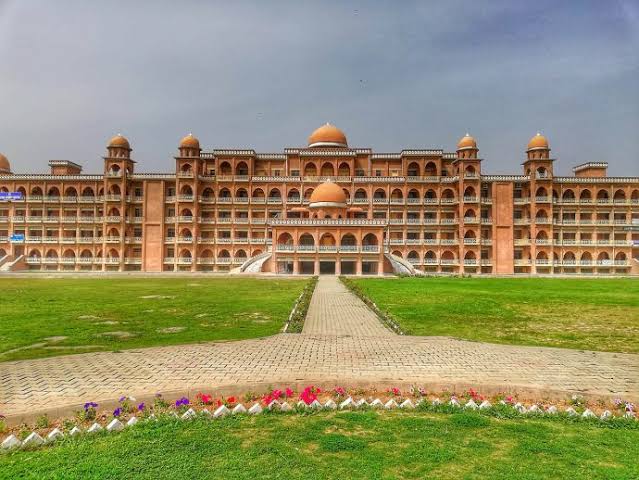
- University of Peshawar (UoP)
- Islamia College University, Peshawar
- Abdul Wali Khan University, Mardan
This average ranking for the province’s oldest and most historic institutions highlights a widening gap between traditional schooling and modern academic excellence.
Also Read:
Three Regional Universities Red-Flagged for Weak Performance
Even more alarming for the provincial education sector is the inclusion of three key higher education centers in the lowest tier. The HEC report officially designated the following institutions as “Poor Performing”:
- Bacha Khan University, Charsadda
- Shaheed Benazir Bhutto Women University, Peshawar
- University of Sawat
Evaluation Criteria Beyond Regular Classrooms
Official sources emphasized that the HEC annual review does not merely judge classroom teaching or exam results. Instead, the rigorous ranking framework evaluates institutions based on modern development indicators, including:
| Evaluation Metric | Key Focus Areas |
| Research & Innovation | Production of high-impact international journals and patents |
| Industrial Linkages | Collaboration with commercial sectors for graduate employment |
| Project Execution | Initiation and successful completion of development grants |
| Knowledge Output | Practical contributions to the scientific and socio-economic sectors |
“The fact that KP’s flagship universities are restricted to the average tier, while three others have completely failed the benchmark, signals an urgent need for structural and financial reforms in the province’s higher education governance.”
Education analysts suggest that financial crises, ad-hoc administrative appointments, and a lack of focus on commercial research are the primary drivers behind this academic decline. The provincial government now faces intense pressure to overhaul these public sector universities to regain competitive standings nationally.