
PESHAWAR—A growing rift between Khyber Pakhtunkhwa’s police chief and the provincial government has triggered a police powers rollback, with lawmakers now moving to amend the very law that once gave the force sweeping autonomy. The dispute centers on Inspector General Zulfiqar Hamid, whose handling of relations with the provincial government, provincial ministers say, has driven the crisis.
How the standoff began
The Khyber Pakhtunkhwa Police Act of 2017 granted the IG broad administrative and operational authority. However, provincial ministers argue that IG Zulfiqar Hamid’s conduct in office has now put that same authority at risk. According to these officials, the IG maintained close ties with the federal government while allowing friction with the provincial administration to escalate, eventually forcing the matter into the provincial assembly.
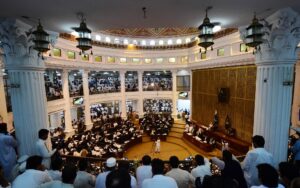
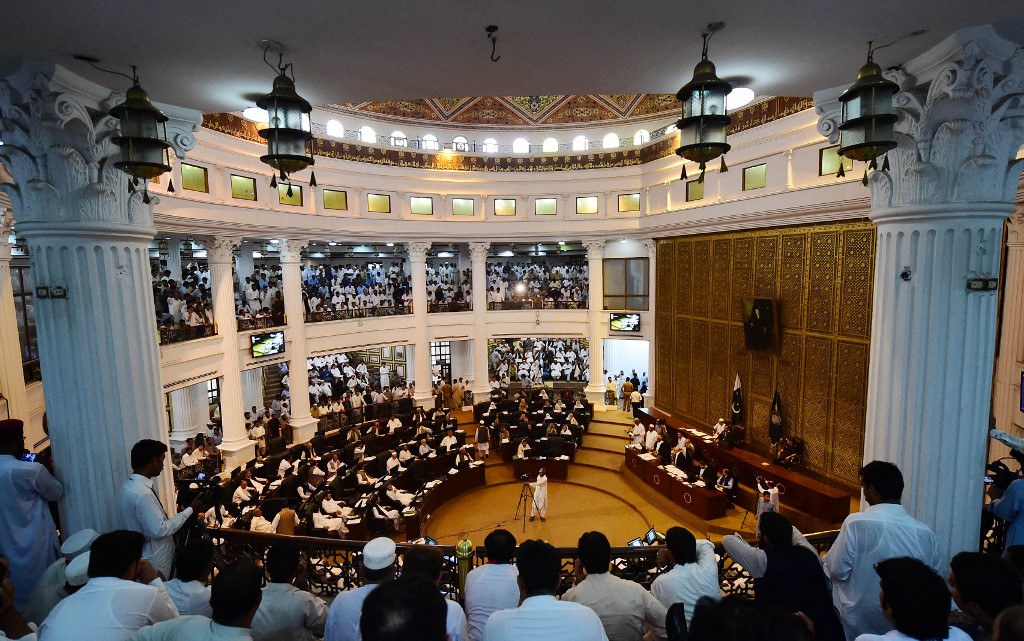
The tension came to a head after the alleged abduction of provincial ministers. Following the incident, Khyber Pakhtunkhwa Assembly Speaker Babar Saleem Swati summoned the IG and the chief secretary to the assembly. The IG, however, did not appear. As a result, the Speaker stated on the floor of the house that the person summoned had failed to attend and had effectively committed misconduct.
Lawmakers push back
In response, provincial ministers and assembly members openly argued that new legislation was needed to reverse the powers previously granted to police leadership. According to the provincial government, it had already provided billions of rupees for police infrastructure, modern equipment and drone technology, on top of regular funding. Officials say an additional 30 to 35 billion rupees was released for the police, and released quickly.
Despite this financial support, the provincial government contends that the IG did not extend to the Chief Minister and the provincial administration the level of priority it expected. Instead, according to these officials, federal directives and federal-level coordination were consistently prioritized over provincial ones.
From dispute to legislation
This pattern, provincial officials say, ultimately pushed the government to reconsider the powers granted to the IG under the Police Act 2017. As a result, new legislation is now being introduced to amend the act and limit the IG’s current authority. Consequently, the dispute is no longer confined to one official. Instead, it is set to reshape the entire police command structure going forward.
The central question now facing Khyber Pakhtunkhwa is whether IG Zulfiqar Hamid’s own conduct forced the provincial government’s hand, compelling it to revisit the full framework of powers established under the 2017 Police Act. According to the provincial government’s position, the answer is yes. Officials argue that had trust and communication between the IG and the provincial administration remained intact, the rollback of police leadership’s authority might never have become necessary, and they describe this coordination as the original vision behind the 2017 reforms.
Implications beyond the current IG
Notably, the criticism extends beyond accusations that the IG failed to cooperate with the provincial government. It also raises a broader question: why are powers granted in 2017 specifically to strengthen the police leadership now being withdrawn? If the new law limits the IG’s administrative, financial and other powers, the impact will not be confined to the current office holder. Rather, it will affect every future IG in Khyber Pakhtunkhwa.
Ultimately, the standoff between the current IG and the provincial government is now reshaping the structure of the entire police system. That raises the central question hanging over Khyber Pakhtunkhwa: did IG Zulfiqar Hamid’s actions strengthen the province’s police force, or did they pave the way for its authority to be curtailed?