
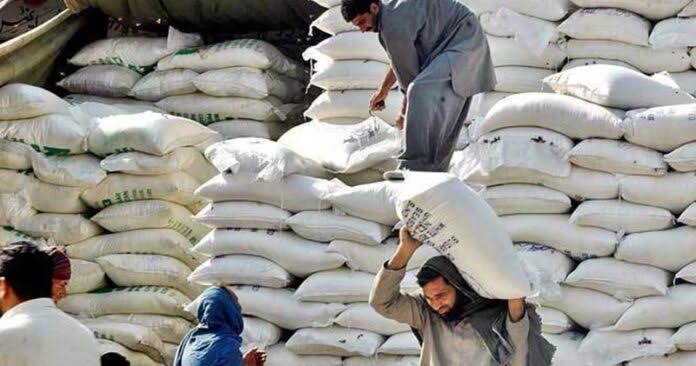
PESHAWAR – Khyber Pakhtunkhwa is facing an emergency as skyrocketing grain prices spark widespread public concern. Specifically, adviser on Finance, Muzzammil Aslam, has reacted to the escalating wheat crisis and surging prices, stating that the country is witnessing a critical supply crisis for the third time under the current federal setup.
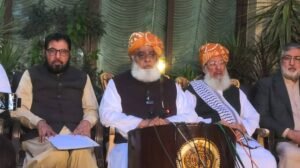
To clarify the province’s systemic vulnerabilities and response measures, KP Information Minister Shafiullah Jan, alongside Special Assistant for Food Dr. Muhammad Israr, held a detailed press conference detailing the local production and supply status.
Understanding the 3.8-Million-Ton Deficit
The immediate cause of the local market strain stems from a massive structural supply gap. Shafi Jan revealed that KP requires a total annual volume of 5,436,537 metric tons of wheat to feed its population. However, the province’s local agricultural output for the year 2026 reached only 1,632,000 metric tons.
Consequently, the province faces an annual deficit of 3,804,537 metric tons of grain. To fill this massive gap, local supply chains rely heavily on purchasing grain from farmers in other provinces, particularly Punjab.
This deep dependence leaves the local market highly vulnerable to external disruptions. Furthermore, high input costs have triggered an aggressive spike in consumer prices just three months after the harvesting season ended. For instance, a 100-kilogram sack of wheat now costs 11,600 rupees from Karachi to Peshawar. Meanwhile, retail flour prices have surged to a staggering 130 to 150 rupees per kilogram. This marks a devastating increase from 2022 when flour cost between 65 and 70 rupees per kilogram. Despite these doubled retail rates, local farmers remain impoverished and bankrupt due to high costs for electricity, fertilizers, and diesel.
Inter-Provincial Barriers and Constitutional Violations
Beyond high input costs, political and regional friction worsens the severe wheat crisis inside Khyber Pakhtunkhwa. Jan explicitly accused the Punjab government of imposing unnecessary restrictions on the movement of wheat and flour. He noted that these transport bans directly violate the spirit of Article 151 of the Constitution of Pakistan, which guarantees free inter-provincial trade.
These trade blockades raise serious fears of local supply depletion, artificial price hikes, and immense market pressure within KP. Jan remarked that Pakistan Muslim League-Nawaz (PML-N) administrations historically demonstrate discriminatory behavior toward the province. He added that a government entering power through contested mandates fails to feel the true weight of public suffering, resulting in policies that hijack public rights.
Additionally, when KP tried to route alternative wheat from Sindh through Balochistan, authorities faced heavy blockades. Aslam also accused the central government of trying to divert public attention away from the severe wheat crisis by shifting focus to fuel price hikes and petroleum levies. Due to these combined supply-chain chokepoints, global assessments now officially categorize Pakistan among the world’s food-insecure nations.
The Strategic Battle for Emergency Reserves
To protect local communities from a severe food shortage, the Khyber Pakhtunkhwa Finance Department has released 15.6 billion rupees in cash directly to the Food Department for immediate purchasing. Currently, the market remains fully under control, and officials report no active shortage of flour or grain in any part of the province. Chief Minister Sohail Afridi is monitoring the situation regularly and has ordered daily market checks to block unjustified price hikes.
To bypass the inter-provincial roadblocks and stabilize the market, the provincial government has locked in key procurement deals with federal agencies and local growers through three core supply metrics:
- PASCO Emergency Transit: The province has secured a provincial cabinet agreement to purchase 175,000 metric tons of wheat from the Pakistan Agricultural Storage and Services Corporation (PASCO). Out of this deal, an initial 25,000 metric tons have already arrived in the province, while the Memorandum of Understanding (MoU) and advance payments for the remaining 150,000 metric tons are complete.
- Local Farmer Procurement: The provincial cabinet has approved the direct purchase of 225,000 metric tons of wheat from local KP farmers, fixing the official support price at 3,500 rupees per 40 kilograms to support struggling growers.
- Storage Capacity Thresholds: These incoming shipments will push the province’s total official reserves—which currently stand at 153,933 metric tons in public warehouses alongside an estimated 114,806 metric tons in private sector storage—past 350,000 tons. This influx will completely fill local government warehouses to maximum capacity.
The Fight on Diplomatic and Constitutional Forums
In tandem with securing physical reserves, Chief Minister Sohail Afridi has taken the province’s case to the highest economic forums. During the National Economic Council (NEC) meeting, Afridi aggressively defended KP’s rights regarding the National Finance Commission (NFC) award, Net Hydel Profits (NHP), and the unhindered transit of wheat and flour.
The KP government has also approached federal and parliamentary channels to demand an immediate end to unlawful transport bans. The provincial administration has dispatched 15 official letters to both the federal and Punjab governments demanding the immediate removal of illegal trade checkpoints. Furthermore, Chief Minister Afridi has successfully convened meetings with the provincial governor and opposition parties to form a united front on this existential survival issue.
In conclusion, while regional trade blockades continue to choke the open market, the provincial administration’s multi-billion rupee funding injection aims to stabilize supply. The provincial government vows to maintain strict market monitoring, protect strategic reserves, and work with all relevant institutions to ensure that flour remains available across every district of KP.