

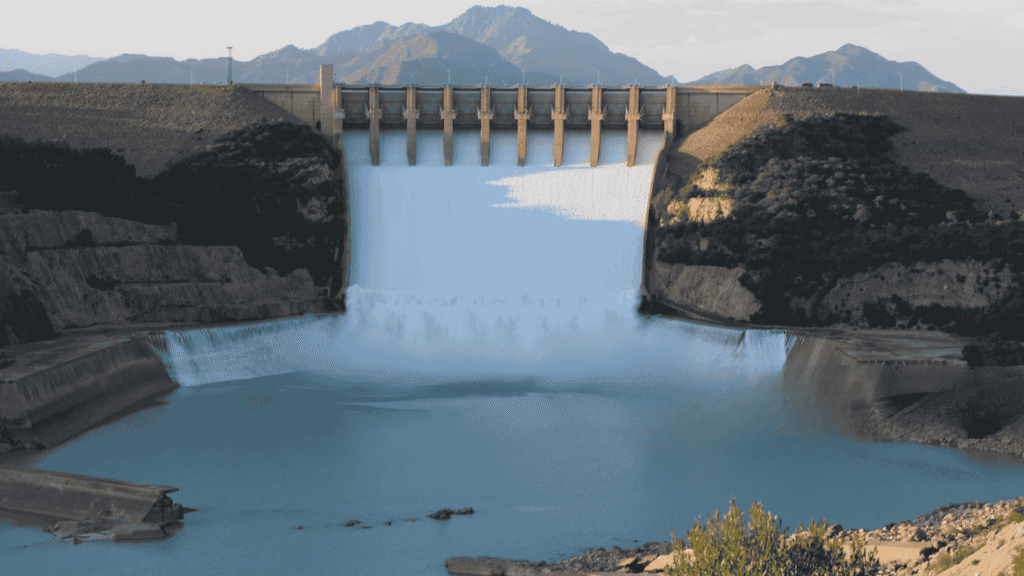
In a recent meeting at Narowal to review the devastation caused by floods, Prime Minister Shehbaz Sharif described climate change as the greatest challenge of our time. He declared the construction of Water Reservoirs in Pakistan essential to mitigate its impact. Alongside new projects, he emphasized the need to enhance the storage capacity of existing dams.
At one level, this acknowledgment is reassuring. After years of neglect, the state finally seems to recognize the urgency of building Water Reservoirs in Pakistan. But the harder task lies not in announcements, but in implementation.
Also Read: How Environment Friendly Technology is Transforming Life in Mansehra
The Recurring Cycle of Neglect
Each disaster in Pakistan triggers familiar cycles of statements, meetings, and promises. Files are opened, discussions are held, and plans are drafted — only to gather dust in government offices. The recent floods have exposed this pattern yet again, striking at a time when the economy is fragile, energy shortages are severe, and agriculture — the backbone of the country — struggles to feed the nation.
Paradoxically, Pakistan, a country blessed with one of the world’s largest canal systems, now imports food staples. Vast stretches of arable land remain barren for lack of irrigation. Without new Water Reservoirs in Pakistan, this agricultural crisis will only deepen.
Floods, like other natural disasters, require immediate rescue and relief efforts. But true governance lies in moving beyond short-term firefighting to long-term planning. Each calamity should prompt an honest assessment: where did institutions fail? Why were rescue operations delayed? What structural weaknesses turned seasonal rains into human tragedy?
Also Read: Khyber Pakhtunkhwa floods cause massive livestock losses worth Rs1.57bn
Unless leaders focus on resilience, the absence of Water Reservoirs in Pakistan will keep amplifying the scale of destruction. Without such reflection, the same mistakes will be repeated, and the losses will escalate.
The Need for National Consensus
The Prime Minister has called for provinces and the federal government to sit together. This is a critical first step. But genuine progress demands more — a broad national consultation that includes political leaders, technocrats, civil society, and experts. Only through consensus can Pakistan develop a sustainable water strategy.
And yet, the conversation cannot remain confined to dams and reservoirs alone. The challenges of climate change extend to energy, agriculture, urban planning, and disaster management. To treat Water Reservoirs in Pakistan in isolation is to miss the larger crisis.
Also Read: When the Rains Come for Harvest: Pakistan Crop Destruction and Climate’s Toll
If Shehbaz Sharif’s words are to matter, they must lead to concrete planning backed by timelines, budgets, and accountability. Building Water Reservoirs in Pakistan is not merely about storage; it is about survival, food security, and sovereignty.
For decades, rhetoric has overshadowed reality. Now, with climate shocks intensifying and floods becoming routine, Pakistan has no option but to act. What is at stake is not only the country’s resilience but its very future.