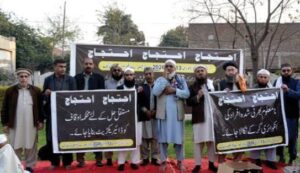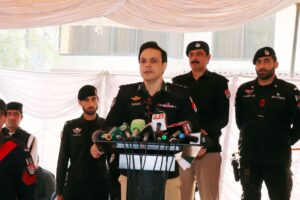

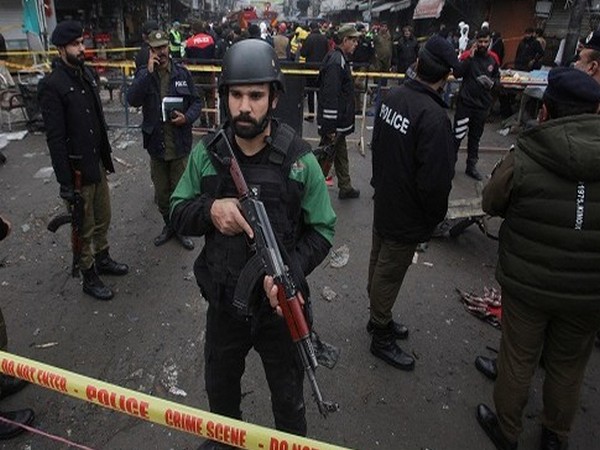
Khyber Pakhtunkhwa (KP) currently finds itself trapped in the jaws of a dual crisis. As political protesters maintain a rigid siege over the region’s arteries, a more sinister shadow has lengthened across the landscape. In a single, bloody day, the specter of violence returned with a vengeance: a suicide blast in Bajaur and a wave of coordinated terrorist activities in Khyber Pakhtunkhwa—specifically in Shangla, Tank, and Bannu—have once again pushed the province to the brink.
This is not merely a localized flare-up of regional unrest. The sheer precision of these attacks suggests a deep-seated, organized conspiracy, fueled by external planning and sophisticated coordination. Yet, as the bodies are counted, the state’s response remains fractured. Pakistan’s counter-terrorism efforts are currently suffering from a paralyzing lack of consensus, a deficit of public trust, and a policy inconsistency that leaves the citizenry wondering: What is the end goal?
The Failure of Implementation, the Trust Deficit
The government repeatedly signals its intent to implement the National Action Plan – 2014 with “seriousness,” yet the ground reality in PeshawarPeshawar and the peripheral districts tells a different story. The requirements for enforcing such a plan—logistical, political, and social—remain unfulfilled. This systemic inertia isn’t limited to the frontier; even when a suicide bomber strikes on the outskirts of the federal capital, the state’s machinery produces little more than high-level meeting communiqués.
In this atmosphere of profound mistrust, a military response alone is insufficient. While the security forces require the mandate for an effective and immediate reaction, they cannot operate in a vacuum. They need the “moral oxygen” of public and civil government confidence. Without a unified front where state institutions, civil society, religious leaders, and local elders stand in lockstep, the fight against the terrorist activities in Khyber Pakhtunkhwa will remain a reactive, rather than a preventive, struggle.
Dismantling the Infrastructure of Violence
To turn the tide, Pakistan must pivot toward a sophisticated intelligence-led strategy. Terrorist networks do not exist in isolation; they breathe through:
- Local Facilitation: Identifying those providing sanctuary within communities.
- Financial Pipelines: Tracing and choking the funding that fuels the insurgency.
- Covert Communication: Disrupting the digital and physical lines of contact between handlers and operatives.
The “key” lies in the seamless integration of intelligence agencies, border control, and active kinetic forces. However, even the most efficient military machine cannot win a war of attrition if the youth remain vulnerable. In the tribal districts, the absence of education, dignified employment, and grievance redressal centers creates a vacuum that extremist groups are all too eager to fill. As long as the youth are denied a stake in the future, they will remain “easy prey” for those offering a violent alternative.
Beyond the Battlefield: A Call for National Unity
A critical, often overlooked reality is the necessity of socio-economic rehabilitation. Security forces need more than just advanced weaponry and logistical support; the state must prioritize the long-term recovery of affected areas and the permanent welfare of the families of martyrs (Shuhada).
Crucially, this compassion must extend to civilian victims—those who do not wear a uniform but have lost everything to this scourge. It is the state’s fundamental duty to provide these families with lasting economic and social security to prevent the rot of despair.
We must acknowledge a hard truth: this war cannot be won on the battlefield alone. The center of gravity in this conflict is public trust. When the people themselves become the guardians of peace in their own streets, the cradle of terrorism will naturally wither. This is not the time for the “blame game,” political point-scoring, or the pursuit of narrow vendettas. We are facing an international challenge that demands we rise as a single, organized nation.
The Road Ahead
Pakistan requires a multi-tiered strategy that balances short-term tactical strikes with long-term ideological and economic shifts. This “Grand Strategy” must integrate military, political, social, and economic dimensions into one cohesive unit.
If we fail to act with a sense of urgency and collective responsibility, the fire currently singeing our borders will not remain contained. Left unchecked, it threatens to engulf the entire country once more. The call for a permanent, stable peace is not just a policy recommendation—it is the desperate cry of every passing day.