
The tribal and southern districts of Khyber Pakhtunkhwa currently navigate a volatile landscape of uncertainty due to the ongoing Pakistan-Afghanistan Conflict.
This escalating instability does more than revive bitter memories of past unrest; it breeds profound anxiety about the region’s future. Increasing tensions along the Pakistan-Afghanistan border—marked by mortar shelling, cross-border skirmishes, and the deployment of drones—have birthed a multifaceted crisis. These impacts now ripple far beyond traditional security concerns, penetrating the human, social, and diplomatic heart of the borderlands.
Pakistan-Afghanistan tensions escalate amid cross-border clashes
A recent tragedy in Bajaur serves as a grim symbol of this shift. The death of four young men from a single family proves that the conflict no longer remains confined to remote military outposts. Instead, it directly ensnares ordinary civilians in its path. Consequently, the public now openly questions whether a viable state or regional strategy exists to stop this ongoing bloodshed.
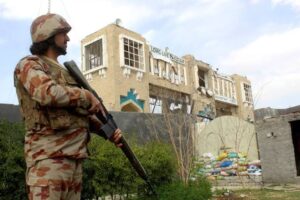
Modern technology introduces a dangerous and unpredictable dimension to this friction. Security forces recently intercepted and shot down suspicious drones, signaling a tactical evolution in the combat strategies utilized by the Taliban. This development confirms that the threat has moved past conventional weaponry. While operations against extremist elements continue across Khyber Pakhtunkhwa, the use of advanced tech makes the conflict increasingly complex to manage.
Aleema Khan Warns of ‘Manufactured’ Tensions as Afghanistan-Pakistan conflict continues
The resurgence of Tehrik-i-Taliban Pakistan (TTP) activities presents a primary challenge to regional order. TTP has intensified its strikes to weaken the very foundations of society rather than focusing on purely military objectives. It also aims to wage a psychological war designed to broadcast insecurity and chaos throughout the civilian population.
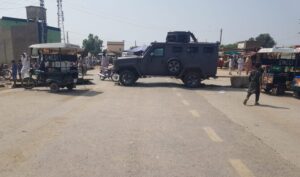
In urban hubs like Dera Ismail KhanDera Ismail Khan, Bannu, and Peshawar, law enforcement agencies face frequent and targeted attacks. Incidents of target killings and open armed patrols by militants pose a direct challenge to the writ of the state. Simultaneously, Pakistan maintains its cross-border operations to neutralize centers where militants reportedly plan these terror acts. However, these strikes often deepen the mistrust between the two nations and further inflame public provocation on both sides.
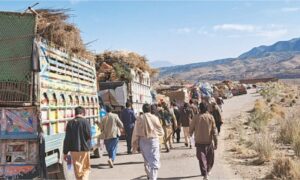
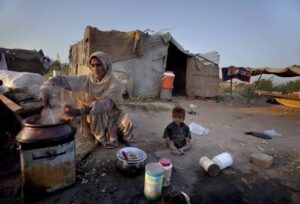
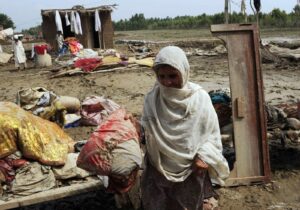
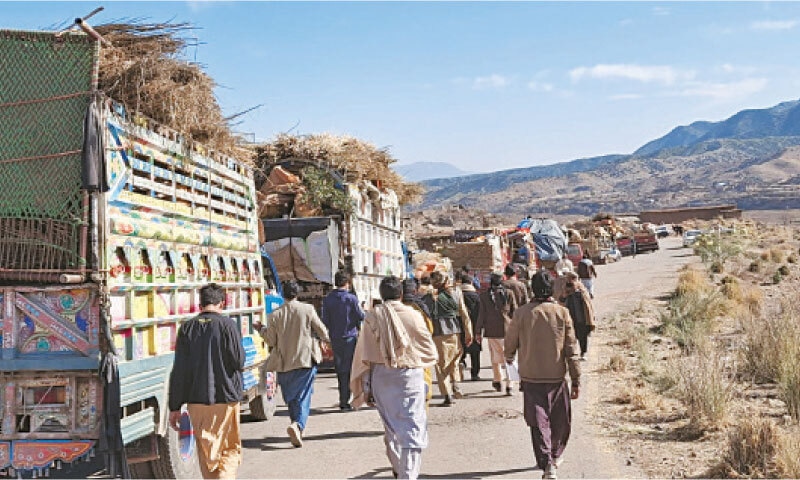
This conflict has now evolved into an undeniable humanitarian disaster. Thousands of residents along the border face forced displacement from their ancestral homes. Beyond the Afridi tribes fleeing the Tirah Valley, countless others find it impossible to live in peace amidst the terror. A recent report by the World Food Programme (WFP) confirms that over 20,000 families have already migrated from Afghan border regions, seeking safety elsewhere while battling acute hunger and a total lack of shelter.
Confusion Mounts Over Tirah Valley Displacement: Operation Denied Amid Mass Exodus
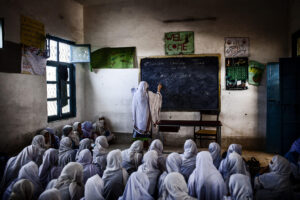
The social fabric of these displaced communities is fraying rapidly. A severe shortage of food, housing, and medical facilities on both sides of the border has turned the situation dire. Children lose their right to an education, women endure heightened vulnerability, and the elderly suffer without basic healthcare. These systemic failures create a generational crisis that will likely haunt the region for years to come.
Despite the prevailing gloom, some diplomatic movements offer a glimmer of hope. Reports suggest that China recently engaged both Kabul and Islamabad to encourage dialogue and reduce friction. This involvement underscores China’s growing diplomatic weight in the region. However, the ultimate success of these efforts remains to be seen, especially since previous mediation by Qatar, Turkey, and Saudi Arabia failed to yield a lasting improvement in the relationship between Pakistan and the Afghan Taliban.
In light of these challenges, a significant proposal has emerged: the formation of a joint reconciliatory jirga. This body would ideally feature influential political and religious figures with deep-rooted authority in both countries. Potential members include Gulbuddin Hekmatyar, Abdul Rabb Rasul Sayyaf, Hamid Karzai, Maulana Fazlur Rehman, Siraj-ul-Haq, Professor Muhammad Ibrahim Khan, Fazlur Rehman Khalil, Major Amir, and Barrister Muhammad Ali Saif. Their collective experience in regional affairs could provide the necessary foundation for a meaningful breakthrough.
The viability of such a jirga depends entirely on the sincerity of all participating parties. If the assembly becomes a mere formal exercise, it will yield no practical benefit for the people on the ground. However, a serious, high-level engagement could mitigate current tensions and establish a permanent security framework. Ultimately, the Pakistan-Afghanistan standoff is a shared tragedy. Decades of history prove that lasting peace is never won by force, but through consistent dialogue, mutual trust, and a shared respect for human life.