
The draft of the 27th Constitutional Amendment has finally emerged in Parliament, almost as if it stepped into the light reluctantly, after being held behind velvet curtains.
The government and its allies appear determined to push it through, while political delegations shuttle between factions to negotiate assent.
Yet, it seems likely that Pakistan Tehreek-e-Insaf and its like-minded groups will choose their natural role: the voice of opposition, the critic, the watcher from the other side of the aisle. Their decision aligns not only with political interest but with the logic of parliamentary counterbalance.
Meanwhile, some smaller parties hover at the boundary between refusal and consent—hesitation giving way, as history so often teaches us, to eventual alignment with power.
The choreography of secrecy
What lends this moment its peculiar texture is the secrecy that surrounded the amendment’s drafting. The Prime Minister Shehbaz Sharif himself reached out to coalition partners to secure support. Yet the text they were asked to endorse remained unseen.
This is not unfamiliar. During the 26th Amendment, the same veil hung over the process until the final vote was cast. That event is now part of the official record—quietly, unceremoniously. The question now is whether the 27th Amendment will also become part of the Constitution without ever having its face fully revealed to the nation.
This raises a deeper, almost philosophical unease:
What does it mean to amend a Constitution in the dark?
The constitution as a document of weight — now made weightless
The Constitution was meant to carry gravitas—a foundational contract that could not be altered lightly. That is why the framers required a two-thirds parliamentary majority for any amendment. The purpose was not procedural complexity—it was moral friction. It was meant to slow the hand that reaches for the Constitution. To ensure that each alteration carries deliberation, consensus, and public justification.
Yet the present moment suggests another logic:
the Constitution bends when power decides it must.
Parliament, caught between ritual and authority
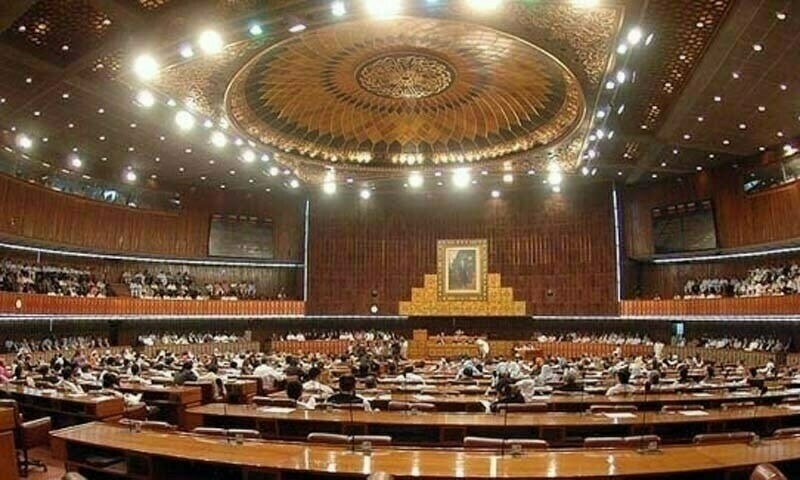
The manner in which this amendment has been brought forward risks turning Parliament into a ceremonial space—an assembly that votes, but does not speak; that approves, but does not question.
A Parliament that is discouraged from debate is not simply weakened.
It is reduced.
For a constitutional amendment, silence is not a neutral act. It is a statement.
It suggests that the Constitution is no longer a shared covenant, but a technical document adjusted through negotiation rather than national reasoning.
For this amendment to hold legitimacy—political, legal, or moral—it must be discussed openly.
Not whispered. Not hinted. Not passed through nods and alignments.
Debate is not an obstacle to governance; it is the very form of democratic governance.
What remains at stake?
The 27th Constitutional Amendment stands at the threshold of becoming law. Whether it enters with clarity or with obscurity remains undecided.
If it passes in silence, it will join the Constitution as a text amended not through national reasoning, but through political choreography.
And a Constitution altered without conversation may persist in form—but it will hollow in meaning.
The test before Parliament now is not merely procedural. It is historical. Will it choose to act as the guardian of the Constitution,
or only its caretaker?