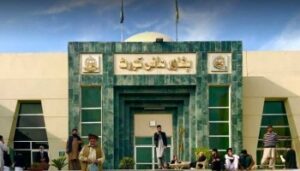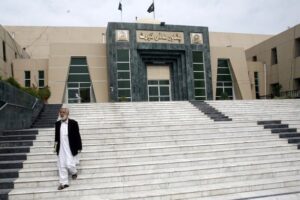


PESHAWAR – The Peshawar High Court (PHC) has dismissed a writ petition filed by the Pakistan Broadcasting Corporation (PBC) challenging the formation of an inquiry committee by the Speaker of the Provincial Assembly regarding the Radio Pakistan ransacking during May 2023 protests.
The court, in its detailed verdict, ruled that the inquiry has not yet been finalized and no material was presented to prove that the committee formed by the Speaker is influencing the judicial proceedings of the case.
The Background: May 9 and 10 Violence
The petition filed by Radio Pakistan stated that during the violent protests on May 9 and 10, the Radio Pakistan building was attacked, looted, and set on fire, resulting in severe damage. Following the incident, a case was registered under the Anti-Terrorism Act (ATA). The petition specifically highlighted that several current members of the Provincial Assembly are among the accused named in this case.
The Petitioner’s Argument: Conflict of Interest
Radio Pakistan’s counsel challenged the notification issued by Speaker Babar Saleem Swati on December 12, which formed a 9-member inquiry committee consisting of assembly members. The petitioner’s stance included:
- Accused as Judges: Since some committee members are already named as accused in the Radio Pakistan attack case, they “cannot be judges in their own cause.”
- No Legal Status: The counsel argued that the Speaker’s notification has no legal standing and the Speaker does not have the authority to interfere in court proceedings.
- Potential Influence: There were concerns that the presence of nominated accused individuals in the committee would compromise the inquiry.
The Court’s 9-Page Written Judgment
The 9-page written judgment, authored by Justice Sahabzada Asadullah, clarified the constitutional boundary between the judiciary and the legislature.
Key highlights of the verdict include:
- Premature Filing: The court declared the application “premature” at this stage. It noted that no evidence was submitted to show that the inquiry is obstructing the case or that it has reached a final conclusion.
- Parallel Proceedings: The judgment stated that within the context of the Constitution, legislative inquiries can run alongside judicial trials in various matters without creating a constitutional clash.
- Institutional Tension: The court remarked that “tension arises when one institution tries to gain superiority over the other,” however, such a situation is not evident in this case.
- Constitutional Competence: The court affirmed that the legislature and executive bodies possess the constitutional competence to regulate internal affairs and conduct inquiries in cases of public interest. This falls within their constitutional limits.
- Legal Recourse: The court concluded that the petitioners are free to seek relief from the relevant legal forums according to the law.