
Pakistan is fundamentally an agrarian nation. However, flawed policies now force us to import basic staples like wheat and chili. This dependency raises a critical question: can we ever achieve food security or self-sufficiency? Beyond economic challenges, we face a dangerous violation of hygiene. The rampant cultivation of toxic vegetables and fruits creates a “poison on the plate.”
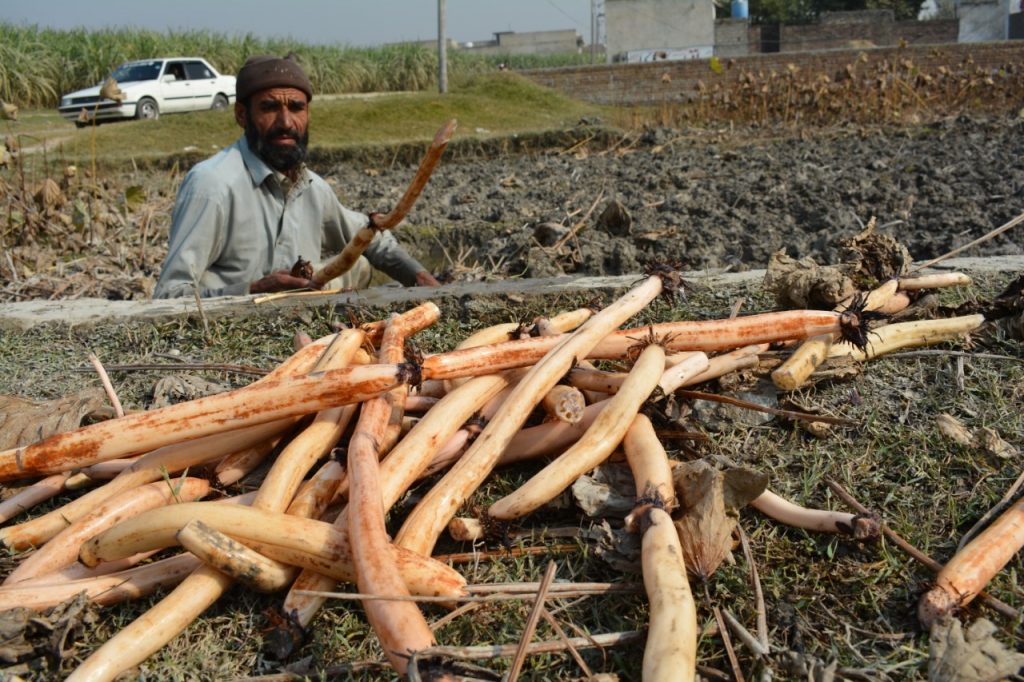
During our investigation, farmer Naveed Jan provided a chilling perspective. He stated plainly: “We are putting poison on the plate.” According to Jan, hazardous resources have turned our daily meals into health hazards. Today, even vegetarians fall prey to life-threatening diseases. The very “greens” they consume often grow in filth.
Also Read: KP Launches Climate Action Board to Tackle Environmental Crisis
A Toxic Harvest: The UNICEF Revelation
A recent UNICEF report reveals a grim reality. Pakistan is among the top five countries where industrial chemical waste and untreated sewage irrigate crops. This “poisoned” produce includes onions, eggplant, spinach, mint, ladyfinger, and potatoes. It also affects colocasia (kachalu), cauliflower, pumpkin, and various gourds like bitter gourd and bottle gourd. Major crops such as wheat, sugarcane (kumad), and maize suffer too.
Contamination also reaches our drinking water. In major cities, water often contains arsenic, lead, and sewage. This neglect has triggered a catastrophic health crisis:
- Kidney Patients: Nearly 25 million people.
- Cancer Patients: Reaching 20 million.
- Hepatitis Patients: Affecting 25 million individuals.
- Heart Disease: More than 40 million cases.
- General Health: Every third or fourth person suffers from diabetes, high blood pressure, or joint pain.
Also Read: Govt Makes Tree Plantation in KP Mandatory Across Public Institutions
The Khyber Pakhtunkhwa Crisis
The Khyber Pakhtunkhwa Assembly recently discussed this crisis. The provincial government admitted that hazardous water irrigates many crops. A report highlighted that orchards in Peshawar use toxic canal and drain water. This practice spreads serious skin diseases rapidly. Laboratory tests confirm that 90% of vegetables in Peshawar are polluted and unfit for consumption.
The reality is grim. Houses along irrigation canals dump waste directly into the water. Additionally, people use harsh acidic chemicals to clean drains. This toxic cocktail flows into canals and eventually enters our food chain.
Also Read: Disaster Management in KP Requires Urgent Financial Support
The Toll on Human Health
Skin specialist Dr. Muhammad Affan explains that our skin is highly vulnerable. It consists of water, proteins, and minerals. Contaminated food and water cause several conditions:
- Psoriasis and Eczema.
- Scabies (Kharish) and Heat Rashes.
- Bacterial Infections: Summer humidity accelerates dangerous bacterial growth.
- Internal Toxicity: Toxins from the liver enter the bloodstream. These manifest as painful boils in both children and adults.
The Vanishing Drop: Water Scarcity and Quality
Many perceive water as an infinite, free resource. In reality, population growth and climate change place extreme pressure on this limited asset. We do not pay for water with currency. We pay with diseases, lost crop yields, and collapsing ecosystems.
Also Read: Khyber Pakhtunkhwa’s Agricultural Lands Under Threat as Housing Societies Flourish
Currently, only 39% of Pakistanis access clean drinking water. More than six out of ten people rely on unsafe sources. In Peshawar, UNICEF data shows that 80% of water sources are contaminated. Only 20% are safe. Furthermore:
- Falling Water Table: Groundwater levels have dropped to an average of 188 feet.
- Bacterial Contamination: E. coli affects 17.5% of urban and 12.9% of rural water sources.
- Safe Samples: Only 13.6% of water samples are completely free of E. coli.
The Path Forward: A Collective Responsibility
Every development project must integrate pollution control and water recycling. As Naveed Jan warned, government action alone is insufficient. Every household must contribute. Repair your leaks, recycle your water, and consume cautiously. Small steps by millions of people create a massive difference. Water is the foundation of life. Today’s polluted drop reduces tomorrow’s harvest and destroys our health.