
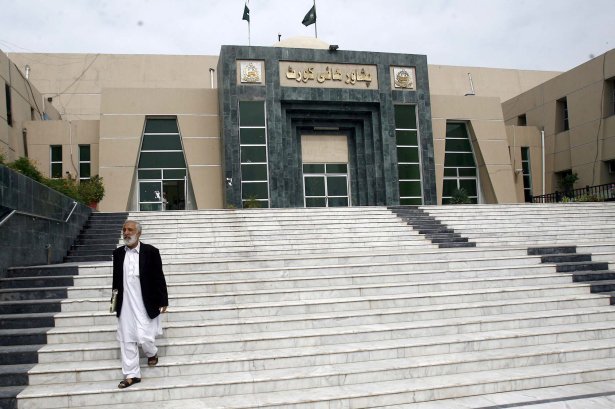
PESHAWAR – Peshawar High Court (PHC) has declared strikes and court boycotts by bar councils and bar associations unconstitutional and unlawful, in a ruling that intensifies debate over the role of lawyers in Pakistan’s justice system and the limits of protest within democratic institutions.
In a 43-page judgment written by Justice Syed Arshad Ali, a two-member bench comprising Justice Arshad Ali and Justice Waqar Ahmed held that strike calls obstruct the administration of justice, violate the fundamental rights of litigants and undermine public confidence in the courts. The court stated that lawyers, while recognised as custodians of democracy and the rule of law, cannot shut down the justice system in the name of protest.
The ruling emerged from writ petitions filed by advocates Shabbir Hussain Gigyani and Ali Azeem Afridi, whose law licences had been suspended by bar authorities. The court struck down those suspensions and ruled that bar councils do not possess the legal authority to cancel or suspend a lawyer’s licence or to prevent them from appearing in court.
The case of Shabbir Hussain Gigyani centred on his representation of a police officer, Bahr-e-Mand Shah, accused of killing a young man in Charsadda on 22 August. After the officer surrendered and applied for bail, objections were raised by members of the legal community. Bar associations passed resolutions barring lawyers from representing the accused officer. During hearings, a group of lawyers created a disturbance in court, which the judges described as a breach of judicial decorum.
Despite this, the court held that Article 10A of the constitution guarantees every accused person the right to be represented by a lawyer of their choice. It ruled that resolutions preventing legal representation violated constitutional protections and legal traditions.
In a parallel case, the Khyber Pakhtunkhwa Bar Council suspended the licence of Ali Azeem Afridi for appearing in court during a strike day, an act it labelled a disciplinary offence. The high court rejected this rationale, stating that appearing in court could not constitute a breach of discipline and, therefore, the suspension was unlawful.
The judgment laid out the financial impact of lawyers’ strikes in precise detail. According to the court, a single strike day in Khyber Pakhtunkhwa results in losses of around 57mn rupees in operational court expenses. The principal seat and benches of the Peshawar High Court spend more than 14mn rupees per day, while session courts exceed 19mn rupees and civil courts exceed 23mn rupees in daily expenditures. These figures do not include additional costs incurred by Advocate General offices, Attorney General departments, prosecutors, law officers, police officials, government witnesses and litigants who travel to court.
The court warned that repeated boycotts delay thousands of pending cases, deepen backlogs and erode public trust in the justice system at a time when courts increasingly move towards digitalisation to speed up the delivery of justice.
While recognising the right of lawyers to protest, the court advised the adoption of peaceful and lawful methods, including wearing black armbands, displaying banners and holding peaceful assemblies without blocking court proceedings.
Finally, the court instructed the Additional Registrar of Peshawar High Court to circulate the ruling to all courts across the province and allowed both writ petitions, formally overturning the contested suspensions.