
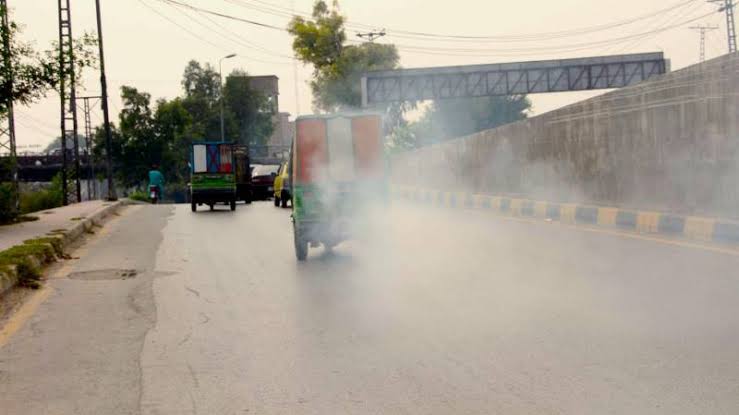
The daily scoreboard of air quality in Peshawar has become nothing short of an alarm bell. Every morning, the Air Quality Index (AQI) hovers around 120, barely edging into “unhealthy” territory. By evening, it regularly breaches that threshold—entering the realm of unhealthy for all—a state that should rattle both citizens and authorities alike.
Yet in practice, alarm is met with indifference. The Khyber Pakhtunkhwa government, environmental bodies (if they exist in any operative form), and civic agencies have habitually failed to treat Peshawar’s toxic climate with the urgency the city’s residents—especially children, the elderly, and respiratory patients—desperately need.
Also Read: Peshawar’s Pollution Crisis: Can Artificial Rain Be The Answer?
Peshawar’s episodes of extreme weather are climactic echoes of a more insidious menace: escalating pollution. We tend to reduce the concept of “pollution” to smog, dust, or heaps of garbage, but environmental and medical experts insist the picture is far more complex. Plastic water bottles leaching microplastics, untreated industrial effluent, discharged medical waste, and raw sewage all conspire to convert rivers into corridors of poison. When these rivers are “partially cleaned,” the amassed toxins flood the air over the city in aerosol form.
As a result invisible, lethal contamination flowing through neighborhoods, precipitating waves of respiratory distress, skin ailments, eye irritation, and cardiac problems. Hospitals in Peshawar are now reporting surging admissions for these conditions, an ominous sign that everyday life here is sickening the body.
Also Read: Govt Makes Tree Plantation in KP Mandatory Across Public Institutions
The Contaminated Arteries

The city is crisscrossed by seasonal streams and drainage channels that were once lifelines. Today, they are dumping grounds. Factories pour unfiltered chemicals, hospitals unload biomedical waste, and households dump sewage and garbage indiscriminately.
Despite court orders to restrain such practices, enforcement remains largely theoretical. Until the mess overwhelms them, civic agencies rarely act—and then only partially. The net effect is that these waterways have become vectors: when cleaning is attempted, the disturbance sends toxic particles airborne, further fouling Peshawar’s air.
Also Read: Peshawar Urban Flooding exposes years of civic neglect
Sources of the Smog

While dense traffic and a dearth of greenery certainly worsen the problem, they don’t tell the full story. The city hosts over 300,000 illegal rickshaws and taxis—many of them ancient, unregulated, and heavily polluting.
Motorcycles sold via installment plans have flooded the city; side-by-side, they crowd narrow streets, clog traffic, and drag engines that spit black smoke.
Repair shops and roadside mechanics operating with impunity kick up fine soot and particulates.
Fuel quality, emission checks, and regulatory supervision are lax to nonexistent.
Meanwhile, wholesale felling of trees has stripped the city of its natural filters.
Repeated pronouncements—”We will conduct a crackdown,” “We will license only clean vehicles,” “We will enforce tree-planting campaigns”—have come and gone, but the smog thickens anyway.
Though the BRT (Bus Rapid Transit) service offers some hope, its reach and speed remain limited. Without a rapid shift to electric vehicles and serious enforcement of emission laws, Peshawar risks sliding toward the fate of cities like Lahore or Delhi—names that have become synonyms for air apocalypse.
AQI 120: A ‘Warning’ That Has Become Normal
An AQI of 120 is officially deemed “unhealthy for sensitive groups.” Yet on many Peshawar mornings, that is the norm. By evening, many areas breach 150, 200, and sometimes higher—levels categorized as “unhealthy” or “very unhealthy.” For a city where residents routinely breathe this air, those thresholds now feel like a daily burden not a warning.
Medical practitioners say they see more cases of asthma, chronic bronchitis, skin rashes, conjunctivitis, and cardiovascular complications than ever before. Patients arrive gasping, wheezing, or with inflamed lungs. Clinics and hospitals are bracing for further surges—particularly in winter months, when inversions trap pollutants near ground level.
Over the years, government and civic authorities have issued dozens of declarations: remove illegal rickshaws, ban older taxis, plant trees, relocate polluting industries, monitor emissions, shift to electric vehicles. None of these have ever translated into consistent action. Many promises expire quietly. Some are partly executed, only to be reversed or ignored.
Electric vehicle (EV) policy is now officially approved, and the move offers a ray of hope. But until the EV fleet scales meaningfully, old, polluting vehicles will continue to dominate. Meanwhile, weak political will and administrative inertia undermine enforcement of even existing environmental laws.
A City Between Breaths
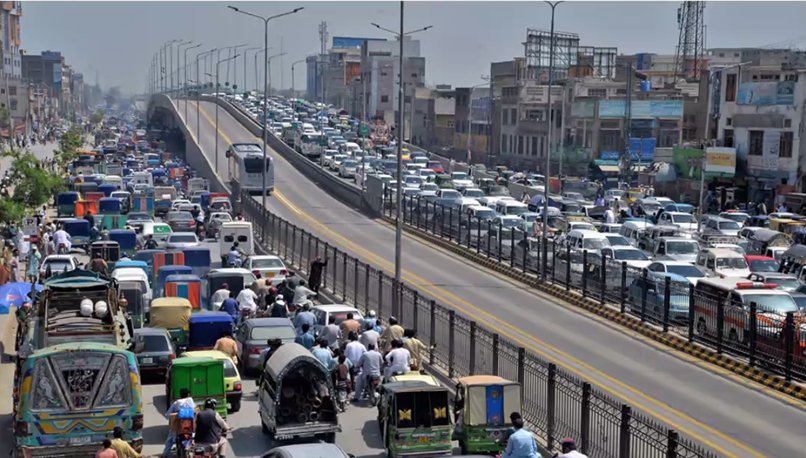
Peshawar was once lauded as “the flower city,” full of gardens, trees, and fresh wind corridors. Those days seem distant now. What began as gradual densification of green land has turned into rampant urban sprawl. Narrow streets, clogged by endless traffic and construction, trap every speck of dust and pollutant.
In such a city, breathing becomes a fight. Daily, the residents inhale not just dust and smoke—but microscopic toxins borne of unregulated medical, industrial, and domestic waste. The city’s respiratory—and civic—health is unraveling.
Peshawar’s crisis demands immediate action—bold, sustained, legally backed. Here is a minimal roadmap:
Enforce existing laws on emissions, waste disposal, and industrial discharge—without selective exemptions.
Retire or retrofit all polluting rickshaws, taxis, and motorcycles.
Scale up electric vehicles rapidly, with incentives, charging infrastructure, and preferential access.
Restore waterways via strict oversight and cleanups, preventing toxic release into air and soil.
Replant lost forests and develop urban green belts to absorb dust and purify air.
Mobilize communities through awareness, citizen monitoring, and reporting of violations.
Bridge governance gaps by empowering environmental agencies and giving courts teeth to enforce orders.
If Peshawar fails to act now, it could slip into the company of the world’s most hazardous cities. But if it shows political resolve and civic courage, it may yet stem the smog before it becomes the city’s identity.