
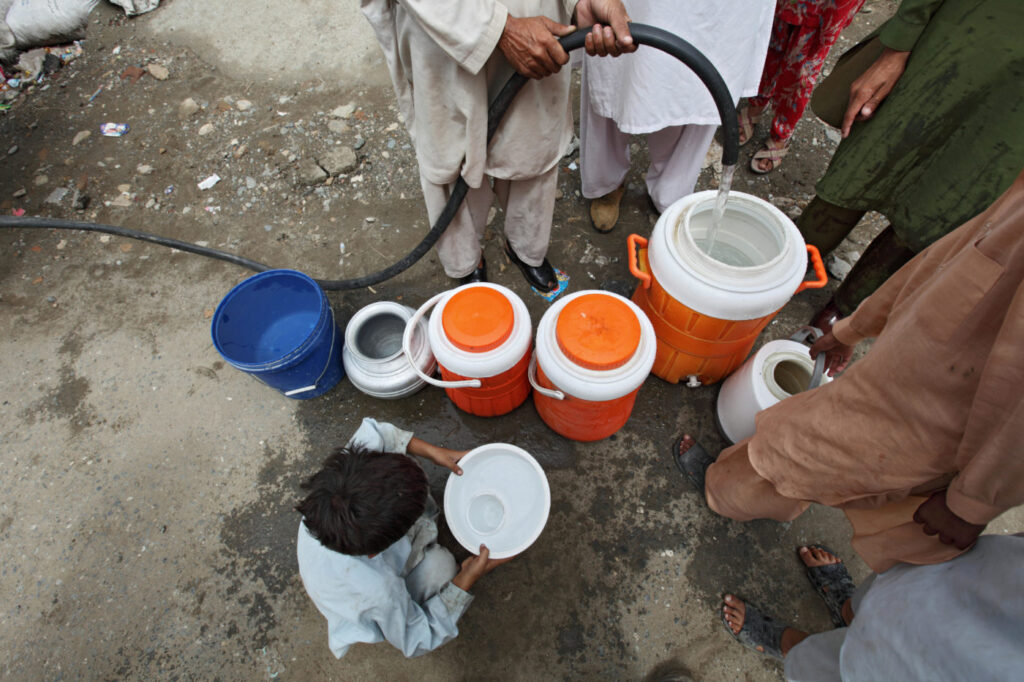
PESHAWAR – A new UNICEF data reveals that 80% of the Peshawar’s water sources are contaminated. With only 20% of water deemed safe for human consumption, millions of residents face a growing threat from preventable diseases and infrastructure collapse.
Bacteria and the Peshawar Water Crisis
The report highlights a deadly gap between water availability and water safety. While 83.4% of households have physical access to water, the quality is a public health nightmare. Widespread bacterial contamination, specifically E. coli, is ravaging the system.
According to the survey:
- Only 13.6% of water samples tested were entirely free of E. coli.
- Contamination is more severe in urban centers (17.5%) than in rural areas (12.9%).
- Health experts warn that this toxic supply is the direct cause of rising cases of diarrhea, polio, and other waterborne illnesses.
Also Read: The 64 Billion Rupee Tap: KP Demands Decades of Water Dues from Punjab
Sanitation Failure
The Peshawar water crisis is exacerbated by a massive sanitation deficit. Approximately 400,000 people in the city still lack access to basic toilets. This lack of infrastructure forces human waste into the environment, further poisoning the local ecosystem.
Environmentalists are also concerned about the sustainability of the city’s aquifers. The average groundwater level has dropped to 188 feet. With a population growth rate of 2.86%, the demand is rapidly outstripping the falling supply.
Without immediate government intervention to modernize filtration and expand sanitation, Peshawar’s “silent emergency” threatens to become an irreversible humanitarian disaster.
Also Read: Tank’s longstanding water crisis sees major govt intervention