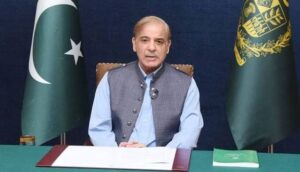

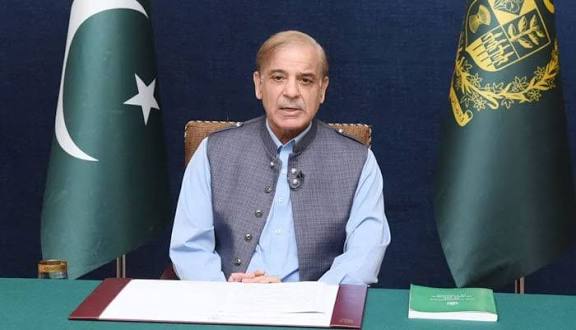
ISLAMABAD – Prime Minister Shehbaz Sharif has declared a sweeping national austerity plan and a transition to a four-day workweek for federal institutions as Pakistan grapples with regional instability and an impending surge in petroleum prices.
Addressing the nation on Monday, the Prime Minister detailed a series of drastic executive decisions aimed at stabilizing the economy and reducing state expenditures over the next two months.
Regional Tensions and National Security
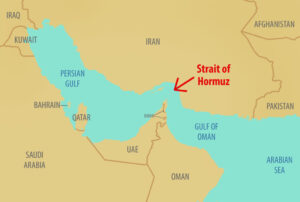
The Prime Minister opened his address to the nation by highlighting the precarious security situation currently engulfing the region. He issued a formal condemnation of recent military strikes in the Middle East, specifically citing attacks in Iran and against Saudi Arabia and other Arab nations.
“The entire region remains gripped by a state of war,” the Prime Minister stated. He expressed solidarity with the Iranian leadership and people following recent strikes, while emphasizing that Pakistan continues to lead diplomatic efforts to de-escalate regional tensions.
Regarding domestic security, the Prime Minister reaffirmed that the nation’s sovereignty remains a top priority. He noted that the military leadership is actively supervising efforts to protect Pakistan’s frontiers, particularly along the western border, amidst global threats to peace.
Sweeping Austerity and Fuel Cuts
Citing a projected hike in global oil prices in the coming days, the federal government has moved to drastically slash fuel consumption and administrative costs. The following measures take effect immediately for a period of 60 days:
- Vehicle Restrictions: Authorities will ground 60% of all government-owned vehicles.
- Fuel Reductions: The government has mandated a 50% cut in fuel quotas for all federal employees and official vehicles.
- Travel Ban: A complete moratorium now exists on foreign travel for federal ministers, advisors, special assistants, and provincial governors.
Salary Deductions and Workforce Restructuring
To alleviate the burden on the national exchequer, the Prime Minister announced significant pay cuts across the legislative and executive branches:
- Federal Ministers: The government is withholding the salaries of all federal ministers for the next two months.
- Parliamentarians: Members of Parliament will face a 25% salary deduction.
- Senior Bureaucracy: Officials in Grade-20 and above will contribute two days’ worth of salary to the national effort.
The federal workforce will also see a structural shift. Under the new four-day working week, 50% of “non-essential” staff will transition to a work-from-home model to reduce utility and commuting costs.
Impact on Education
In a move to further reduce the country’s carbon footprint and energy demand during this crisis, the government has ordered the closure of all schools for two weeks. Educational institutions will pivot to online classes to ensure academic continuity during the hiatus.
The Prime Minister concluded by urging the nation to adopt a spirit of resilience, stating that these “difficult but necessary” decisions are essential to navigate the current global energy and security crisis.