
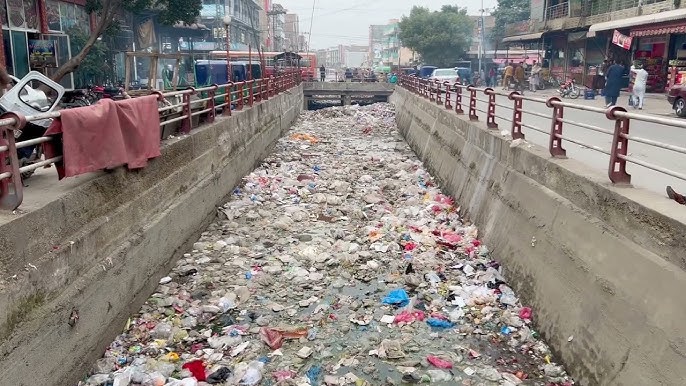
PESHAWAR – In the colonial era, engineers designed Peshawar’s canal system as a scientific marvel. These waterways once provided the essential lifeblood for food security and communal health. Residents used the flowing water for drinking, bathing, and religious ablutions. They trusted a system where soil fertility and human longevity remained in a healthy balance. But now that life-giving artery has transformed into a “toxic cycle” of disease.
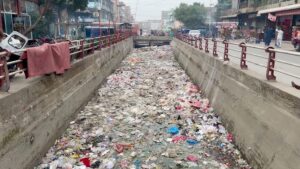
This change stems from a lack of regulation over illegal sewage and industrial waste. Now, the city’s canals act as open sewers. As this contaminated water seeps into the earth, it carries chemicals and arsenic into the groundwater.
Also Read: Plastic Pollution in Pakistan: An Escalating Environmental Threat
Grave Risks to Public Health
The human cost of this environmental neglect remains staggering. According to a specialized medical report, Peshawar faces a surge in water-borne ailments. Doctors report an alarming trajectory of skin diseases and chronic intestinal infections. Furthermore, cases of liver and kidney failure continue to rise. Among the most vulnerable, children suffer from severe nutritional deficiencies. Meanwhile, the presence of heavy metals elevates the long-term risk of cancer for the entire population.
What began as an irrigation problem has now evolved into a national threat. These toxins do not stop at the water table. Instead, they travel through the roots of crops. Ultimately, this process transfers poisonous elements directly into the human food chain.
Also Read: KP Environmental Protection Agency Launches Crackdown on Industrial Pollution
The Sinking, Saline Table
The groundwater crisis extends beyond quality to the very survival of the resource. Research indicates that over 60% of Pakistan’s underground water is no longer safe. In major urban centers, the water table recedes at a terrifying pace. Cities like Lahore and Multan, for example, experience drops of up to 300 feet. Peshawar Valley faces a similar imbalance where extraction far exceeds natural recharge.
In semi-arid regions, rising salinity compounds the threat. Approximately 80% of agricultural land now relies on saline or semi-saline water. This salt-heavy irrigation gradually kills the natural productivity of the soil. Consequently, once-fertile fields become barren. This shift pushes the farming community into a deep economic crisis.
Also Read: Peshawar’s Pollution Crisis: Can Artificial Rain Be The Answer?
The Silence of the Regulators
The crisis finds its roots in a massive governance failure. Large-scale housing schemes continue to emerge without functional water treatment plants. Therefore, these developers discharge raw effluent directly into the canal network.
The situation is particularly dire along Peshawar’s Nasir Bagh Road. Here, marble factories release chemical-laden wastewater without any treatment. This waste does more than pollute the water. Specifically, it creates a suffocating, impenetrable crust on the topsoil. This layer permanently strips the land of its fertility. Local observers estimate that thousands of acres of prime agricultural land have become uncultivable “wastelands.”
Also Read: Poison on Our Plates: The Silent Crisis of Contaminated Food and Water in Pakistan
Despite repeated formal appeals, the relevant departments remain largely silent. This administrative paralysis allows toxic water to alter the structure of the land. Until the state enforces strict monitoring, the veins of Peshawar will carry poison instead of life.