

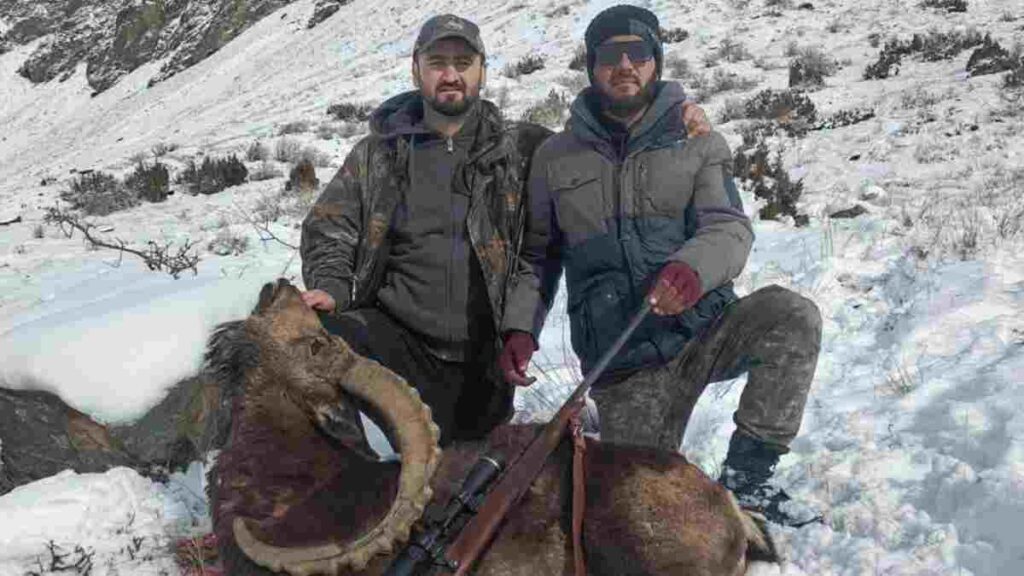
CHITRAL – The 2026 winter season has officially commenced with a major milestone for Himalayan Ibex trophy hunting in Chitral. In the rugged terrains of the Terich Rush Gol (TT Conservancy), the first hunt of the year was successfully completed under the strict supervision of the Wildlife Department.
A New Record at Rush Gol
Hammad Muhammad Baig, a skilled young hunter hailing from Lower Chitral, made headlines by successfully hunting a magnificent Himalayan Ibex. According to wildlife officials, this expedition was carried out under Permit No. 1 of 2026.
The hunt was a display of extraordinary precision; Baig took the shot from a daunting distance of approximately 342 meters. Upon recovery, the Ibex’s horns were measured at an impressive 45.2 inches, marking a significant achievement for this year’s conservation efforts.
Consistency and Skill
This victory marks the second consecutive year of success for Hammad Muhammad Baig in the Terich Rush Gol Conservancy. His track record reflects a deep understanding of the terrain and wildlife ethics:
- 2026 Season: 45.2-inch trophy hunt.
- Previous Season: 37-inch trophy hunt.
- Permit Details: As a local hunter, Baig secured his permit by depositing a fee of $530.
Authorities from the Chitral Gol National Park (CGNP) Wildlife Division and the Wildlife Department of Upper Chitral supervised the entire process, ensuring all rules and regulations were strictly followed. Baig’s back-to-back success is being hailed as a testament to his expertise and his unwavering commitment to the hunting code of conduct.
Conservation Through Community Participation
The Himalayan Ibex trophy hunting in Chitral is more than just a sport; it is a cornerstone of “Sustainable and Scientific Wildlife Management.”
“These successes reflect our commitment to preserving biodiversity while empowering the people who live alongside these animals,” stated a representative from the Wildlife Department.
Where does the money go?
The revenue generated from trophy hunting permits is strategically utilized for:
- Community Welfare: Funds are funneled directly into local development projects.
- Nature Conservation: Resources are used to protect natural habitats and prevent illegal poaching.
This program serves as a model of effective cooperation between the Wildlife Department and the local population, ensuring that the majestic Himalayan Ibex continues to thrive for generations to come.