
Ella Wadiya drew intense attention across South Asia after her appearance at the prestigious Le Bal des Débutantes in Paris because her family background reopened an old, emotional conversation about history, identity, and legacy.
Social media users in Pakistan and India quickly turned a fashion debut into a political and cultural debate, and as a result, the story began trending across platforms within hours.
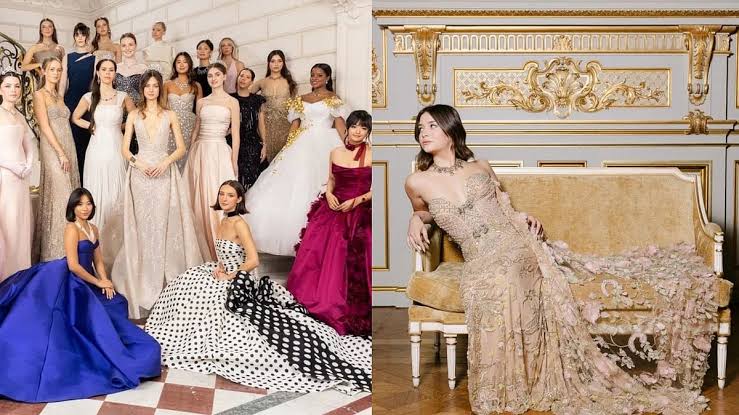
Ella Wadia, great-great-granddaughter of Muhammad Ali Jinnah, made her debut at Le Bal des Débutantes 2025 in Paris wearing an Elie Saab gown.
— Entertainment Feed (@EntFeed_) December 2, 2025
Today's deals:https://t.co/YOotvBT38x#LeBalDesDebutantes #EllaWadia #MuhammadAliJinnah pic.twitter.com/fRN6cuiKCQ
Ella Wadiya is the daughter of Indian businessman Jehanging Wadiya and fashion figure Celina Wadiya. Her family belongs to India’s well-known Parsi industrial lineage. Moreover, her grandfather, Nusli Wadiya, founded the Wadiya Group in India and served as its first chairman, which made the family one of the most influential industrial houses in the country.
However, public interest intensified because Nusli Wadiya is the son of Dina Jinnah, the only daughter of Muhammad Ali Jinnah and his wife Rattanbai. Dina later married Neville Wadiya, who came from a prominent Parsi family, and chose to live her life in India rather than move to Pakistan. Consequently, Ella Wadiya became a symbolic figure in a debate that blends fashion, politics, and history.
For her debut at Le Bal, Ella selected a gown designed by Lebanese couturier Elie Saab. Although she stepped into the global fashion spotlight through this event, she keeps a low digital profile. Furthermore, her Instagram account remains private, which has added another layer of mystery and increased public curiosity.
Meanwhile, social media users in both countries seized the moment and turned it into a larger argument about identity. Pakistani users emphasized her bloodline and highlighted her connection to Muhammad Ali Jinnah. In contrast, Indian users stressed that her family belongs to India’s Parsi community and firmly rooted business class.
Several Pakistani media outlets also described her as the great-granddaughter of Muhammad Ali Jinnah, and therefore framed the story through a Pakistani historical lens. As a result, the coverage widened the debate beyond social media.
Notably, user reactions added fuel to the discussion. Rabia, a Pakistani user, wrote that people should view the event as an expression of personal freedom rather than a religious issue. On the other hand, Indian user Kamal Chandola commented that history had come full circle by contrasting Partition-era ideology with modern global lifestyles. Similarly, Priyanka, another Indian user, argued that Dina Jinnah chose India freely and therefore defined the family’s identity.
At the same time, Pakistani voices such as Sana Mustafa defended Muhammad Ali Jinnah’s religious stance, while Amina Hassan urged people not to mislabel Ella Wadiya’s nationality. Consequently, the online debate continues to grow and attract wider readership across both countries.