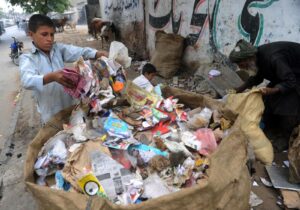

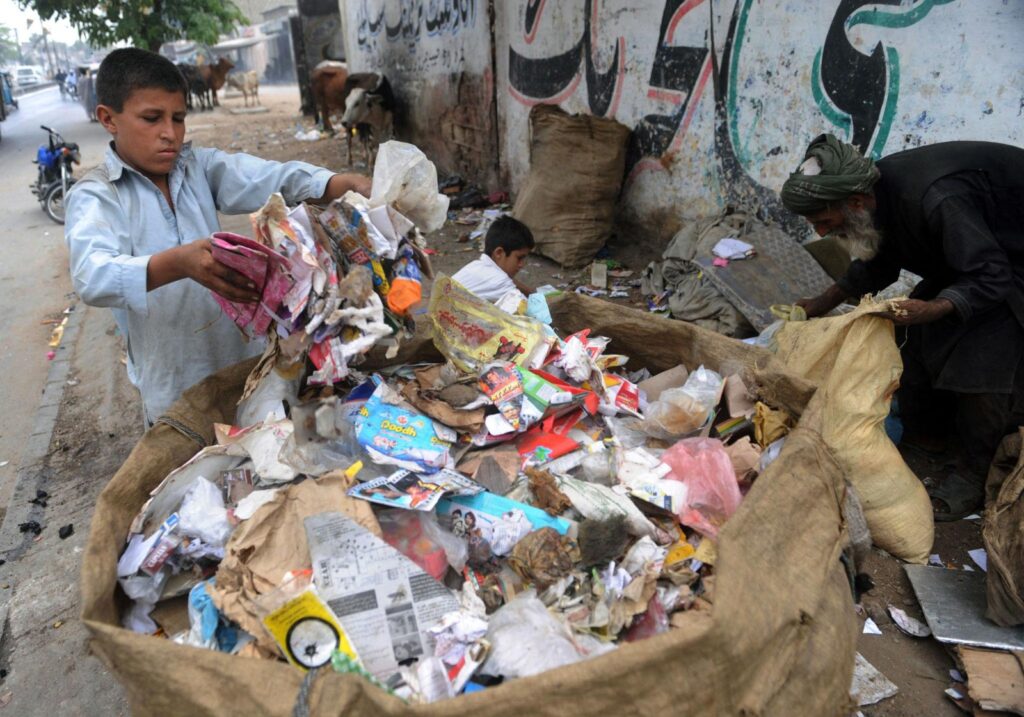
PESHAWAR – In a warehouse filled with the smell of plastic, paper and rot, Javed Ali moves carefully through piles of garbage in Peshawar. For fifteen years, this work has been his livelihood. But two years ago, it nearly cost him his health.
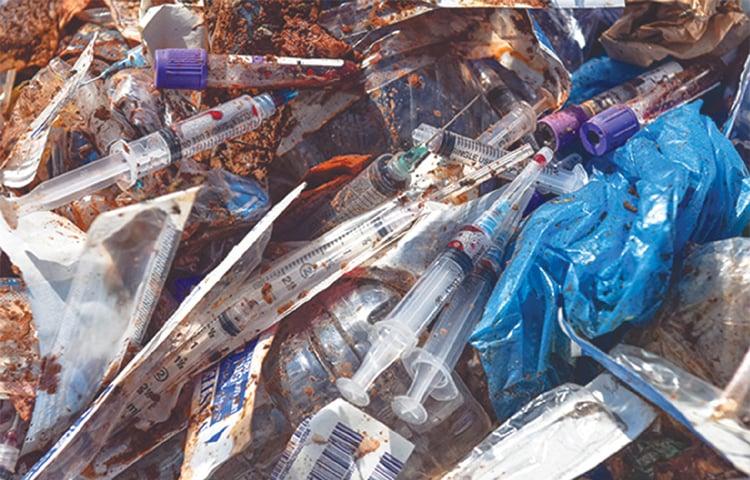
Javed, one of many Afghan Refugees in Peshawar who earn a living by sorting the city’s waste, remembers the moment clearly. While separating discarded materials, a used syringe pierced his hand. Doctors later told him the infection that followed—hepatitis C—likely came from contaminated medical waste.
After a difficult recovery, he returned to work with one rule: no hospital waste. Now he limits himself to plastic and paper, avoiding the items that once brought him illness.
HIV-Positive Women in KP face hidden social crisis
But others cannot afford that choice.
Near the drains along Ring Road in Hayatabad, Sultan Mohammad and several other waste collectors sift through garbage discarded by the city. For them, hospital waste offers something ordinary trash does not: higher value.
Used syringes, drips and surgical tools can sell for up to 160 rupees (0.57 US dollars) per kilogramme, far more than cardboard, paper or general plastic waste, which usually brings 40 to 60 rupees (0.14 to 0.21 US dollars) per kilogramme.
The hidden economy of discarded medical waste
Sultan recalls nights when people quietly brought medical waste to their area. Workers would search through the piles for reusable materials and sell what they found. The practice has decreased, he says, but it has not disappeared. Private clinics and laboratories still discard used items that eventually make their way into the informal recycling trade.
The journey of these discarded objects often leads to small buyers scattered across the city.
In Shah Dhand, one of the narrow, crowded quarters of inner-city Peshawar, Hazrat Gul has spent twenty-five years buying recyclable waste from scavengers. From time to time, collectors bring him hospital equipment pulled from trash heaps.
Each month, he says, around five to six hundred kilogrammes of such waste arrives at his shop. He buys it for 160 rupees (0.57 US dollars) per kilogramme and sells it onward for 210 rupees (0.75 US dollars).
Behind these exchanges lies a regulatory system meant to prevent such risks.
Poison on Our Plates: The Silent Crisis of Contaminated Food and Water in Pakistan
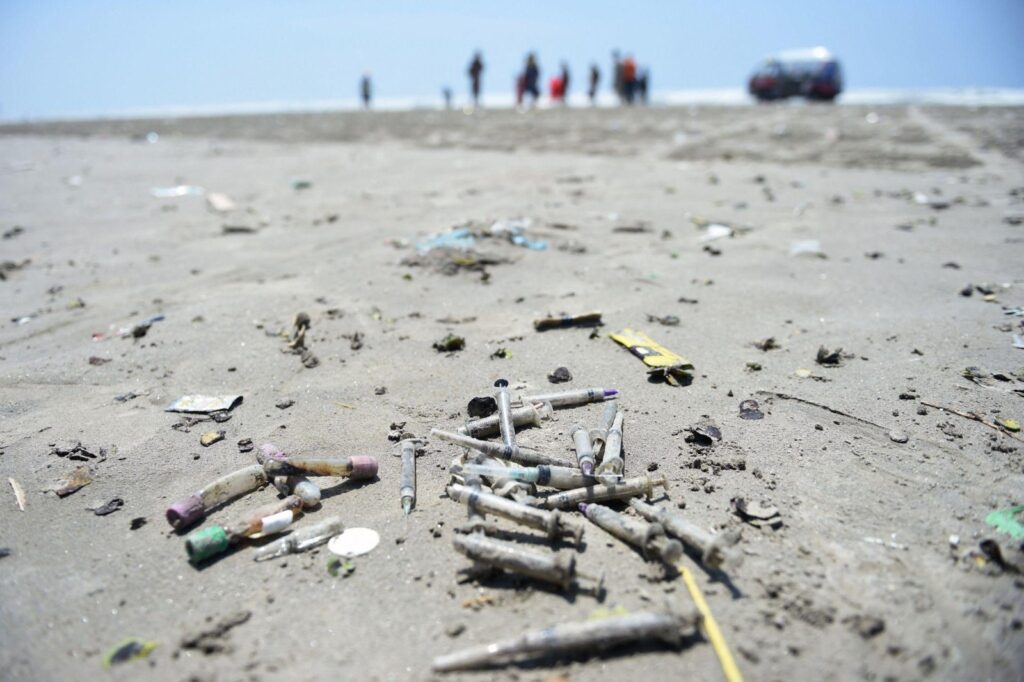
Pakistan’s Environment Protection Act of 1997 sets strict rules for handling medical waste from hospitals and clinics. The Environmental Protection Agency oversees the process, ensuring facilities dispose of hazardous materials safely.
Ramzan Ali, who leads the research, development and communication department within Khyber Pakhtunkhwa’s environmental authority, says improper disposal of medical waste can endanger both people and ecosystems.
Hospitals must separate waste using a colour-coded system: blue bins for general materials such as bottles and paper; red bins for sharp objects including syringes and broken glass; and yellow bins for contaminated items such as blood bags, gloves and bandages.
Regulations exist, but enforcement remains uneven
Large hospitals must also install incinerators to burn hazardous waste into ash. Facilities unable to install these machines must hire licensed companies and maintain records to prove that waste is disposed of properly.
Some hospitals in Peshawar follow these requirements. Lady Reading Hospital and Hayatabad Medical Complex operate their own incinerators. Khyber Teaching Hospital contracts a private company to handle disposal, paying about 1.5mn rupees (5,357 US dollars) each month.
Yet Ramzan Ali says many government and private facilities still fail to follow the rules fully.
Medical professionals warn that the consequences extend beyond environmental damage.
Dr Ayesha Maqbool says medical institutions now train doctors and nurses in proper waste management. The goal is simple: prevent hazardous materials from reaching people who handle trash without protection.
When used needles enter the recycling chain, she explains, they carry a serious threat. A single injury can transmit diseases such as hepatitis C or AIDS to workers collecting, transporting or sorting waste.
Peshawar crackdown on Afghan refugees as 37 refugee camps set for closure
Environmental authorities say they monitor hospitals across Khyber Pakhtunkhwa and investigate complaints about waste violations. Facilities that break the rules can face fines ranging from 50,000 rupees (178 US dollars) to 70 million rupees (250,000 US dollars). In severe cases, authorities can order closures.
Still, for many Afghan refugees in Peshawar, the dangers remain part of daily work.
Every morning, the city’s waste arrives in new heaps—plastic, paper, metal and sometimes the hidden remains of hospital wards. For those who sort through it, the difference between livelihood and illness can be as small as the prick of a needle.