
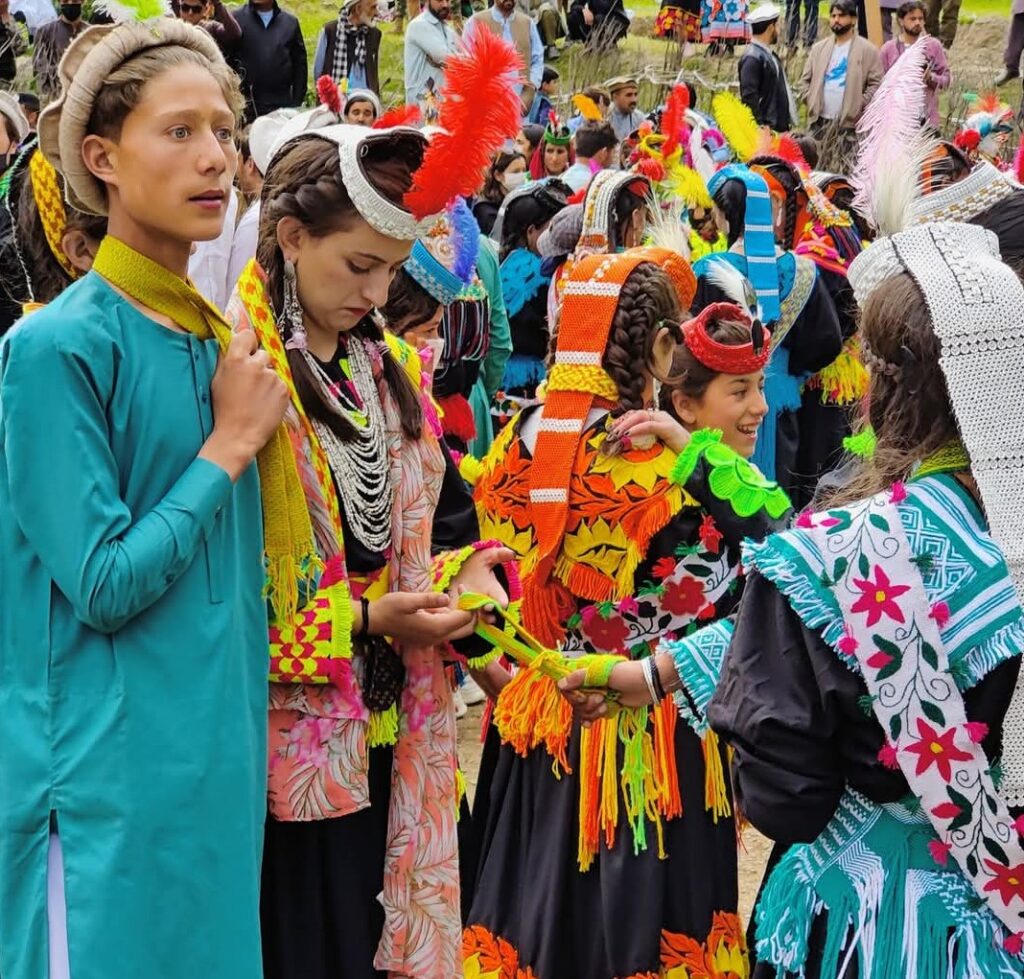
CHITRAL: Residents of the Kalash valley have hailed the Aga Khan Agency for Habitat’s initiative on community preparedness as a significant step to protect lives and the unique cultural heritage of the region.
The valleys have faced increasing frequency of climate change-induced flash floods since 2010. Comprehensive disaster readiness has become a critical need. Talking to local media on Sunday, elites from Bumburate, Birir, and Rumbur—including Bahram Kalash, Ghazi Khan, Turab Khan, and Tabriz—said the project, funded by the Government of Denmark, has equipped the community to mitigate the impact of natural hazards.
The initiative focuses on localized disaster risk management and long-term habitat planning to help the valleys withstand environmental challenges. They explained that geographic isolation makes self-reliance essential. Disasters often destroy roads, cutting off access to external assistance. Residents said comprehensive community preparedness has become the only lifeline during emergencies.
A cornerstone of the project has been the formulation of the valleys’ first-ever habitat plan. The plan balances modern infrastructure needs with climate realities. It ensures that development does not compromise environmental or cultural integrity.
The project’s strength lies in its community-based approach. Valley Emergency Response Teams (VERTs) operate in all three valleys. Additionally, 300 Community Emergency Response Teams (CERTs) function at the village level. Eighty-six volunteers received specialized training to act as first responders during disasters.
“Through this project, the local communities of Bumburate, Rumbur, and Birir now operate within an inclusive organizational hierarchy. Equipped with the skills and structure to manage emergencies, residents of the Kalash valleys are better prepared to face increasing threats from natural disasters and a changing climate,” they said.
They added that the project has empowered each resident of the valleys to know how to respond after natural disasters. They no longer have to wait for government assistance.
Residents of the Kalash valley now possess the knowledge, skills, and organization to act decisively during emergencies. This demonstrates the value of community-centered disaster preparedness in isolated and vulnerable regions.