
The deployment of the USS Abraham Lincoln marks a dangerous escalation in the Middle East, as Tehran warns it will not tolerate any violation of its maritime sovereignty.
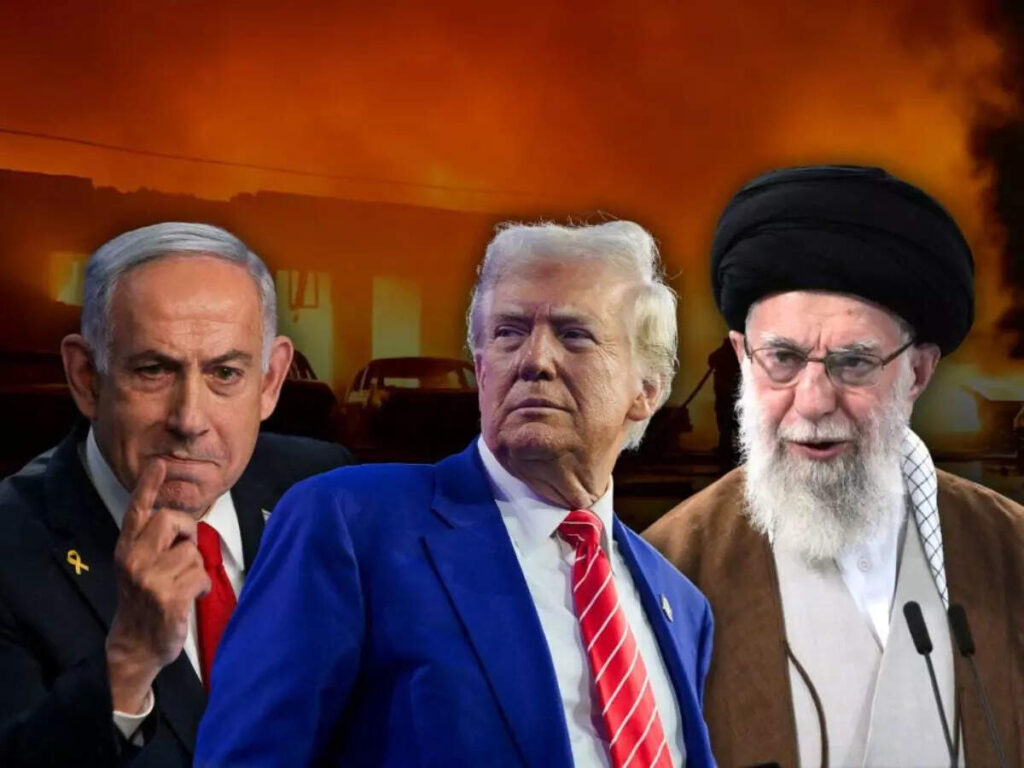
The drums of war are beating louder in the Middle East as the United States and Iran find themselves once again at the door of a direct confrontation. U.S. President Donald Trump has issued a fresh, stern warning to Tehran, confirming that another powerful carrier strike group is moving toward Iran.
Trump’s message remains blunt: if a deal is not reached, the next encounter will be far more severe than anything witnessed before.
Is Trump Administration Preparing for War with Iran?
The Call for a ‘Fair Deal’ Amid Threats
Despite the military posturing, the U.S. President maintained that Iran must come to the negotiating table quickly to discuss a “fair and equal agreement” acceptable to all parties. However, the atmosphere for such talks remains poisoned by threats of force.
Foreign media reports indicate that Iran’s Revolutionary Guard (IRGC) has made its stance clear. In a recently issued statement, the IRGC emphasized that Iran will not tolerate any violation of its maritime boundaries. The arrival of American ships, they warned, brings the immediate possibility of an attack. The statement further dismissed President Trump’s rhetoric as limited to words, asserting that the outcome of any potential war will be decided practically “on the battlefield.”
A Region Refusing to Pivot
The deployment of the USS Abraham Lincoln near Iranian waters, following recent protests within Iran, signals how close Washington and Tehran are to a direct clash. While the U.S. appears to be pursuing a goal of regime change through economic pressure—fueled by inflation and internal unrest—the strategy is hitting a significant roadblock: regional cooperation.
Unlike previous eras, America finds itself in a state of uncertainty because regional neighbors are unwilling to offer their “shoulders” for the use of force. Key allies in the region have refused to facilitate an attack on Iran from their soil. Consequently, the U.S. is now heavily reliant on its aircraft carriers and naval vessels, pushing the situation toward a high-stakes maritime and aerial conflict.
The Limits of Technology
While the U.S. holds technological superiority, the risks are unprecedented. Analysts suggest that Iran might employ tactics and technology reminiscent of the expertise seen in the Indo-Pak conflicts to challenge American dominance. If Iran successfully thwarts U.S. naval power, the United States could find itself in a position similar to India’s past military setbacks, putting its global prestige and the “awe” of its power at stake.
Neighborhood Neutrality
The most significant shift in the current crisis is the vocal neutrality of Iran’s neighbors. Fearing that their own territories would become targets for Iranian retaliation, these states—many of which host thousands of American troops—have declared they will not allow their land or airspace to be used for aggression against Tehran.
Iranian officials have been explicit: any neighbor granting such permission will be considered an enemy. Aside from Israel, no other regional power seems willing to invite the destruction of a full-scale war.
The Path Forward: Diplomacy or Destruction?
It appears that traditional diplomacy is currently absent from President Trump’s agenda, as he views the use of force as a solution, much like the U.S. approach to Venezuela. Trump has threatened that until Iran negotiates, it will face a strike more powerful than recent Israeli actions.
However, the reality remains that while Iran is open to negotiations, “talks” cannot happen in an atmosphere of active threats and military encirclement. Instead of insisting on regime change and catastrophic war, the U.S. administration must listen to regional voices. If peace is the genuine goal, Washington must abandon the threat of force, adopt a diplomatic tone, and reach an agreement that avoids the abyss of war.